May 8, 2026
How to protect stair railings and newel posts
Stair railings and newel posts take more abuse during a move than almost any other fixed surface in a home. They sit right where heavy furniture pivots, where dollies swing wide, and where tired hands instinctively grab for balance. A single scrape can cut through stain, dent wood fibers, or chip paint in seconds. Repair is rarely cheap or invisible. Wood refinishing, trim replacement, or custom carpentry often costs hundreds or even thousands of dollars depending on material and finish quality. Protecting these features properly saves money, prevents delays, and keeps a new or well maintained home looking the way it should.
The risk is higher than many people realize. Home renovation cost surveys consistently show that trim and railing repairs rank among the most frequent post move damage claims. Insurance industry data also shows that corner and edge damage generates a disproportionate share of small claims because these areas experience concentrated impact forces. Physics explains why. When a moving object contacts a narrow edge, the force concentrates over a small surface area, increasing pressure dramatically. Even a light bump with a dresser corner can exceed the compressive strength of wood fibers or brittle paint films.
Newel posts are especially vulnerable. They protrude into the stair path and often serve as turning pivots for large items. Structural engineering research shows that protruding vertical elements receive higher lateral impact loads because they become unintended fulcrum points during rotation. Railings face similar risk because hands and furniture naturally track along their line during ascent and descent.
The first layer of protection is understanding traffic flow. Most damage happens at three points where the bottom of the stairs meets the hallway, the mid stair turn or landing, and the top of the stairs where items rotate into rooms. Observational studies in material handling environments show that collision frequency increases sharply at turning points because visual attention shifts from clearance to balance and footing. Identifying these zones ahead of time allows focused protection rather than guesswork.
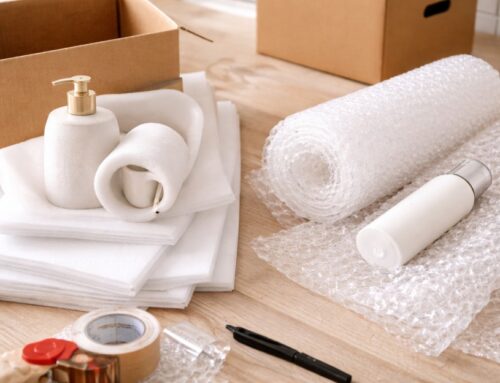
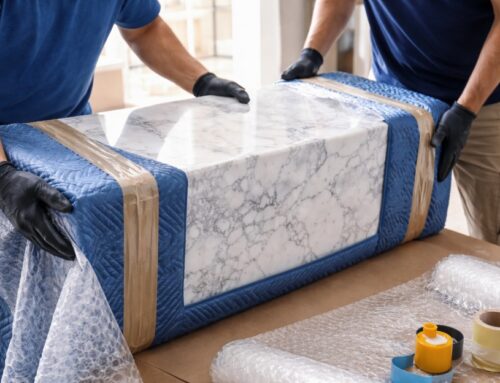
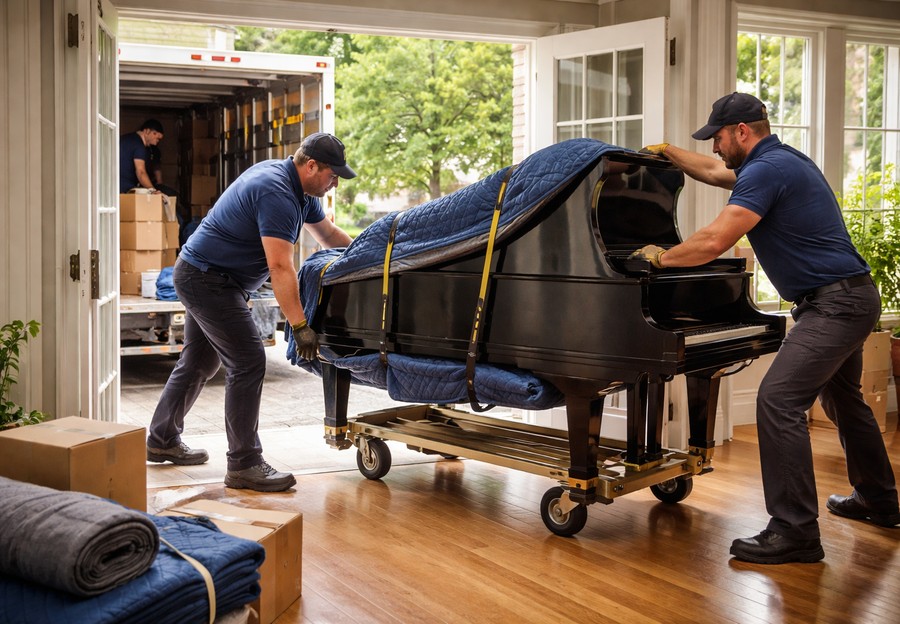
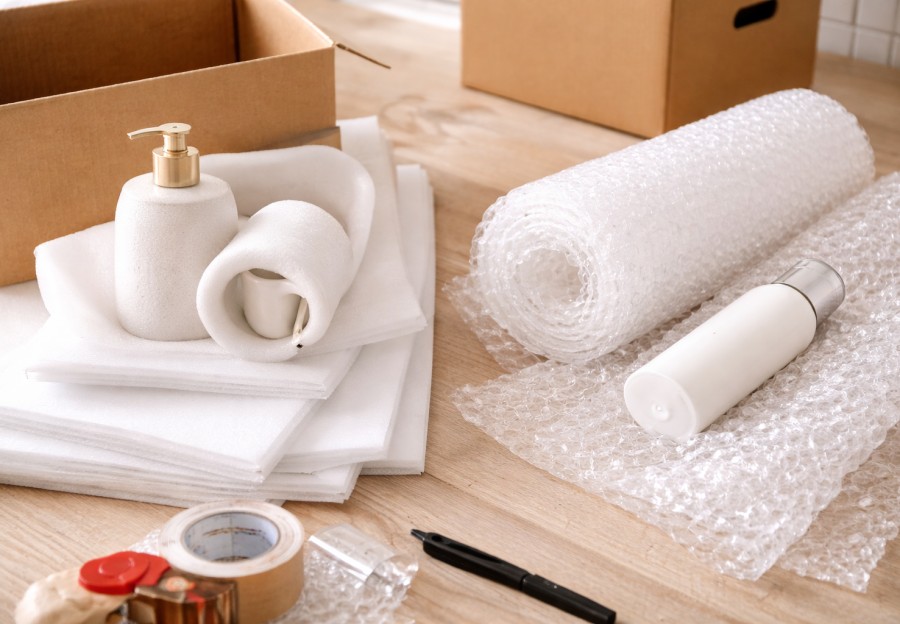
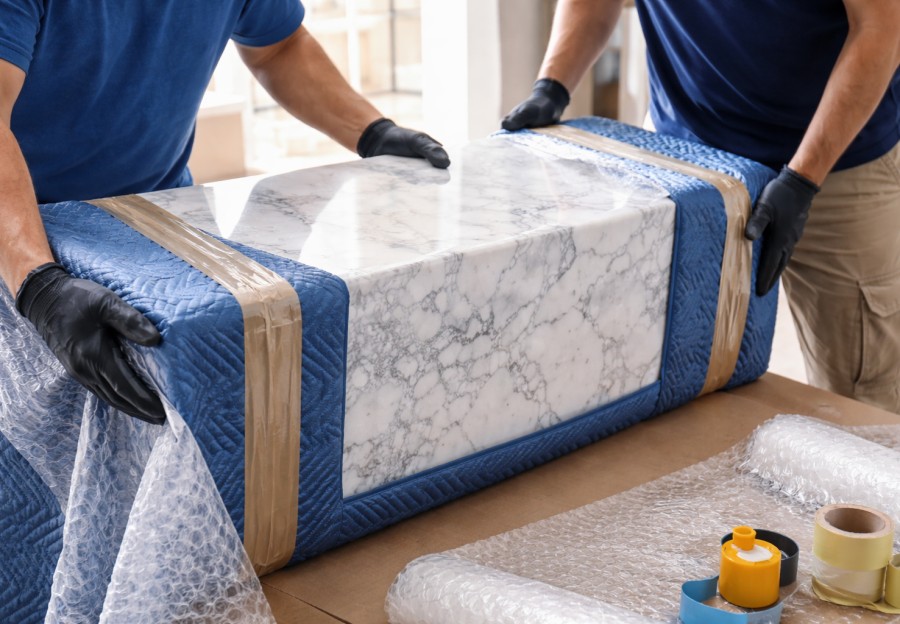
Surface protection works best when it combines cushioning with abrasion resistance. Soft padding absorbs impact energy while a tougher outer layer resists tearing and sliding friction. Moving blankets provide shock absorption but can slide or bunch if not secured properly. Corrugated cardboard adds rigidity and distributes force over a larger area. Packaging engineering tests show that layered materials dissipate impact energy more effectively than single layer protection.
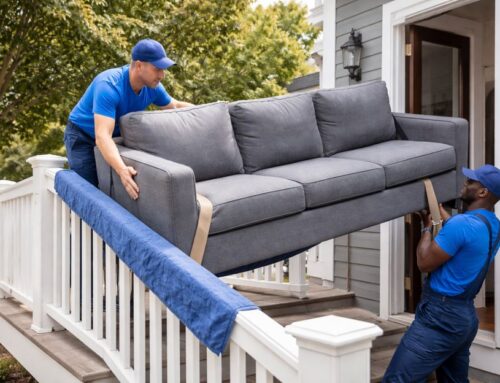
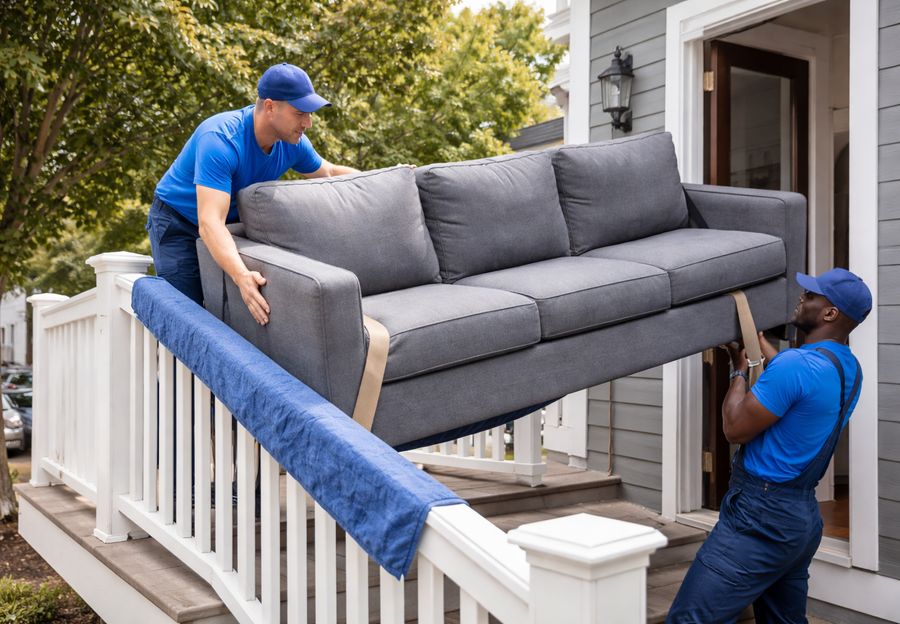
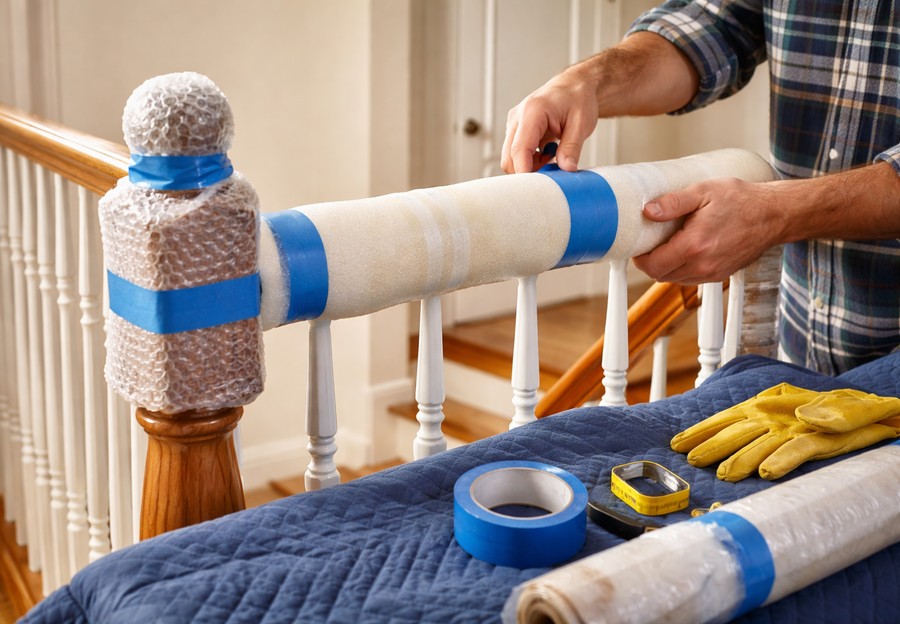
For railings, wrap the entire exposed section, not just the top rail. Furniture often contacts balusters and side rails at unexpected angles during rotation. Covering only the visible top edge leaves vulnerable surfaces exposed to side impacts. Secure padding so it cannot slip downward during repeated contact. Friction studies show that unsecured padding migrates under vibration and repeated brushing, eventually exposing the surface beneath.
Newel posts benefit from extra corner build up. Corners experience the highest stress concentration. Structural mechanics research confirms that sharp corners amplify stress during impact. Adding additional folded cardboard or foam around edges creates a rounded profile that reduces peak pressure when something brushes past.
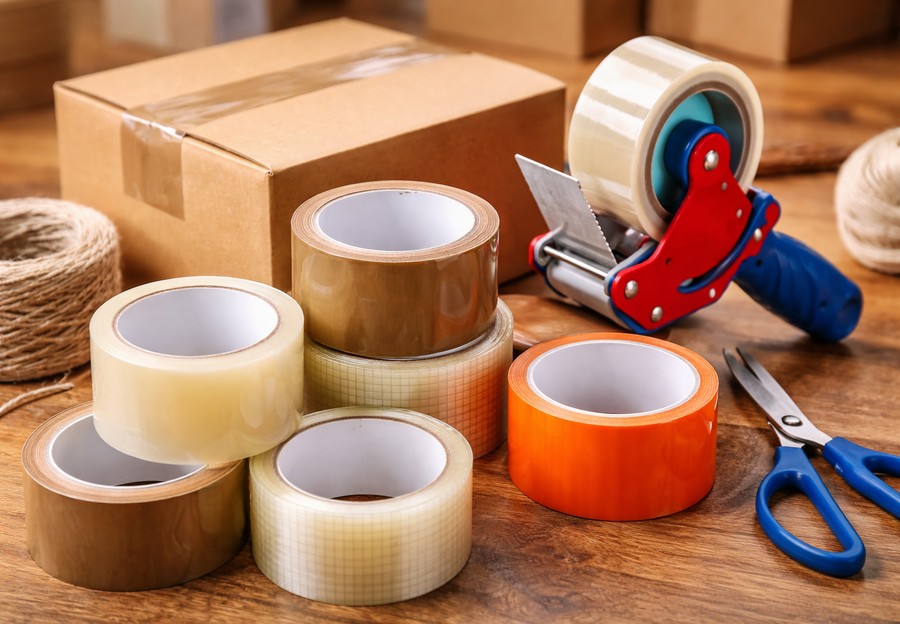
Avoid placing adhesive tape directly on finished wood or painted surfaces. Many tapes contain aggressive adhesives that can lift stain, soften lacquer, or leave residue that attracts dirt. Conservation guidelines for furniture handling consistently recommend placing tape only on protective layers rather than on finished surfaces.
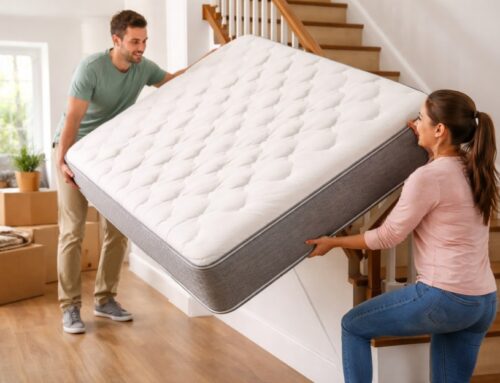
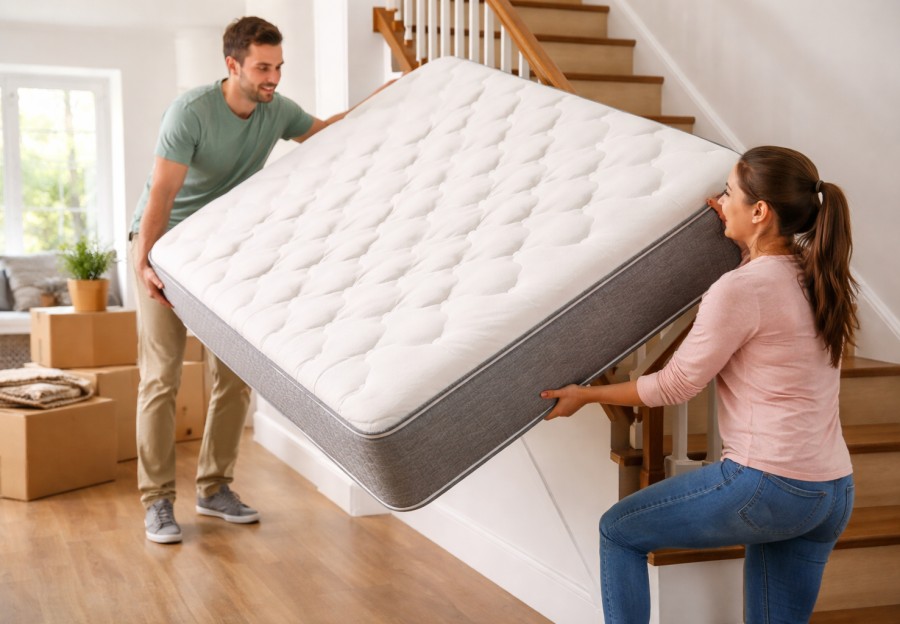
Height coverage matters. People often protect only the mid section of railings, forgetting that furniture edges ride higher or lower depending on carry angle. A mattress may brush near the top rail while a dresser corner may strike lower near balusters. Cover from base to hand height to account for these variations.
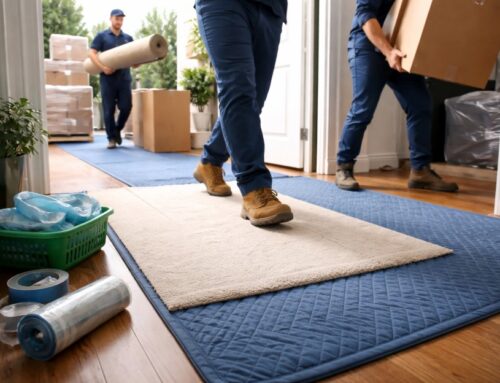
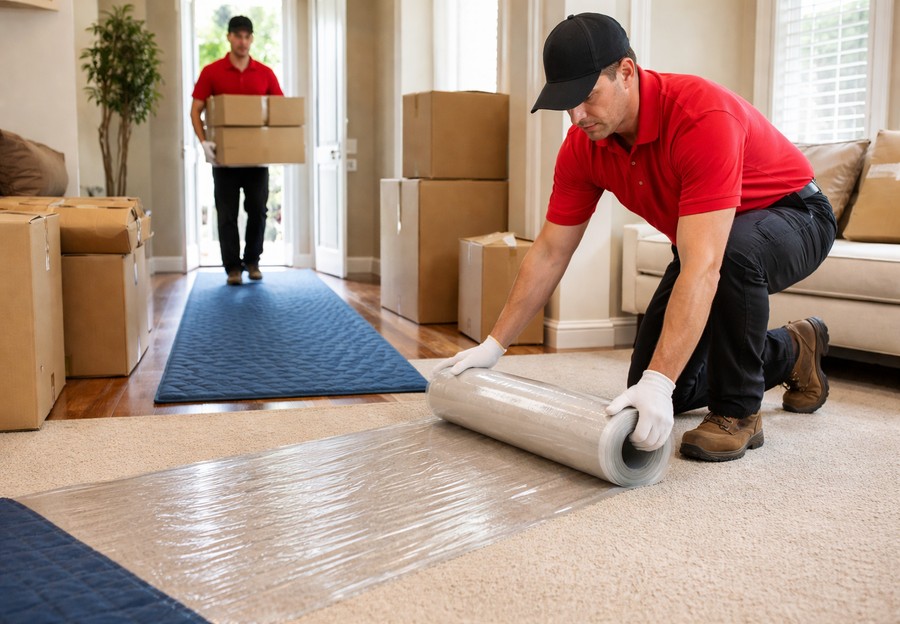
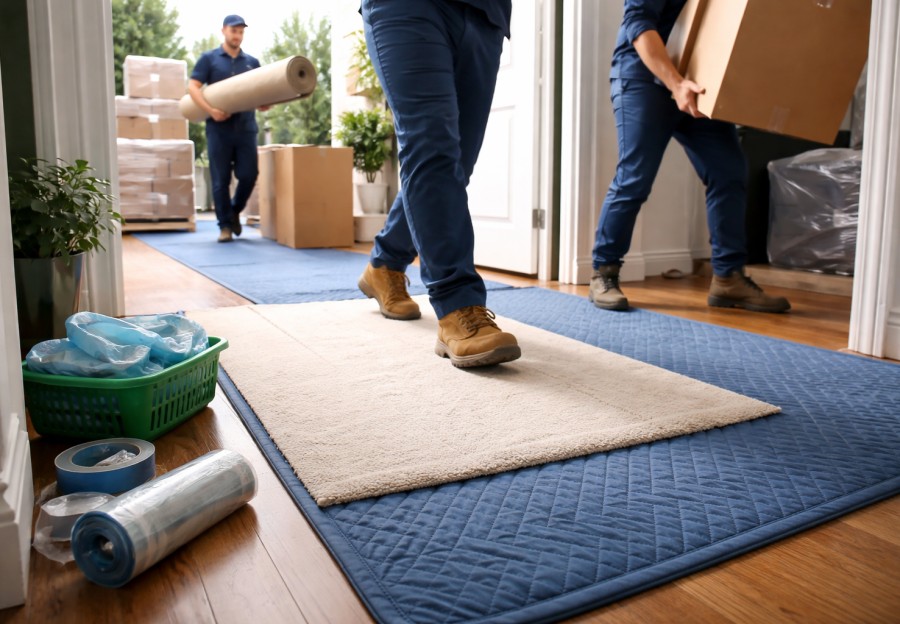
Floor runners support railing protection indirectly. Slips increase lateral drift and loss of control, which pushes loads into railings. Occupational safety studies show that slip risk rises significantly on dusty or polished floors under load. Runners improve traction and stabilize movement, reducing side impact risk.
Lighting quality influences protection effectiveness more than expected. Dim stairwells reduce depth perception and clearance judgment. Visual ergonomics research shows that poor lighting increases collision errors significantly in tight spaces. Temporary lighting or brighter bulbs reduce accidental contact and improve awareness during carries.
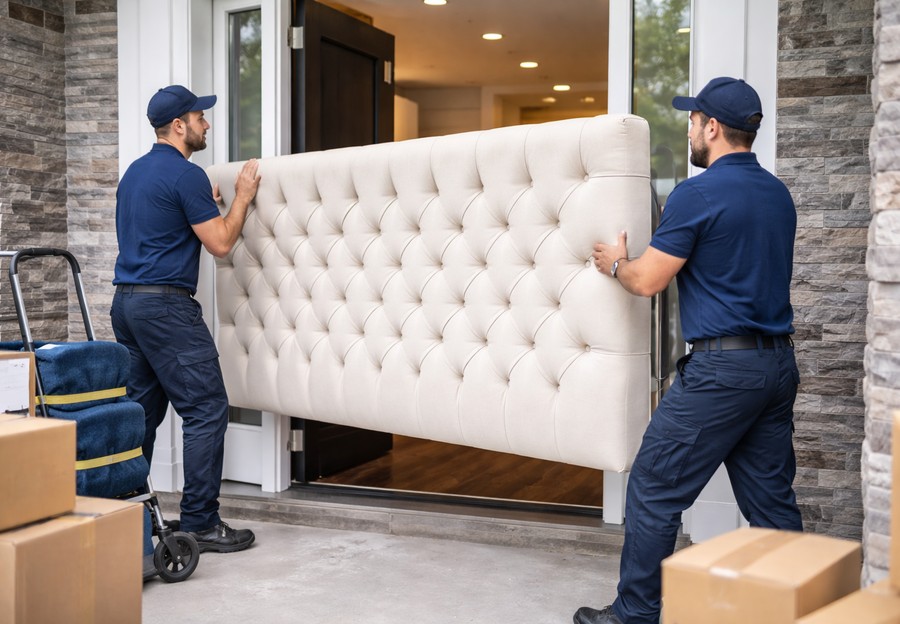
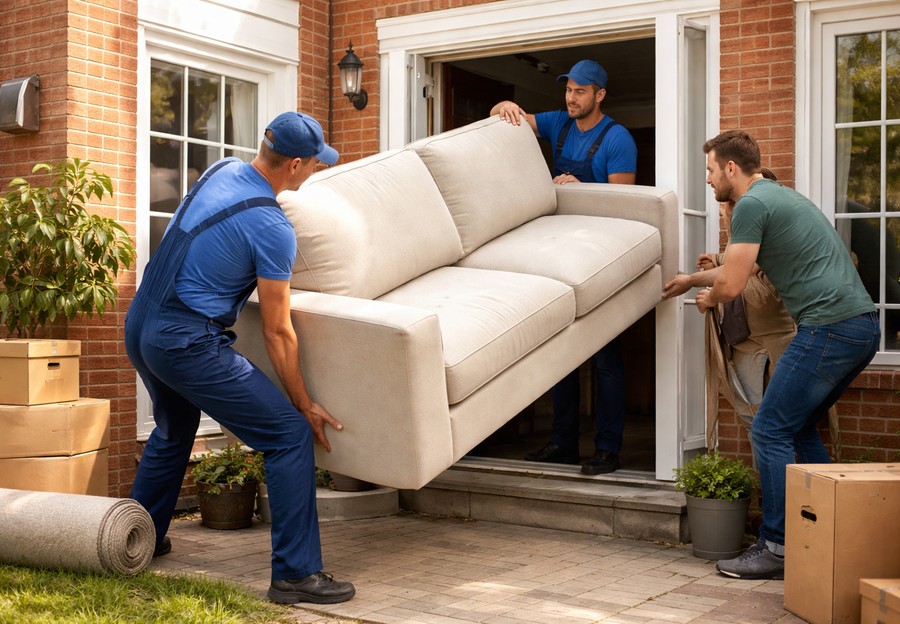
Communication discipline matters. When two or more people carry a large item, unsynchronized movement creates twisting forces that push the load sideways into railings. Human factors research shows that synchronized verbal cues reduce lateral drift and improve stability during coordinated movement. One person calling slow, stop, tilt, and clear helps the team maintain predictable motion.
Pacing protects surfaces as much as padding. Rushing increases momentum and reduces reaction time. Occupational injury data consistently links sudden acceleration and fatigue to loss of control incidents. Slower controlled movement allows micro corrections before contact becomes damage.
Angle management prevents scraping. Instead of carrying items parallel to the railing, slight inward angling keeps edges away from the barrier. Physics explains that when an object rotates around a fixed contact point, angular momentum increases quickly. Avoiding even light contact prevents that pivot effect from pulling the load into the rail.
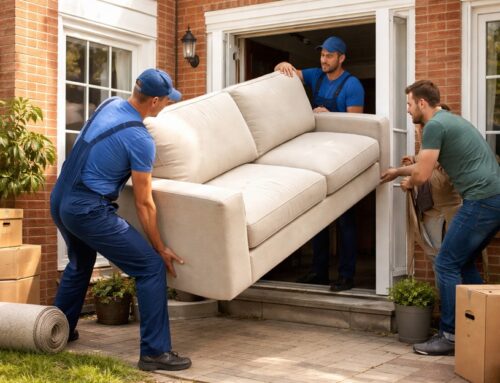
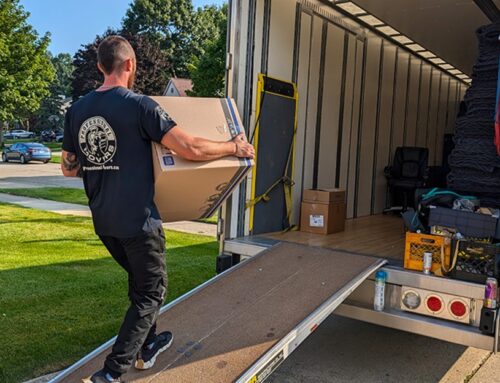
Dollies should be handled carefully near railings. Wheels can drift laterally on slight slopes or uneven tread transitions. Transportation safety testing shows that rolling loads require steering control even at low speeds. Spotters should guide clearance while the operator maintains straight tracking.
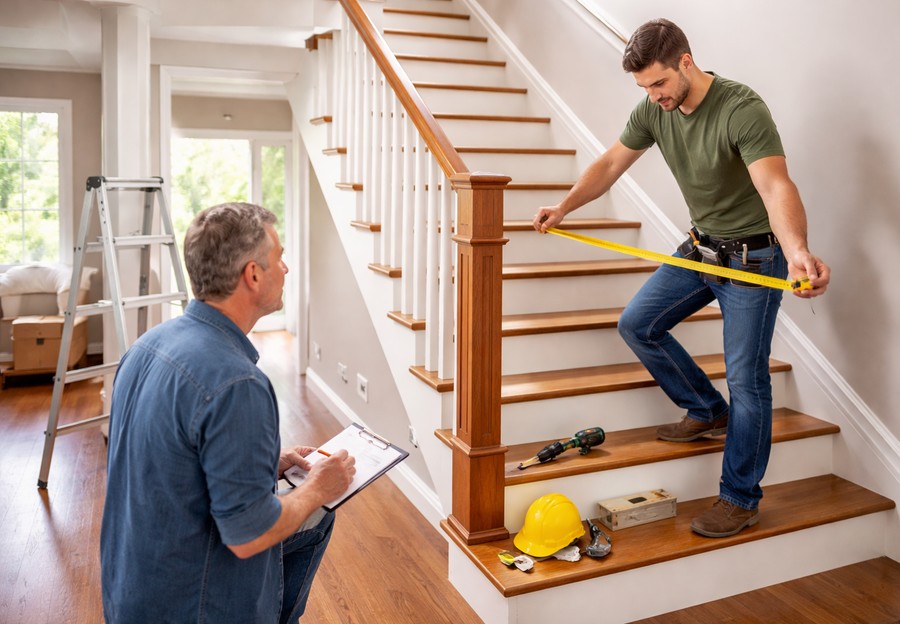
Stair width matters. Narrow staircases amplify contact probability. Building design data shows that many residential stairs range between 36 and 42 inches wide including railings, leaving limited clearance for large furniture. In these cases, extra padding thickness may need to be increased and certain items may require partial disassembly or alternate routing.
Temperature and humidity influence finishes. Fresh paint or newly refinished railings remain softer for days or weeks depending on coating type. Coating cure studies show that some water based finishes take up to 30 days to fully harden. Soft finishes scratch more easily under light contact. Extra padding thickness during moves shortly after refinishing reduces risk of imprinting and scuffing.
Children and pets add unpredictability. Sudden movement near stairways increases collision risk. Injury prevention studies show that distraction and unexpected obstacles raise accident probability in confined spaces. Restrict stair access during heavy carries to maintain clear predictable pathways.
Financial incentives reinforce protection. Repairing a scratched stained railing often requires sanding, color matching, sealing, and curing. Contractor cost surveys show that small trim refinishing jobs frequently exceed several hundred dollars due to labor intensity and finish blending complexity. Newel post replacement in hardwood staircases can exceed a thousand dollars when custom profiles are involved.
Environmental responsibility connects as well. Repair materials, refinishing chemicals, and replacement lumber carry environmental cost. Sustainability studies consistently show that preserving existing building materials reduces carbon footprint more than replacement and repair cycles.
There is also an insurance angle. Minor cosmetic damage often falls below deductible thresholds, leaving homeowners to pay out of pocket. Claims data shows that many small moving damages are never reimbursed because they do not meet claim minimums or involve cosmetic exclusions. Prevention avoids this frustration entirely.
Psychologically, visible damage in entryways and staircases has outsized emotional impact. Environmental psychology research shows that high traffic visual damage increases perceived disorder and reduces satisfaction with the home environment. A flawless staircase preserves first impressions and daily comfort.
Inspection after the move matters. Remove padding carefully and inspect surfaces under good lighting. Small scuffs can often be addressed quickly before they set or oxidize. Early touch up prevents deeper refinishing later.
If your staircase includes specialty materials such as wrought iron, glass panels, or high gloss lacquer, protection becomes even more important. Glass chips propagate easily. Lacquer scratches show prominently under light. Metal coatings can chip and rust if breached. Materials durability studies show that surface coating integrity strongly influences long term corrosion and wear resistance.
For extremely tight staircases or oversized furniture, alternative strategies may be safer than forcing passage near railings. Disassembly, alternate routes, or controlled hoisting sometimes reduce total risk. Risk assessment models consistently show that eliminating a hazard is more effective than repeated mitigation when clearance margins are minimal.
The core principle is layered defense. Cushion impact. Prevent abrasion. Stabilize movement. Improve visibility. Control pacing. Communicate clearly. Protect high risk zones more heavily than low traffic areas. This multi layer approach mirrors industrial safety design where redundancy reduces failure probability.
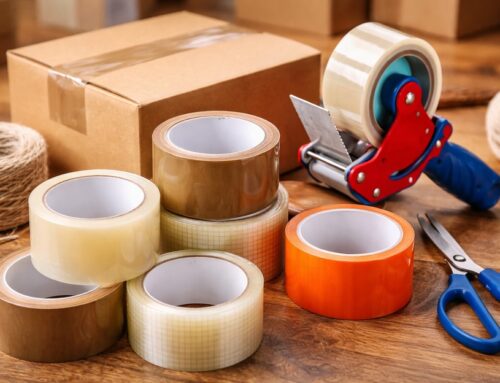
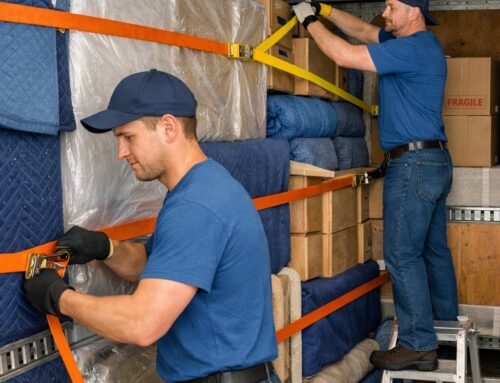
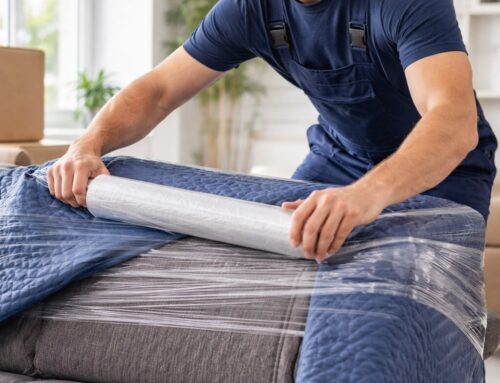
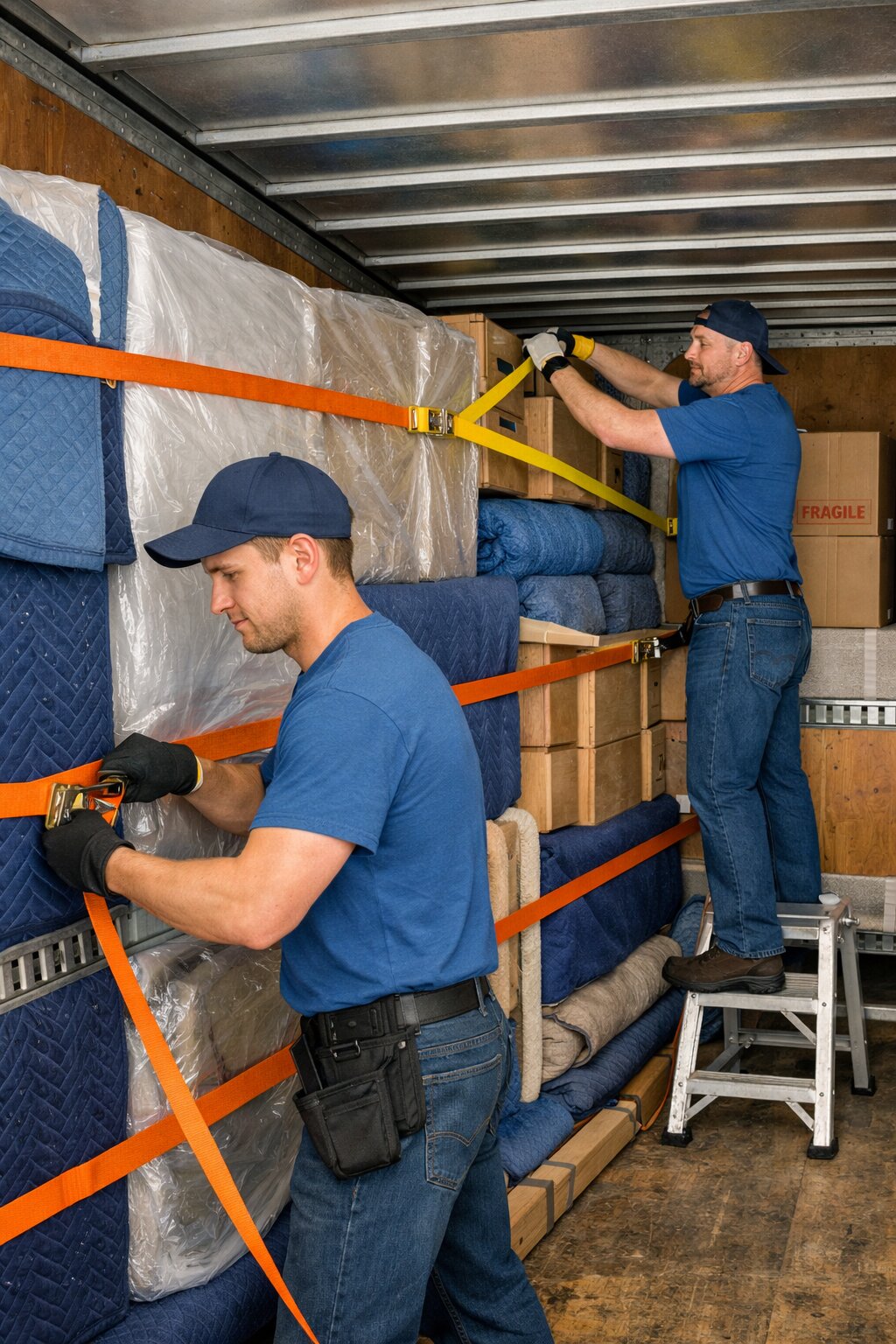
Protection does not need to be complicated or expensive. Cardboard from moving boxes, standard moving blankets, stretch wrap over padding, and careful securing create effective barriers. The cost of materials is trivial compared with repair expenses.
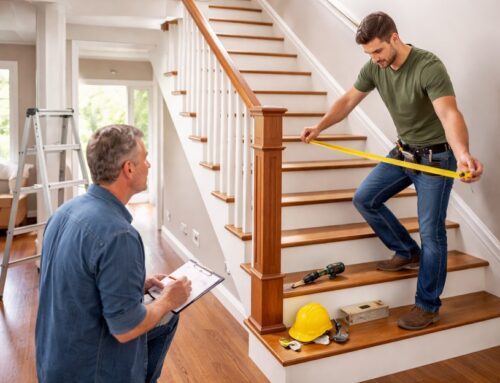
Planning ahead makes the process smooth. Walk the stair path. Identify tight turns. Measure clearance. Stage padding in advance. Assign a spotter. Set lighting. Clear obstacles. These steps reduce improvisation under load, which is when most mistakes happen.
When stair railings and newel posts emerge unscathed after a move, it often goes unnoticed. That invisibility is success. No fresh scratches to catch your eye. No repair estimates to chase. No lingering frustration every time you climb the stairs.
Protection is not about paranoia. It is about respecting how force concentrates in tight spaces and how easily beautiful finishes are damaged under momentary contact. A few minutes of preparation protects years of craftsmanship and investment.
Moves always involve enough stress and uncertainty. Protecting stair railings and newel posts removes one unnecessary risk from the equation. The home remains intact, the budget stays protected, and the transition feels cleaner and more controlled.
When the last box is upstairs and the padding comes off to reveal spotless rails and flawless posts, the quiet satisfaction confirms that the care was worth it. That is the true measure of a move done thoughtfully.