April 6, 2026
How to prepare fragile light fixtures for transport
Light fixtures sit in a tricky category during a move. They look solid when mounted on the ceiling or wall, yet once removed they reveal thin glass, delicate wiring, brittle finishes, and oddly shaped frames that do not tolerate pressure or vibration well. Chandeliers, pendant lights, sconces, table lamps, and decorative shades often combine multiple materials that respond differently to stress and temperature. A careless pack can turn an expensive or sentimental fixture into a box of shards by the time the truck arrives.
The risk is not small. Home improvement market data shows that decorative lighting fixtures often cost several hundred dollars per piece, and custom or imported fixtures can run into the thousands. Glass replacement alone is frequently unavailable for discontinued models, which turns minor breakage into a full replacement expense. Insurance claim summaries from moving providers consistently list lighting and mirrors among the most commonly damaged household categories because of their shape, fragility, and exposed edges.
Understanding what actually damages light fixtures helps prevent it. The main forces are impact, vibration, compression, temperature change, and abrasion. Transportation safety studies show that cargo experiences thousands of small vibration cycles during even short drives. Those micro movements slowly work parts loose and allow surfaces to rub. Packaging engineering research shows that fragile items fail more often from repeated low level vibration than from one dramatic bump. Compression from stacked boxes and uneven load pressure adds another layer of risk.
Preparation begins before anything is removed. Photograph each fixture while still installed and again once removed. Clear images of how parts connect, how wiring routes, and how hardware fits make reassembly easier later. Furniture and appliance reassembly studies show that visual reference reduces assembly errors and missing part issues significantly compared with memory alone. It also provides condition documentation if damage occurs.
Power safety comes first. Always turn off the breaker and confirm power is off before disconnecting any fixture. Electrical safety agencies consistently report that improper disconnection causes avoidable shock injuries during home projects. Label wires clearly if multiple fixtures are being removed so reconnection stays accurate.
Disassembly reduces risk dramatically. Removing bulbs, shades, finials, crystals, and decorative arms lowers weight and reduces leverage stress on frames. Glass components should never travel attached to the main body of a fixture. Even slight flex during transit can crack mounting points or stress glass seams. Materials engineering research shows that stress concentrates at attachment points when mass is suspended during vibration.
Bulbs deserve separate handling. Even LED bulbs contain delicate electronics and thin glass envelopes. While LED bulbs are more durable than traditional incandescent or halogen, drop testing still shows fracture risk under edge impact. Packing bulbs individually prevents them from colliding with heavier parts.
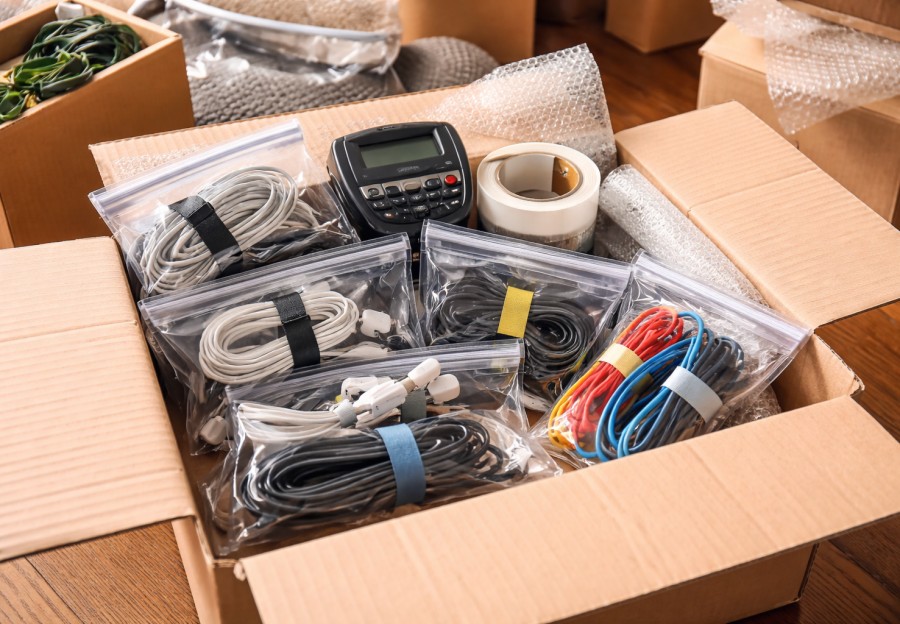
Small hardware should be gathered carefully. Screws, mounting brackets, decorative caps, and wire nuts disappear easily during moves. Assembly error studies show that missing hardware is one of the most common causes of post move delays and improvised unsafe installations. Place hardware in sealed labeled bags and attach them to the main fixture box or keep them together in a dedicated hardware container.
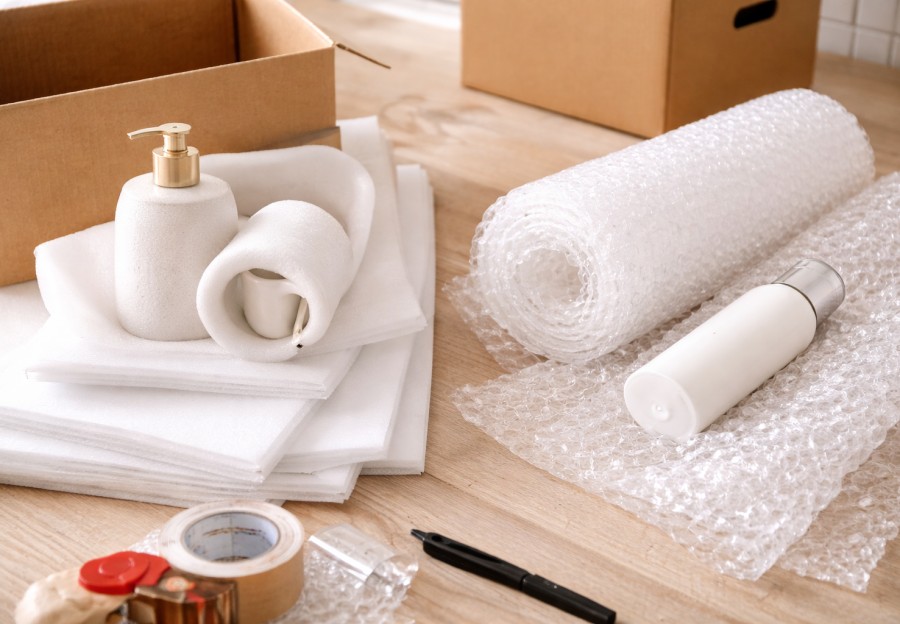
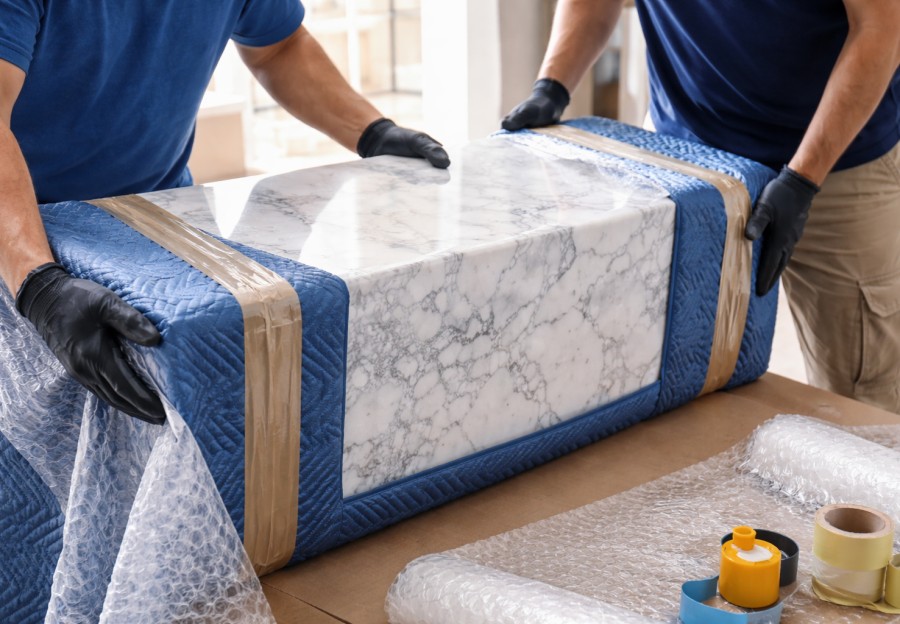
Surface protection matters as much as impact protection. Many fixtures have painted, plated, or patina finishes that scratch easily. Micro abrasion from friction against paper or cardboard can dull surfaces over time. Materials wear studies show that repeated light rubbing causes visible finish degradation even without obvious impact. Wrapping each component in soft clean material reduces that abrasion risk.
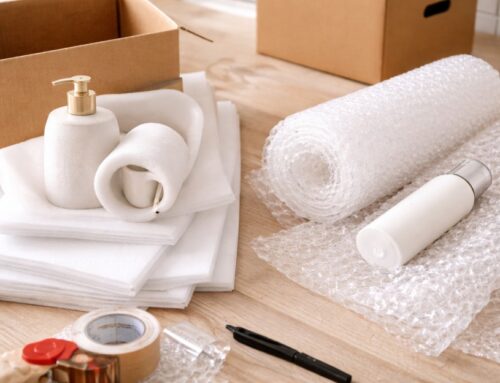
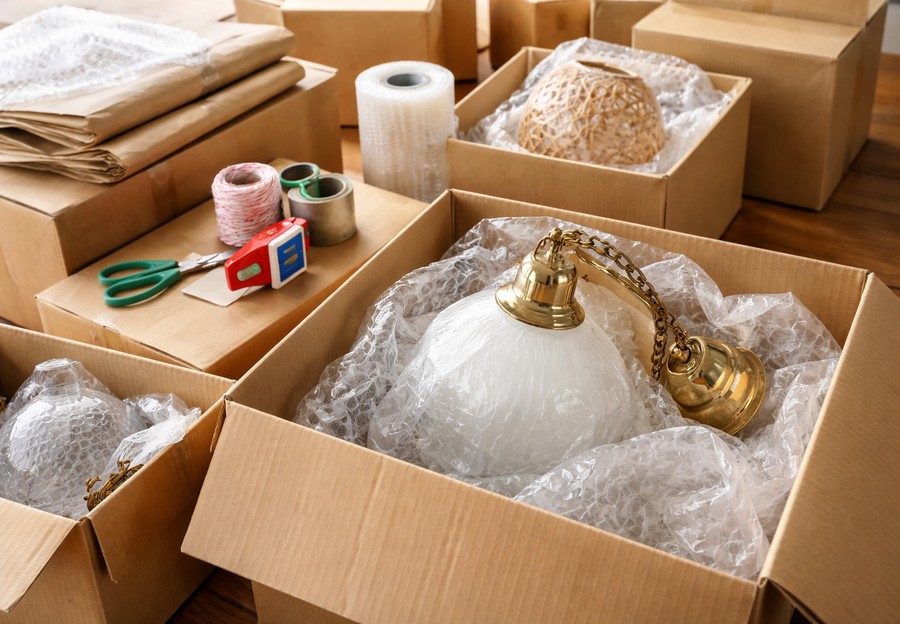
Glass shades and globes require layered cushioning. Single layer wrapping often fails because point impacts transmit force directly to the glass. Packaging lab testing consistently shows that layered cushioning disperses energy more effectively than thin single layers. Curved glass benefits from even pressure distribution to avoid stress points.
Internal void control inside the box is critical. Empty space allows parts to shift and collide during vibration. Packaging vibration studies show that internal movement amplifies damage rates over long distances. Filling gaps with soft but resilient material prevents momentum buildup.
Box choice influences survival. Oversized boxes invite over stacking and internal shifting. Undersized boxes compress contents and reduce cushioning effectiveness. Selecting a box that allows sufficient padding on all sides while maintaining snug fit protects best. Heavy duty double wall cartons provide higher compression resistance than thin retail boxes. Packaging engineering data shows that stronger corrugated structures resist collapse under stacking pressure significantly better.
Orientation inside the box matters for long items such as chandelier arms or long glass tubes. Supporting them lengthwise with padding along the full span prevents bending stress. Structural mechanics research shows that long slender components fail under bending more easily than under uniform compression.
Moisture control deserves attention. Glass and metal surfaces may tolerate brief moisture, but wiring insulation, fabric shades, and painted finishes do not. Vehicle interior temperature studies show that closed trucks can exceed outdoor temperatures by more than 20 degrees Celsius in under an hour under direct sun, increasing condensation risk when temperature drops later. Moisture trapped inside boxes can create corrosion, odor, and finish damage. Ensure all components are dry before packing and avoid sealing damp materials in airtight plastic.
Avoid direct plastic contact on sensitive finishes for extended periods. Some plastics can imprint or react with lacquer and soft coatings under heat. Conservation studies in museum handling often recommend a fabric or paper barrier between plastic films and delicate finishes.
Temperature sensitivity affects adhesives and plastics used in fixture construction. Polymer durability research shows that repeated thermal cycling accelerates material fatigue and adhesive softening. Keeping fixture boxes away from direct truck walls where temperature swings are strongest reduces exposure.
Labeling improves handling behavior. Clear fragile marking increases the chance that boxes ride higher in the load and avoid compression zones. Logistics studies show that visual handling cues reduce misplacement and stacking errors by roughly 25 to 30 percent in busy environments.
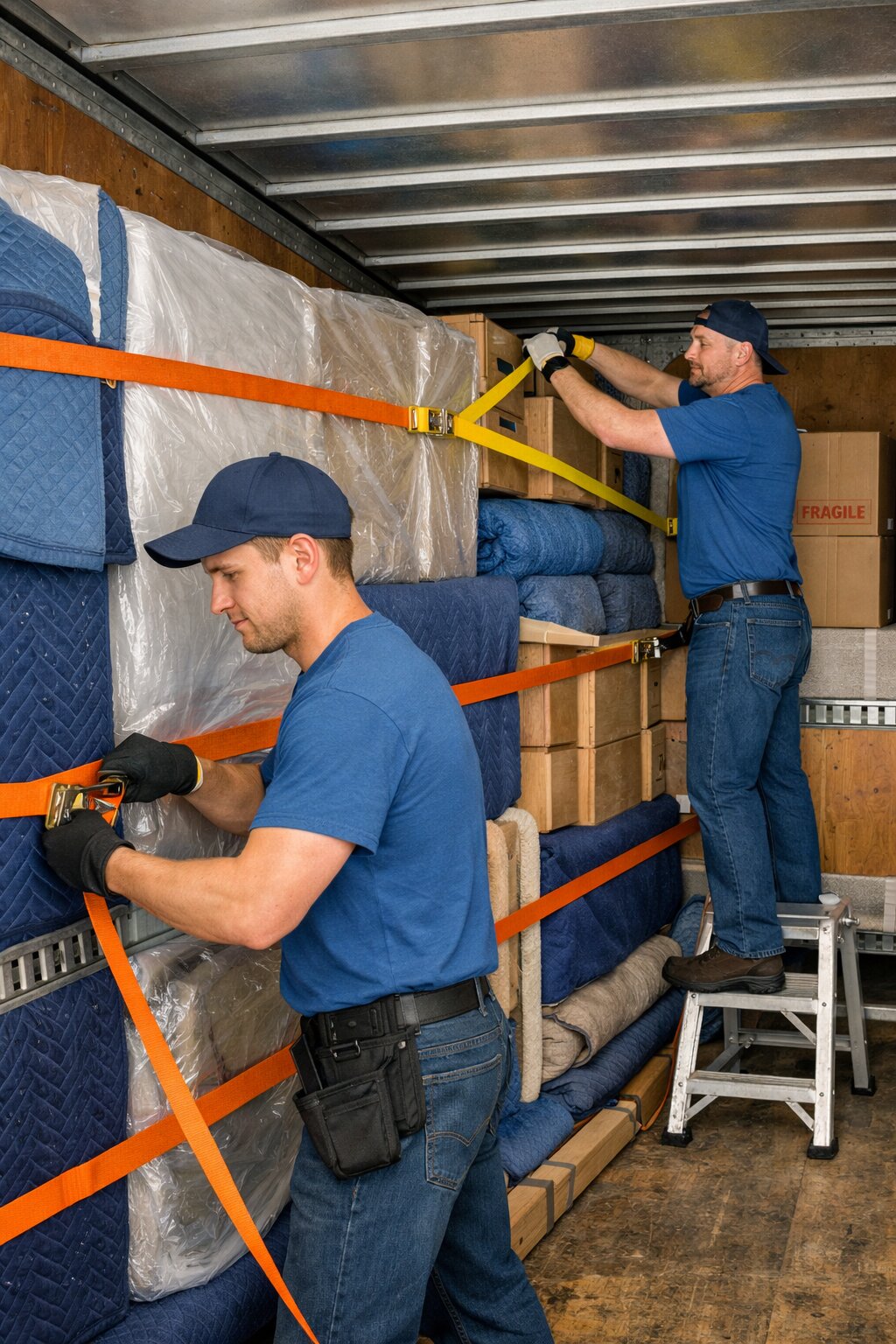
Stack placement inside the truck matters. Fragile fixture boxes should never ride under heavy furniture or dense cartons. Transportation safety research shows that bottom layers absorb the highest compression forces during braking and road vibration. Placing these boxes atop padded furniture or mattress layers reduces transmitted shock.
Lighting fixtures with crystals or intricate assemblies benefit from partial reassembly in protective clusters. Removing each crystal individually may increase handling time and loss risk. Some chandeliers transport better when crystal strands are grouped and cushioned rather than fully disassembled, depending on design. Balance disassembly with part count management.
Table lamps present a slightly different challenge. The base often carries significant weight while the shade is extremely delicate. Packing these components separately prevents the base from crushing the shade. Lamp harps should be detached to prevent bending and puncture damage. Wire strain relief should be supported so cords are not sharply bent. Cable fatigue studies show that repeated tight bending shortens conductor lifespan significantly.
Ceiling fans with light kits require blade removal to reduce torque stress on motor housings. Fan blade finishes scratch easily and warp under pressure. Supporting blades flat with rigid backing prevents bending. Motor housings should be cushioned heavily because internal bearings can shift under shock.
Wall sconces often have projecting arms that snap under lateral pressure. These benefit from rigid side protection and careful void filling so that nothing presses directly on the arm.
Unpacking should mirror packing discipline. Open boxes slowly and support glass components immediately as they are removed. Sudden shifts in temperature when moving from cold trucks into warm rooms can create condensation on glass and metal surfaces. Allow items to acclimate briefly before installation to reduce moisture stress. Materials science research shows that gradual temperature equalization reduces micro cracking and condensation related corrosion.
Inspect each piece before installation. Look for hairline cracks, loose fittings, and bent hardware. Small issues addressed early prevent larger failures once mounted overhead.
Electrical safety matters during reinstallation. Verify wiring insulation remains intact and that no strain occurred during transport. If anything appears compromised, consult a licensed electrician rather than improvising. Electrical fault data shows that damaged insulation and loose connections contribute to a large share of residential electrical incidents.
Cost prevention reinforces careful packing. Repairing or replacing damaged fixtures often costs more than the entire packing supply investment. Consumer repair surveys show that custom glass replacement and specialty lighting repairs escalate quickly due to labor and sourcing complexity.
Environmental impact also matters. Lighting fixtures combine metals, glass, and electronics that are not always easily recyclable. Extending their lifespan reduces waste and manufacturing demand. Sustainability studies consistently show that preservation yields greater environmental benefit than replacement.
There is also a personal comfort element. Lighting shapes how a home feels. Familiar fixtures provide continuity and warmth in a new space. Preserving them intact supports emotional comfort during the transition. Behavioral research shows that maintaining familiar environmental cues reduces stress during major life changes.
Timing matters. Packing light fixtures earlier than most rooms reduces rush and error. Fatigue increases mistakes. Behavioral studies show that attention and fine motor control decline under time pressure and physical exhaustion. Giving yourself space to pack delicate items carefully pays off.
If you are unsure about handling particularly valuable or complex fixtures, professional packing assistance may be worth the cost. Specialized packers use custom crates and foam supports for high value lighting. Cost comparison data often shows that one avoided replacement justifies professional service for premium fixtures.
The principles remain consistent regardless of fixture type. Reduce mass by disassembly. Protect surfaces from abrasion. Cushion glass with layered padding. Eliminate internal movement. Control moisture and temperature exposure. Use strong boxes sized appropriately. Place boxes in low compression zones. Document condition and assembly details. Unpack with patience.
Light fixtures are designed to illuminate a space for years, not to survive vibration, compression, and thermal swings. Treating them as precision objects rather than ordinary household items preserves both function and beauty.
A move already carries enough uncertainty. When your lighting arrives intact and ready to reinstall, the new space immediately feels more like home. Careful preparation grounded in real materials science, safety data, and logistics experience transforms fragile fixtures from a liability into a well protected part of your move.