April 10, 2026
How to protect vinyl and leather furniture
Vinyl and leather furniture bring comfort, durability, and style into a home, but they are far more sensitive during a move than most people realize. These materials react strongly to pressure, temperature swings, abrasion, moisture, and prolonged compression. A couch that looks indestructible in daily use can suffer scuffs, cracking, sticky residue, or permanent creases after just one poorly planned move. Protecting these surfaces properly preserves appearance, comfort, and resale value while avoiding expensive repairs or replacement.
The financial stakes are real. Furniture industry pricing data shows that quality leather sofas and sectionals routinely cost several thousand dollars, and even mid range vinyl seating can represent a significant investment. Upholstery repair surveys show that refinishing or patching damaged leather often runs into hundreds of dollars per panel, while full reupholstery frequently costs more than buying new furniture. Prevention during transport is far cheaper than repair afterward.
Understanding how these materials behave explains why protection matters so much. Leather is a natural collagen fiber matrix treated with oils and finishes. It breathes, expands, and contracts with humidity and temperature. Vinyl is a synthetic polymer that softens with heat and stiffens with cold. Materials science research shows that repeated thermal cycling accelerates surface fatigue and micro cracking in both natural and synthetic coatings. Inside a moving truck, temperature can swing rapidly. Vehicle interior studies show that closed trucks can exceed outdoor temperature by more than 20 degrees Celsius in direct sun, then cool quickly at night. These fluctuations stress surface finishes.
Abrasion is another major enemy. Fine grit, dust, and cardboard fibers act like sandpaper when rubbed under pressure. Textile and polymer wear studies demonstrate that micro abrasion gradually dulls finish gloss and weakens protective coatings even when no obvious scratch appears immediately. During a move, vibration causes constant micro movement between surfaces unless they are immobilized properly.
Pressure damage happens more easily than people expect. Cushions and arms that remain compressed under heavy loads for hours can develop permanent deformation. Foam recovery studies show that prolonged compression reduces elastic rebound, especially in warm environments. That means a sofa arm pinned under a mattress or stacked boxes can emerge flattened or misshapen.
Moisture adds another layer of risk. Condensation can form when warm humid air contacts cooler surfaces inside a truck or storage area. Moisture trapped against leather encourages mildew growth and finish breakdown. Vinyl can develop cloudy haze or adhesive migration under prolonged damp conditions. Building materials research shows that microbial growth can begin within 24 to 48 hours in warm moist environments.
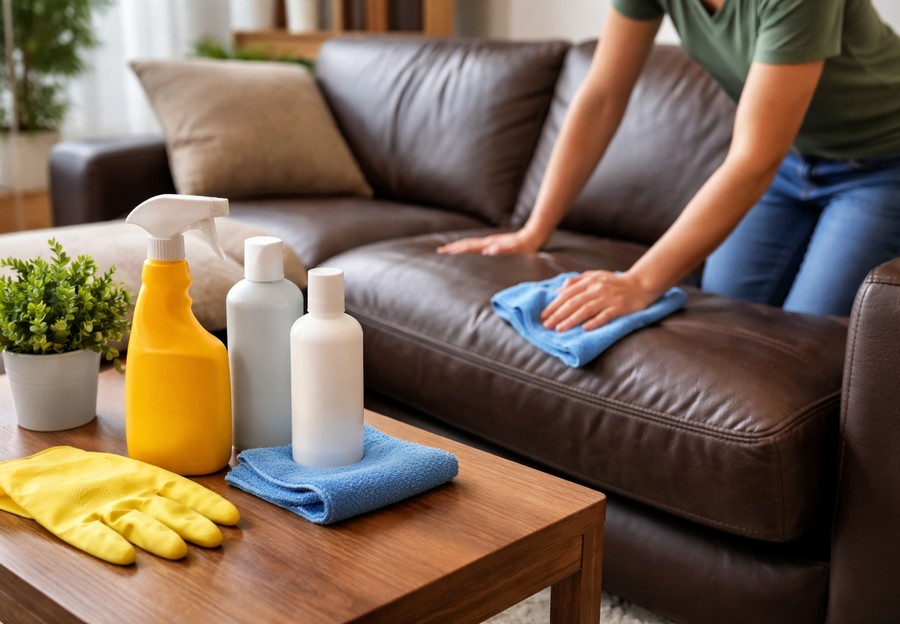
The first step in protection is surface cleanliness before wrapping. Dirt particles trapped under protective covers become abrasive during vibration. Wiping surfaces lightly with a dry microfiber cloth removes loose grit and reduces scratch risk. Avoid heavy cleaners immediately before packing because residual moisture can become trapped.
Conditioning leather lightly before a move can help maintain flexibility, especially in dry climates. Leather care studies show that conditioned hides resist cracking better during humidity changes. Avoid over conditioning, which can leave residue that attracts dust.
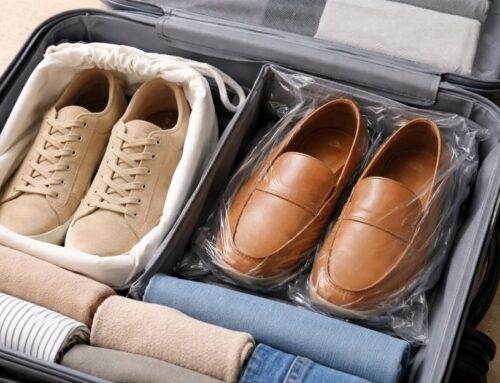
Direct plastic contact should be avoided whenever possible. Plastic films can trap heat and moisture against leather and vinyl surfaces. In warm conditions, plastic can soften and imprint texture onto delicate finishes. Conservation studies in museums often recommend using a breathable fabric barrier between plastic and sensitive surfaces.
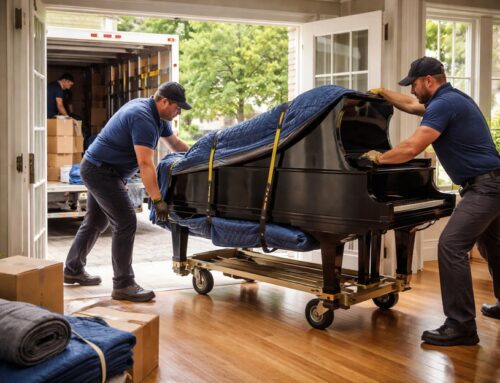
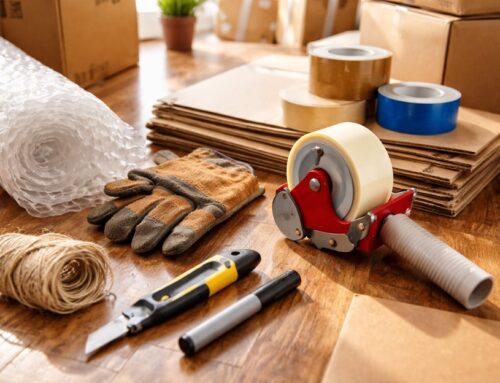
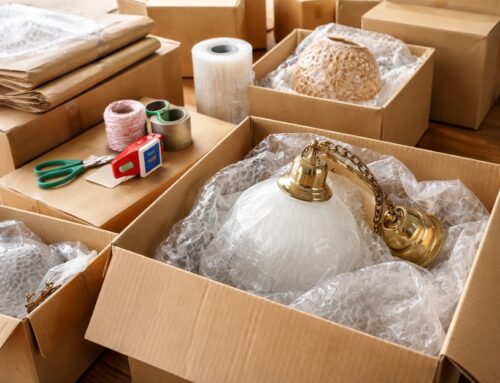
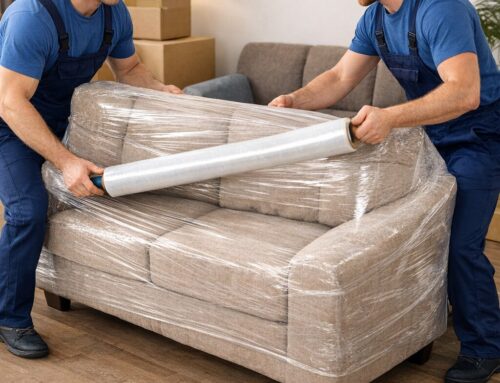
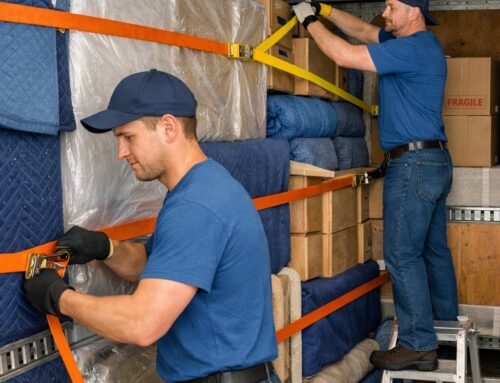
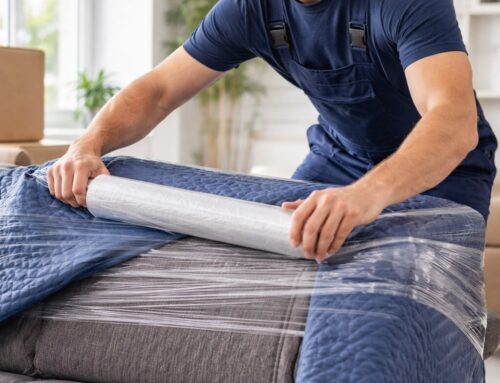
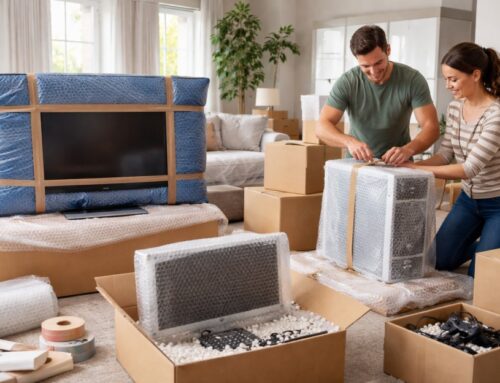
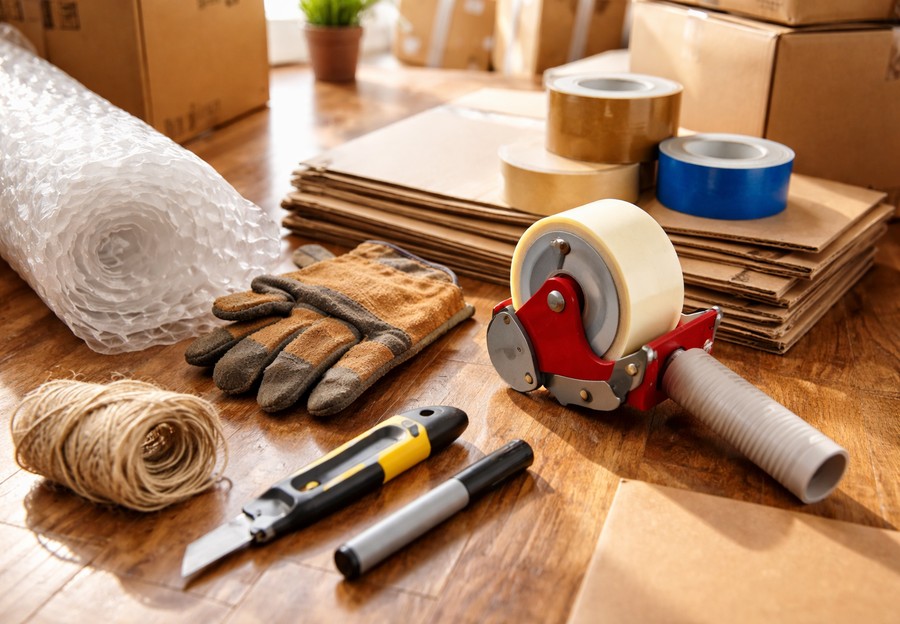
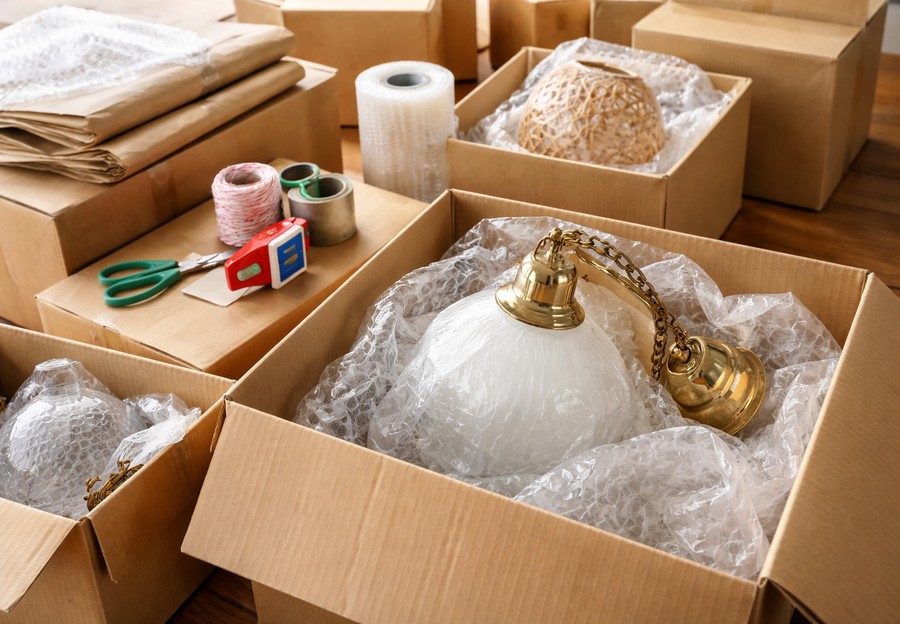
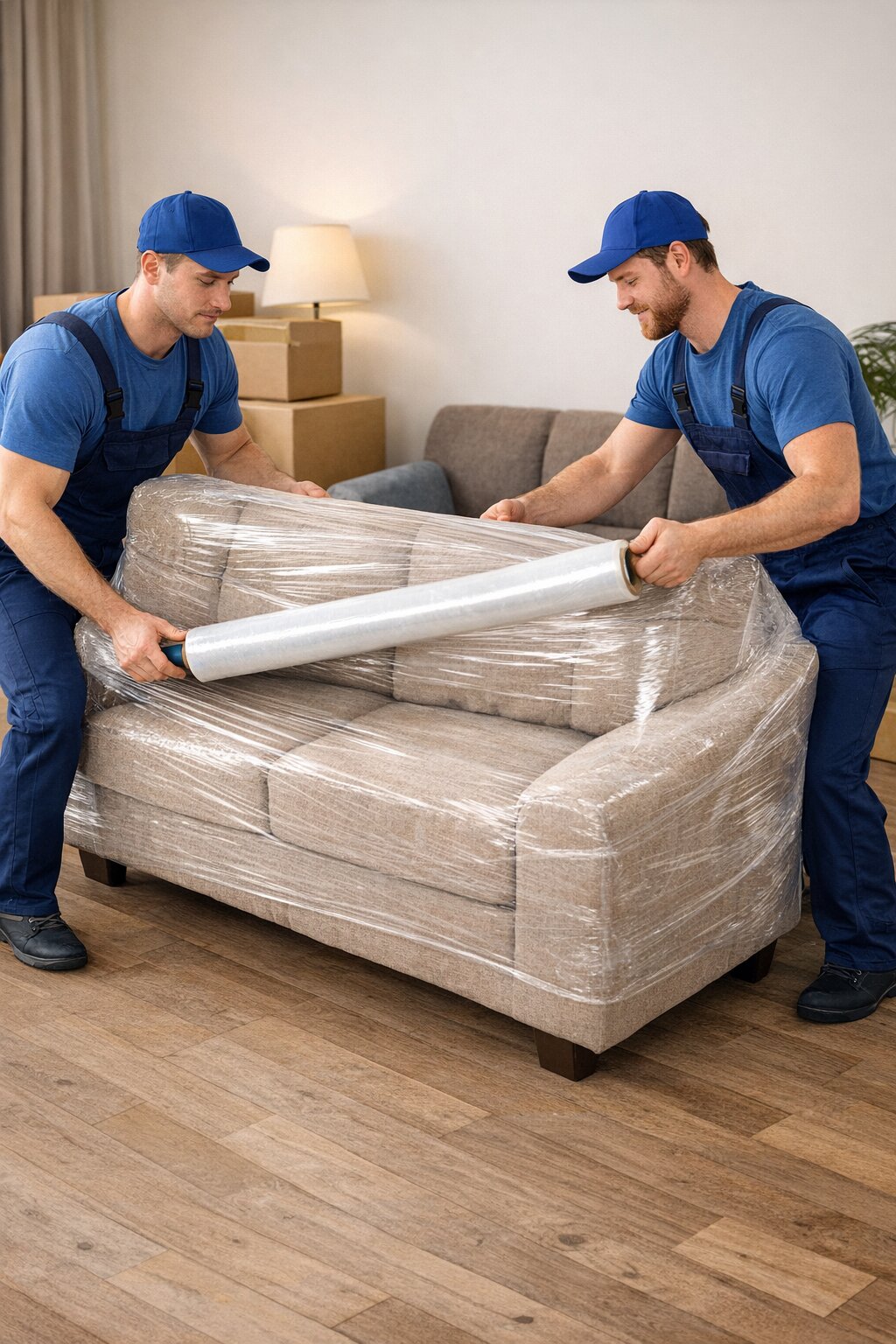
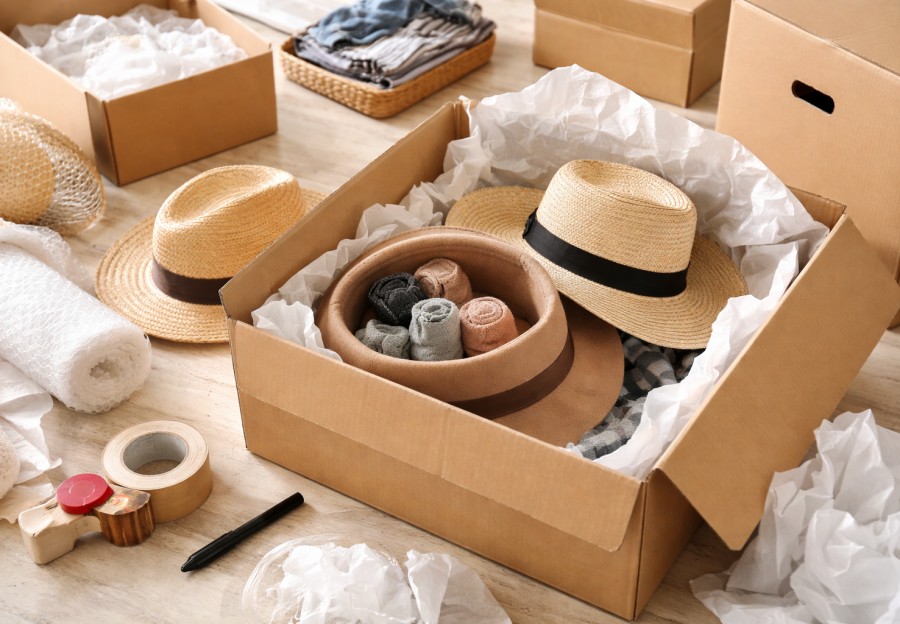
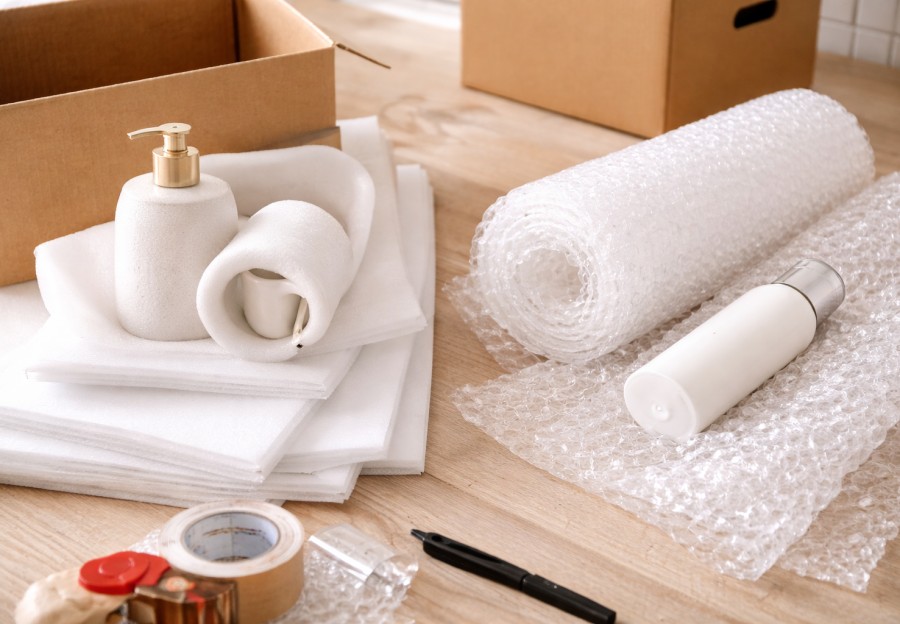
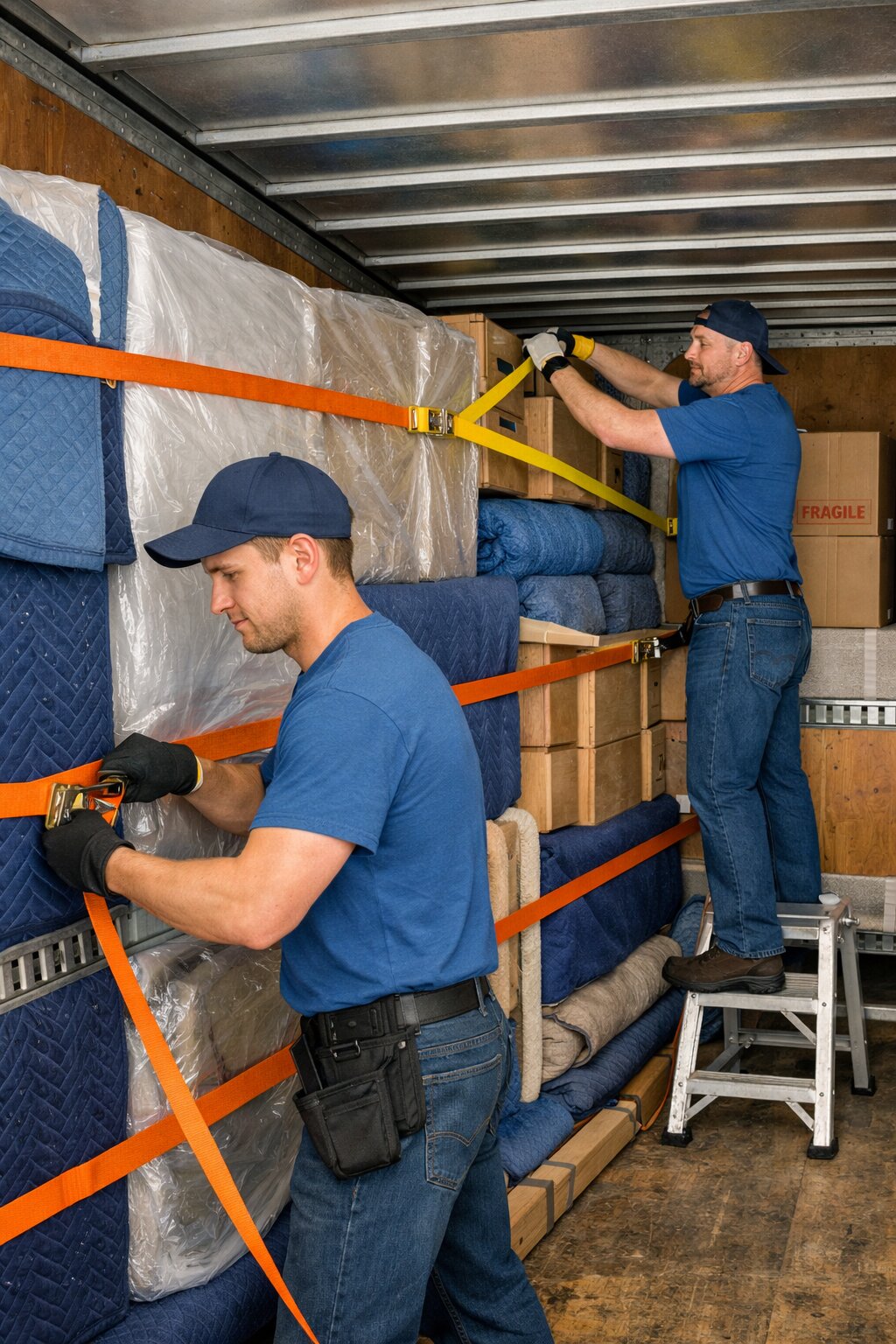
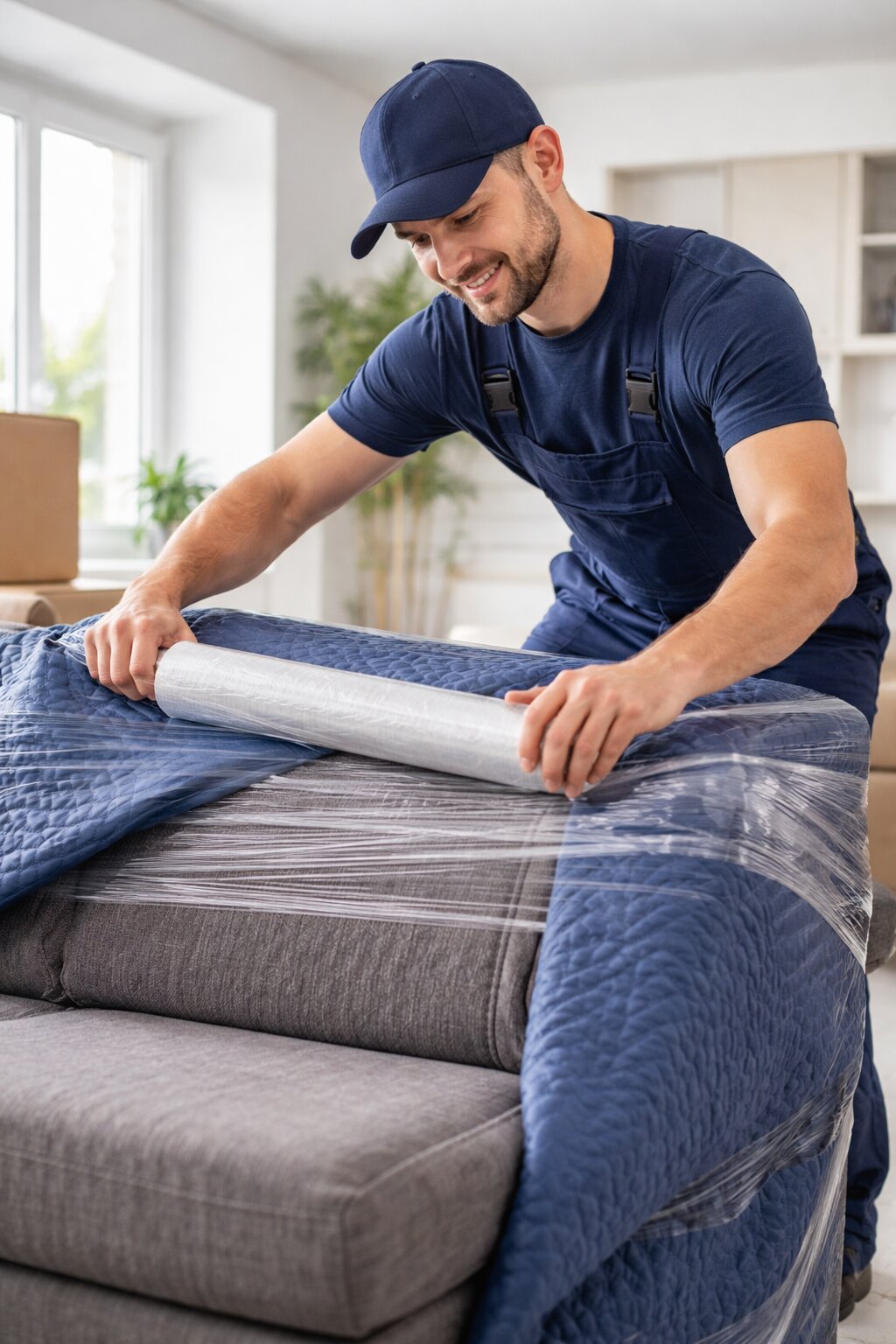
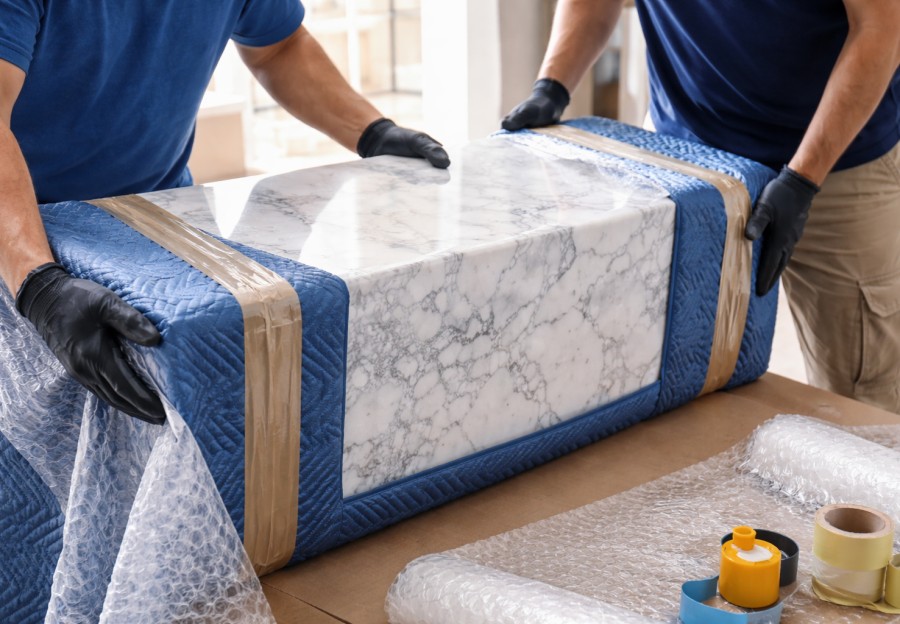
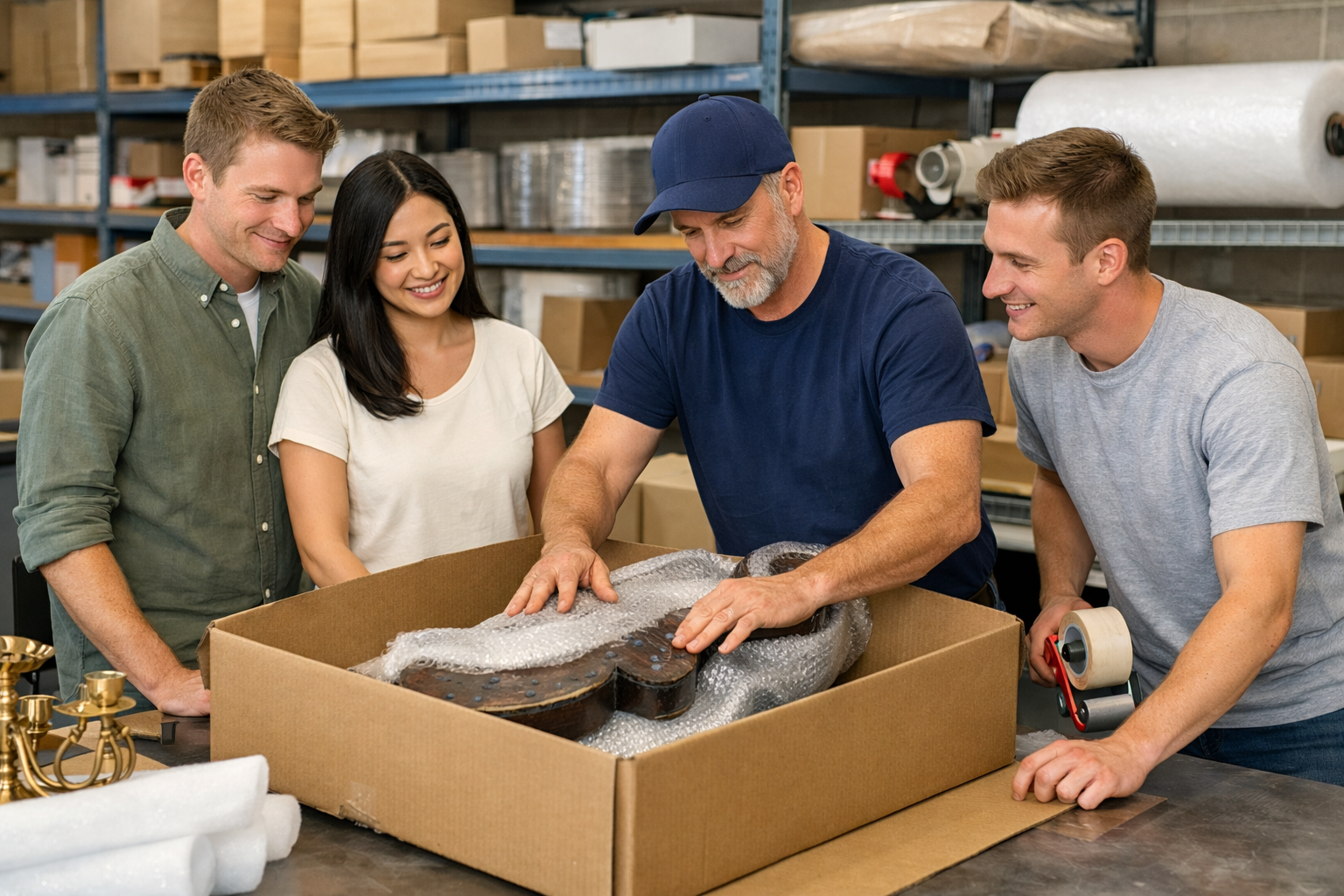
The best protection uses layered coverage. A soft breathable layer such as cotton sheets or furniture pads goes directly against the upholstery. This prevents abrasion and allows moisture to dissipate. A secondary outer wrap such as stretch film or shrink wrap holds the padding in place and protects against dust and light moisture exposure without directly contacting the surface.
Stretch wrap plays an important role when used correctly. Packaging engineering research shows that stretch film increases load stability and reduces movement during vibration by more than 30 percent when properly applied. By securing padding tightly, it prevents shifting that leads to scuffing and pressure points. The key is keeping the wrap over the padding rather than directly on the upholstery.
Cushion management matters. Loose cushions should be removed and wrapped separately rather than left on the frame where they can shift, trap pressure, or rub. Foam compression studies show that independent cushioning reduces long term deformation risk.
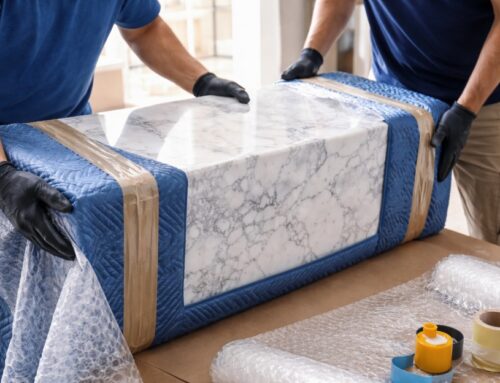
Legs, arms, and protruding trim deserve extra attention. These areas experience the highest contact and impact during handling. Adding additional padding at corners distributes force and reduces finish damage. Structural mechanics research shows that stress concentrates at edges and joints during handling.
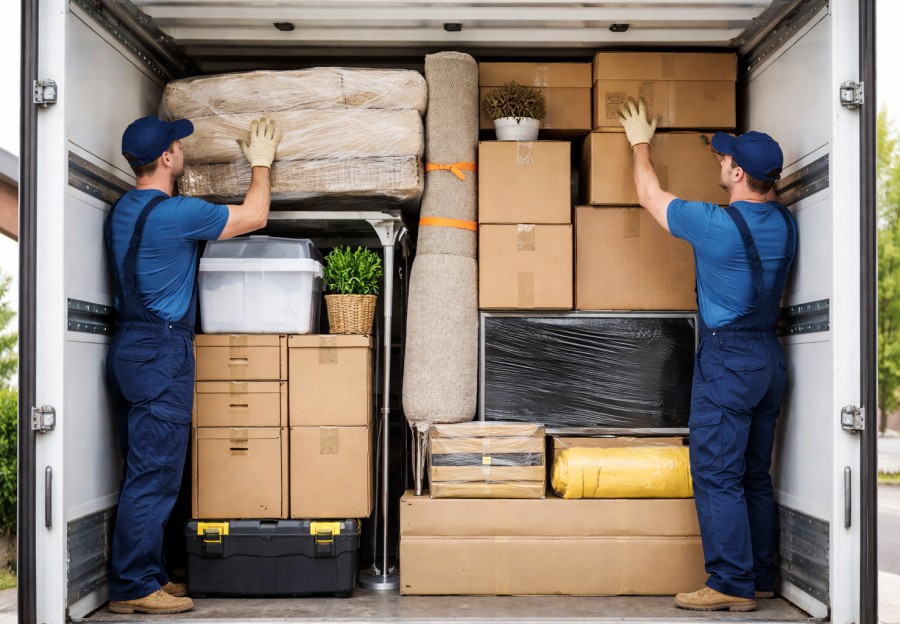
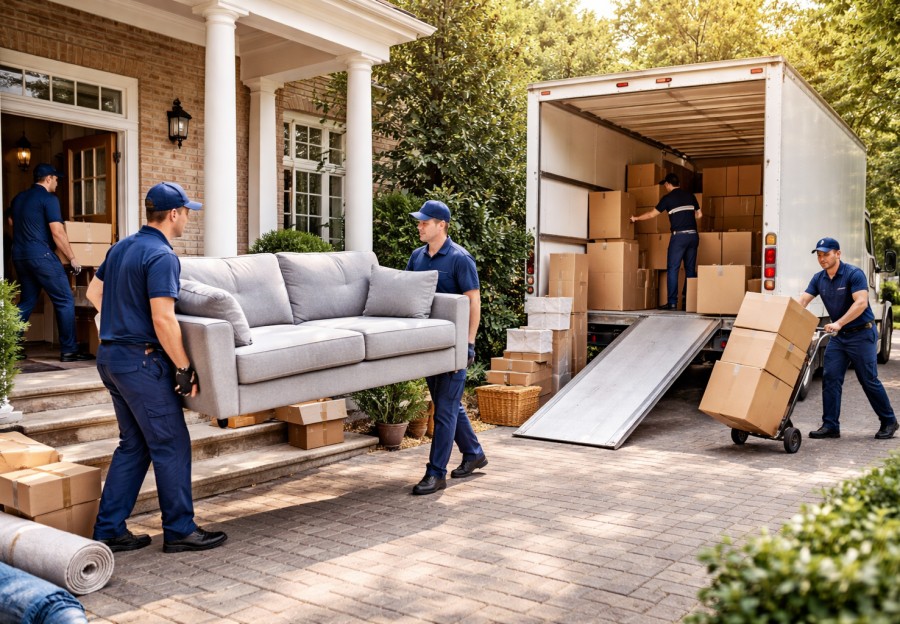
Orientation inside the truck affects outcome. Vinyl and leather furniture should never be placed where heavy items press directly against broad seating surfaces for extended periods. Transportation safety research shows that bottom layers absorb the highest compression forces during braking. Placing upholstered furniture vertically against padded walls or between mattresses reduces compression exposure while allowing air circulation.
Avoid stacking directly on leather or vinyl whenever possible. Even light items can leave pressure impressions over long drives, especially in warm conditions. Foam memory effects become more pronounced when heat softens material structure.
Sun exposure should be minimized. Ultraviolet light degrades dyes and polymers over time. Even short periods of direct sun through open truck doors or staging areas can accelerate fading. Covering furniture promptly reduces UV exposure.
Temperature management matters for storage and long distance moves. If furniture will sit in a truck or storage unit for extended periods, ventilation and temperature moderation reduce material stress. Storage industry studies show that climate controlled environments significantly extend upholstery lifespan compared with uncontrolled spaces.
Moisture barriers should be used thoughtfully. If rain or snow is present during loading, an outer moisture resistant wrap protects padding from soaking. Once indoors or in dry conditions, allowing some airflow prevents trapped humidity.
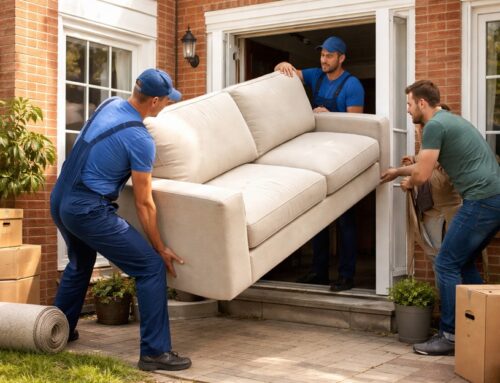
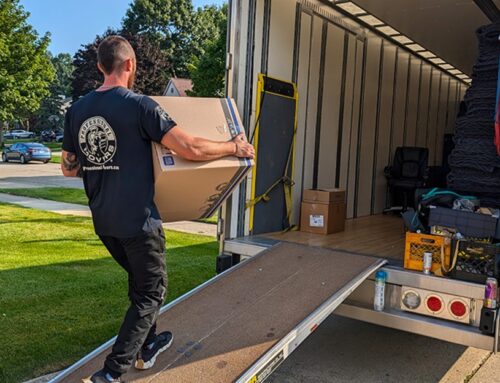
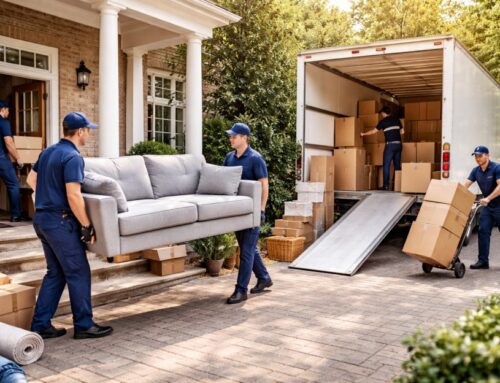
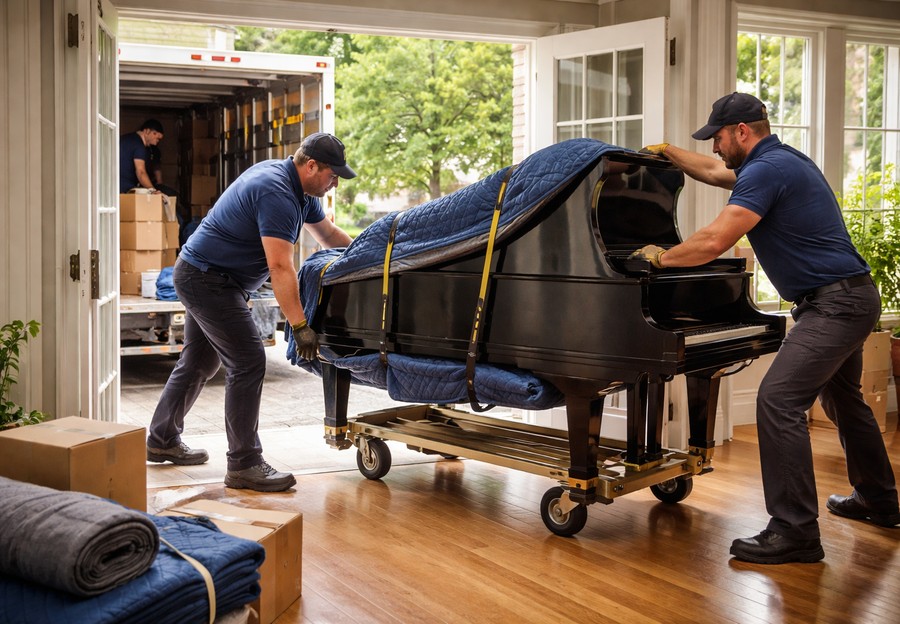
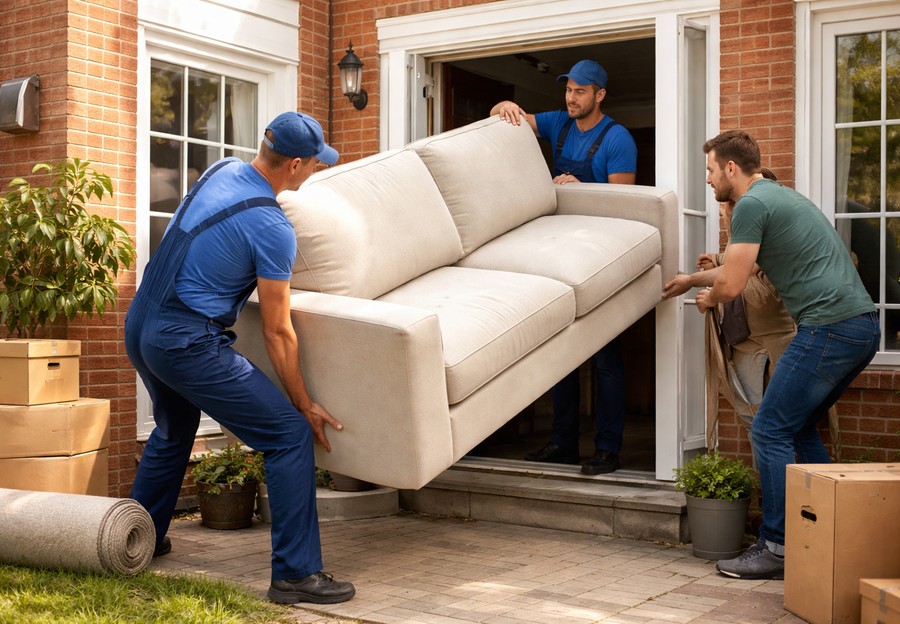
Handling technique matters as much as wrapping. Dragging vinyl or leather across rough surfaces scuffs coatings quickly. Lifting and controlled placement reduce abrasion risk. Occupational safety research also shows that proper lifting reduces injury risk, which indirectly reduces accidental drops or scrapes.
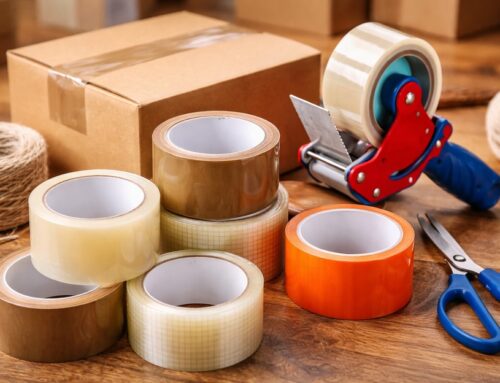
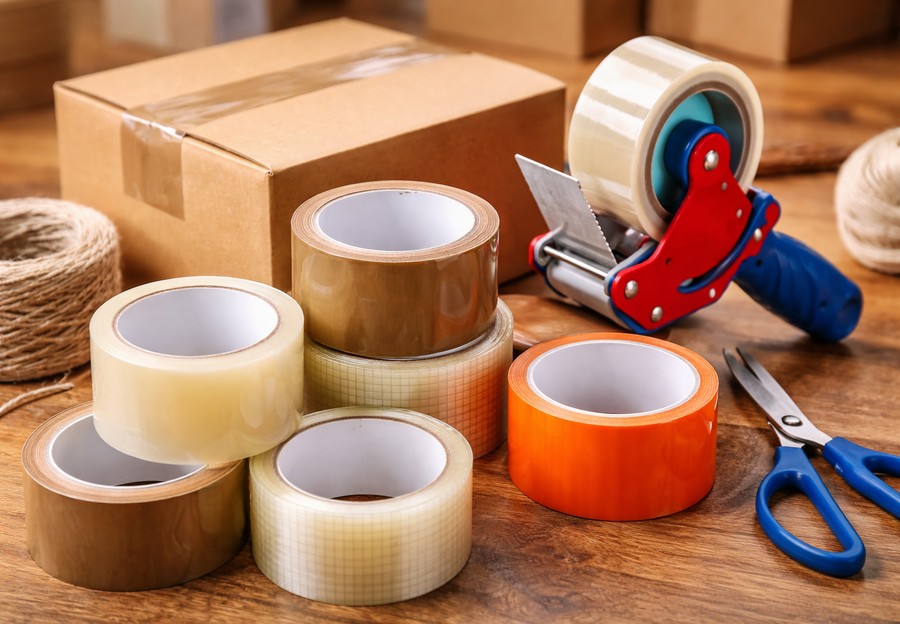
Avoid placing adhesive tape directly on upholstery. Tape residue can pull finish layers or leave stains that require professional cleaning. Use tape only on protective coverings, never on exposed surfaces.
If furniture includes recliner mechanisms or adjustable components, secure moving parts so they do not shift during transit. Mechanical vibration studies show that repeated micro movement accelerates wear in hinges and linkages.
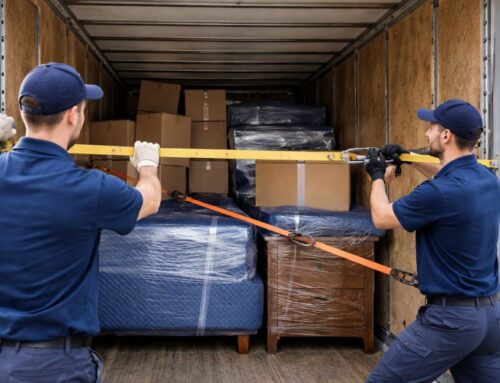
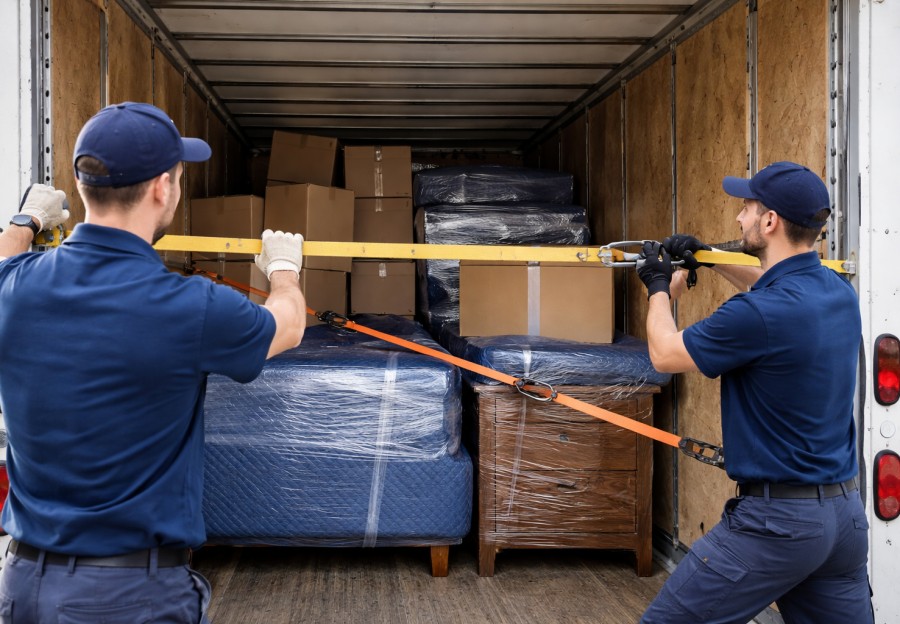
For long distance moves, periodic load checks can identify shifting or compression before damage becomes permanent. Professional movers often re tension straps during transit stops to maintain load stability.
Unpacking deserves patience as well. Remove outer wrap first, then allow furniture to acclimate to indoor temperature before removing breathable padding. Sudden temperature changes can cause condensation on cool surfaces. Allowing gradual equilibration reduces moisture stress.
Inspect surfaces carefully before placing furniture into final position. Early detection of scuffs or pressure marks allows faster remediation. Some minor compression marks recover naturally after several hours as foam and materials relax. Foam recovery research shows that elastic rebound improves when pressure is removed gradually.
Avoid placing newly unwrapped furniture directly against heat sources such as radiators or sunny windows. Rapid heating can dry leather unevenly and accelerate vinyl softening.
Cleaning after unpacking should be gentle. Avoid harsh solvents or abrasive cloths. Manufacturer care guidelines emphasize mild cleaners and soft fabrics to preserve surface coatings.
Cost prevention reinforces the value of this care. Consumer repair pricing surveys show that professional leather refinishing often starts in the hundreds per panel, while replacement panels or cushions escalate quickly. Spending modestly on proper padding and wrap prevents these downstream costs.
Environmental responsibility also benefits. Furniture production carries significant material and energy footprint. Sustainability studies consistently show that extending product lifespan reduces environmental impact more effectively than recycling after damage.
There is also a comfort factor. Leather and vinyl seating often anchors living spaces and daily routines. Preserving its look and feel supports emotional continuity in a new home. Behavioral research shows that familiar comfort items reduce stress during transitions.
Timing matters. Pack upholstered furniture after most dust producing packing is complete so surfaces remain clean. Avoid leaving wrapped furniture in direct sun or damp environments longer than necessary.
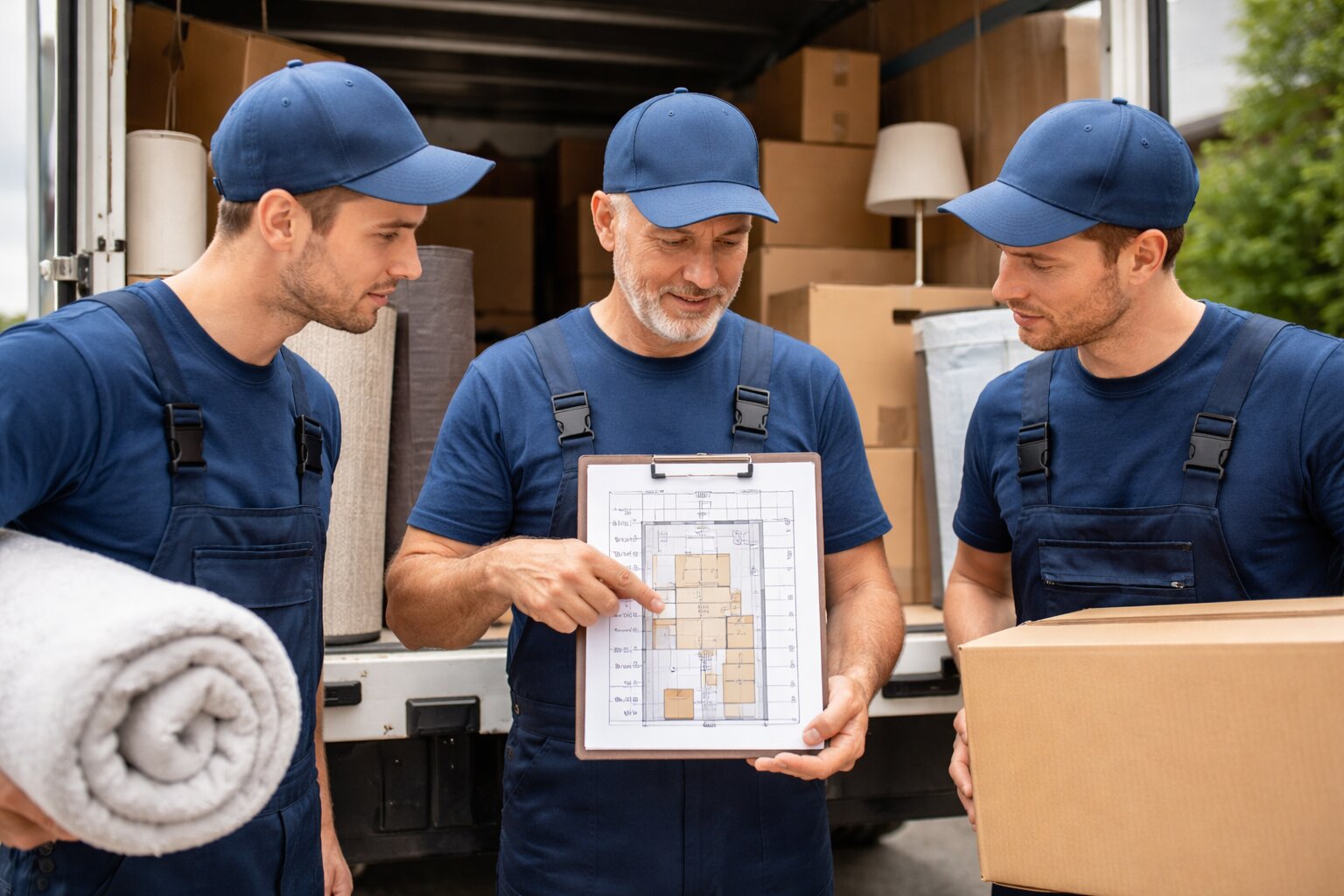
If your furniture is particularly high value or antique, professional packing services may be worth considering. Custom crating and breathable covers provide additional protection for premium pieces. Cost comparison data often shows that one avoided repair justifies professional handling.
The core principles remain consistent regardless of furniture size or style. Keep surfaces clean. Avoid direct plastic contact. Use layered breathable padding. Secure padding with stretch wrap. Protect corners and protrusions. Remove loose cushions. Avoid compression under heavy loads. Minimize heat and sun exposure. Manage moisture. Handle with care. Allow gradual acclimation on arrival.
Vinyl and leather are durable in everyday life but sensitive under transport stress. Treating them as precision finishes rather than rugged surfaces preserves their beauty and longevity.
A move already carries enough uncertainty. When your seating arrives clean, unmarked, and comfortable, the new space immediately feels settled rather than compromised. A small investment in thoughtful protection grounded in real materials science and logistics experience delivers peace of mind and long term value.