May 4, 2026
How to set up a kids’ space quickly post-move
When you move with children, the boxes are not the hardest part. The hardest part is helping a child feel safe, settled, and grounded in a brand new space that smells different, sounds different, and looks unfamiliar. Research from the American Academy of Pediatrics shows that routine and predictability strongly influence how children regulate stress, sleep quality, and emotional security after major life changes. A fast, thoughtful setup of a child’s space helps restore that sense of normalcy sooner than most parents realize.
Children process change differently than adults. Adults see progress in unpacked boxes and furniture placement. Kids see disruption of bedtime rituals, missing favorite toys, and unfamiliar shadows at night. Developmental psychology studies show that younger children rely heavily on environmental cues for emotional regulation, while school age children rely on personal ownership of space to regain control and identity. A prepared kids’ space supports both needs at once.
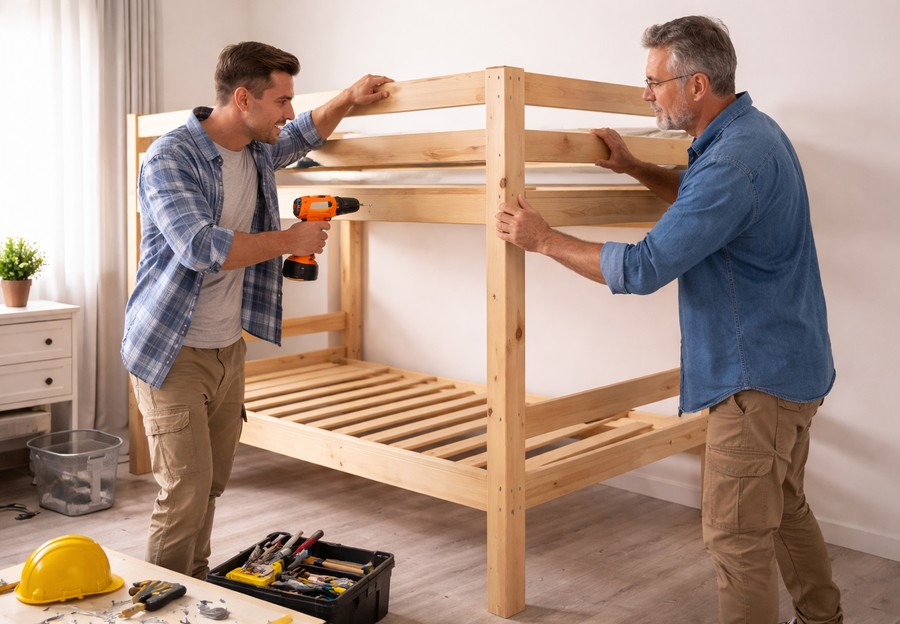
The first priority should always be sleep. Sleep disruption affects mood, attention, immune function, and emotional resilience. The National Sleep Foundation reports that school age children typically need nine to eleven hours of sleep per night, while preschoolers often need ten to thirteen. After a move, even small sleep deficits accumulate quickly and show up as irritability, clinginess, or regression in routines. Setting up the bed, bedding, favorite pillow, stuffed animals, and nightlight on day one sends a powerful signal that home life continues here.
Start with the familiar. Use the same bedding, pajamas, bedtime books, and lighting setup used in the previous home. Sensory continuity matters. Sensory research shows that familiar textures and smells activate comfort responses in the brain and reduce cortisol levels during stressful transitions. Even something as small as a familiar blanket can stabilize nighttime anxiety.
Lighting deserves careful attention. New rooms often have different window exposure and artificial lighting tone. Harsh overhead lighting can increase alertness at night. Sleep hygiene studies show that warm low lighting in the evening supports melatonin production and faster sleep onset. If the room lighting feels too bright or cold, use lamps or nightlights to recreate the previous bedtime environment as closely as possible.
Once sleep is anchored, move to play and comfort. Children need a space where they can engage in normal play without navigating towers of boxes. Play supports emotional processing and stress regulation. Pediatric behavioral studies show that children use play to rehearse new environments and regain a sense of mastery. Clearing even a small open floor area and placing a few favorite toys allows children to decompress while adults continue unpacking.
Avoid overwhelming the room with everything at once. Visual overload increases cognitive fatigue. Environmental psychology research shows that clutter raises stress hormones and reduces attention span in children. Select a limited number of high value toys and books initially, then rotate additional items in gradually over the first week.
Storage solutions can remain simple at first. Open bins, baskets, and low shelves allow children to find and return items independently. Independence supports confidence and reduces frustration during the adjustment phase. Child development research consistently links autonomy in daily routines with faster emotional adaptation after change.
Safety comes early in setup. New homes present unfamiliar hazards such as different outlet placements, door swing directions, balcony access, or stair locations. Injury surveillance data shows that household accident risk increases during periods of environmental change. Secure basic safety items such as outlet covers, furniture anchoring for tall dressers, and window locks before allowing unsupervised play in the room. Quick safety setup reduces constant monitoring stress for parents and allows children more freedom to explore safely.
Next comes personal identity. Let children participate in small choices such as where their bookshelf goes or which wall their bed faces. Decision making increases perceived control, which behavioral research shows reduces anxiety during transitions. Even small choices give children ownership over the new space and strengthen emotional attachment.
Photos, artwork, and familiar wall decor help bridge emotional continuity. Visual memory research shows that familiar images activate positive emotional associations and improve comfort in unfamiliar environments. Hanging a few favorite drawings or family photos early makes the room feel personal rather than temporary.
Noise management matters more than many families expect. New neighborhoods bring new sound patterns such as traffic, neighbors, elevators, or different plumbing noise. Acoustic studies show that unpredictable nighttime noise disrupts sleep quality in children more than consistent background noise. White noise machines or fans can mask unfamiliar sounds and stabilize sleep during the adjustment period.
Temperature regulation affects sleep and comfort as well. Children are more sensitive to thermal discomfort. Pediatric sleep studies suggest that cooler bedroom temperatures support deeper sleep cycles. Test the room at night and adjust bedding layers or thermostat settings as needed during the first few nights.
Screen placement should be deliberate. While screens can feel comforting during transition, excessive screen exposure close to bedtime interferes with sleep quality. Sleep medicine research shows that blue light exposure suppresses melatonin production and delays sleep onset in children. Keep screens out of the sleep zone if possible and prioritize quiet activities such as reading or drawing before bedtime.
Clothing access helps restore routine independence. Unpack a basic capsule wardrobe rather than the entire closet. Having predictable access to school clothes, pajamas, and play outfits reduces morning friction and supports routine stability. Routine research shows that predictable morning flow improves school readiness and emotional regulation.
If the move involved changing schools or childcare, the bedroom becomes an even more important emotional anchor. Educational psychology research shows that environmental stability outside school supports academic adjustment and attention during transitions. A calm predictable bedroom environment buffers external change.
Scent also influences comfort. Familiar laundry detergent, stuffed animal scent, or lightly scented diffuser can trigger comforting associations. Olfactory neuroscience shows that smell connects strongly with emotional memory and security responses. Avoid strong new scents initially, which can feel overstimulating.
If siblings share a room, define personal zones quickly. Even small visual boundaries such as separate shelves or bedding colors support identity and reduce conflict. Family dynamics research shows that personal space reduces sibling friction during stressful transitions.
Time expectations should stay realistic. Behavioral adaptation studies show that children often need two to four weeks to fully adjust to a new environment depending on age and temperament. Temporary sleep regression or clinginess does not signal failure. It signals processing.
Keep routines consistent even if the physical space is still imperfect. Meal times, bath sequence, bedtime order, and morning rituals provide emotional anchors. Consistency research shows that predictable daily rhythm stabilizes stress responses in children during change.
Hydration and nutrition also support regulation. Stress often reduces appetite or increases sugar cravings. Pediatric nutrition studies link stable blood sugar levels with better mood regulation and attention in children. Keep familiar snacks available during unpacking chaos.
Limit adult stress spillover. Children mirror adult emotional tone. Family systems research shows that parental stress transfers quickly to children’s behavior and sleep patterns. Taking short breaks, staying hydrated, and pacing unpacking reduces emotional transmission.
From a cost perspective, setting up the kids’ space early prevents impulsive replacement purchases driven by stress. Consumer behavior studies show that rushed post move buying often leads to duplicate or unnecessary purchases. Using what you already own first saves money and reduces waste.
There is also a safety and health benefit. A functional kids’ space reduces the risk of children climbing unstable box stacks or wandering into unpacked tool areas. Injury prevention studies show that controlled play zones reduce accident rates during household transitions.
Environmental responsibility matters too. Reusing familiar furniture, decor, and storage rather than rushing to buy replacements reduces manufacturing demand and landfill waste. Sustainability research consistently shows that extending product lifespan has lower environmental impact than replacement.
Emotionally, the payoff is significant. Children who feel secure in their space adjust faster socially and academically after moves. Longitudinal child development studies show that environmental stability buffers stress related behavioral changes during relocation.
The setup does not need to be perfect. It needs to feel safe, familiar, functional, and calm. Bed first. Lighting and temperature next. A small play zone. Basic safety. Personal touches. Consistent routine. Everything else can evolve gradually.
Moving disrupts everyone, but children feel it most deeply because their world is smaller and more sensory driven. When their space comes together quickly, it gives them a stable island inside the larger chaos of relocation.
A settled child sleeps better. A rested child adapts faster. A calm child gives parents the breathing room needed to finish the rest of the move without constant emotional firefighting.
That is why setting up a kids’ space quickly is not just about convenience. It is about emotional health, behavioral stability, safety, and long term adjustment. A few focused hours spent creating familiarity pays dividends for weeks afterward.
When your child curls up comfortably in their familiar bed on the first night and reaches for the same bedtime book they always loved, the new house starts to feel less like a strange building and more like home.