April 22, 2026
How movers avoid tipping furniture over rails
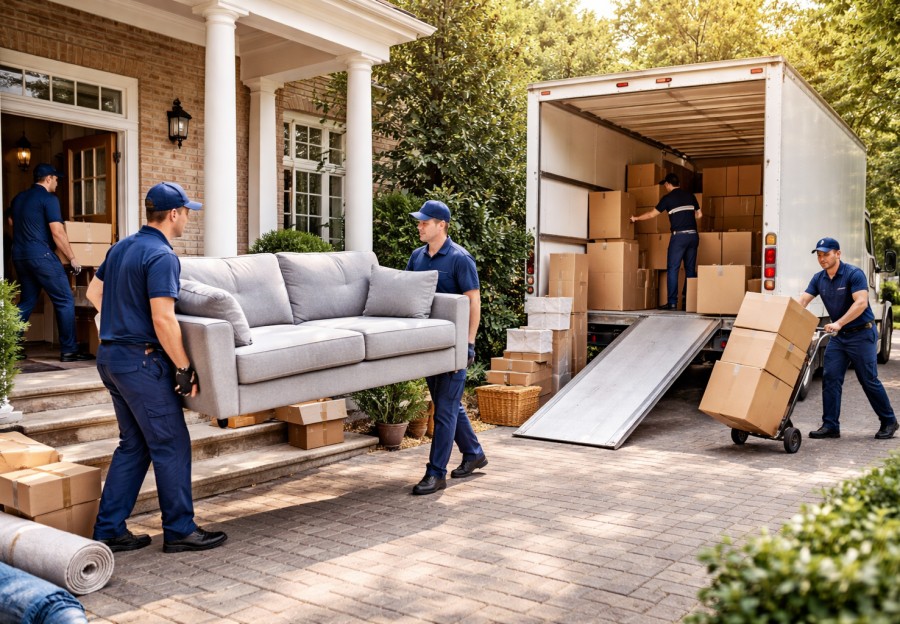
Few moments during a move feel as tense as carrying a heavy piece past a stair rail, balcony rail, or open edge. One wrong angle or sudden shift and gravity takes over. Professional movers treat these zones with extra caution because the physics change dramatically when a drop edge enters the picture. Avoiding tipping is not about strength or bravery. It is about understanding center of gravity, leverage, friction, pacing, and human fatigue, then controlling all of them at once.
Rails create a false sense of security. They look solid, but they are not designed to stop the momentum of a large piece of furniture. Residential railings are built primarily as fall barriers for people, not as load bearing restraints for several hundred pounds of moving mass. Building code studies show that many residential guardrails are designed to withstand around 200 pounds of lateral force at the top rail. A sofa or dresser tipping with momentum can exceed that force quickly. Relying on a rail to stop a falling item risks structural damage and serious injury.
The first risk factor is center of gravity. Every object has a balance point where its mass is evenly distributed. When that point shifts beyond the base of support, tipping begins. Tall narrow items such as bookcases and wardrobes have higher centers of gravity, which means they reach their tipping threshold sooner than wide low items like mattresses or sofas. Mechanical engineering research shows that tall objects require less angular movement to become unstable because the vertical projection of their mass travels farther with small rotations.
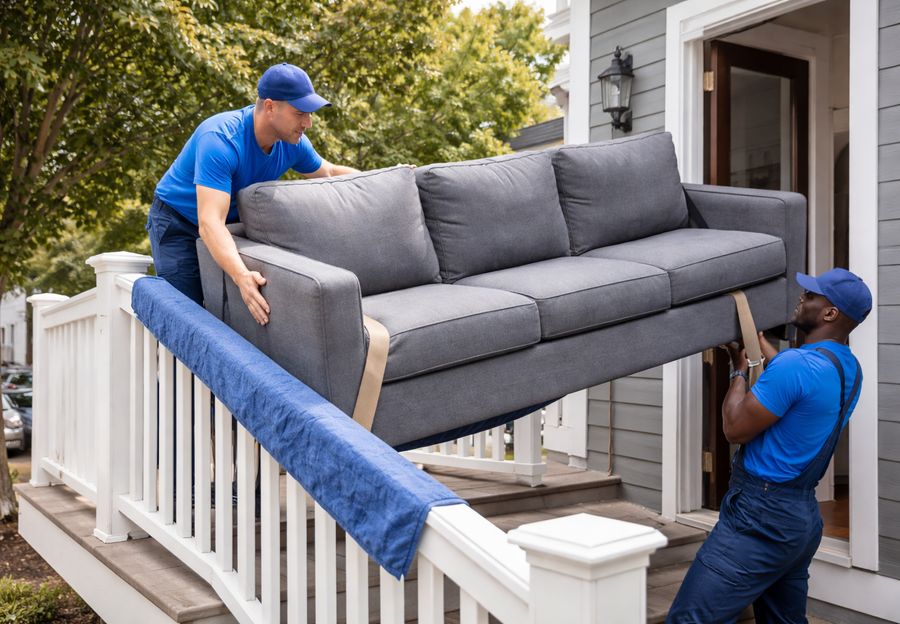
Rails reduce usable support area. When a mover walks close to a railing, the furniture cannot be stabilized on that side because there is no floor beyond the edge. This effectively narrows the safe footprint. The object may feel balanced until a tiny shift pushes its center of mass outside the remaining support zone. Once that happens, gravity accelerates the fall and human reaction time is often too slow to recover control. Human factors studies show that reaction time under physical load and fatigue is slower than during light tasks, increasing accident risk.
Professional movers start by controlling the path. They avoid hugging the rail whenever possible and maintain a buffer zone between the furniture and the edge. This buffer gives room for micro adjustments and prevents the center of gravity from drifting toward the drop zone. Spatial planning research shows that even small increases in lateral clearance significantly reduce collision and tipping incidents in constrained environments.
Grip position matters more than most people realize. Movers position hands low and wide on the load whenever possible. Lower grip points reduce leverage that could amplify rotation. Biomechanics studies show that controlling load closer to its base improves stability and reduces torque on the handler’s joints. High grip points may feel easier initially but increase the likelihood of tipping if the top begins to drift outward.
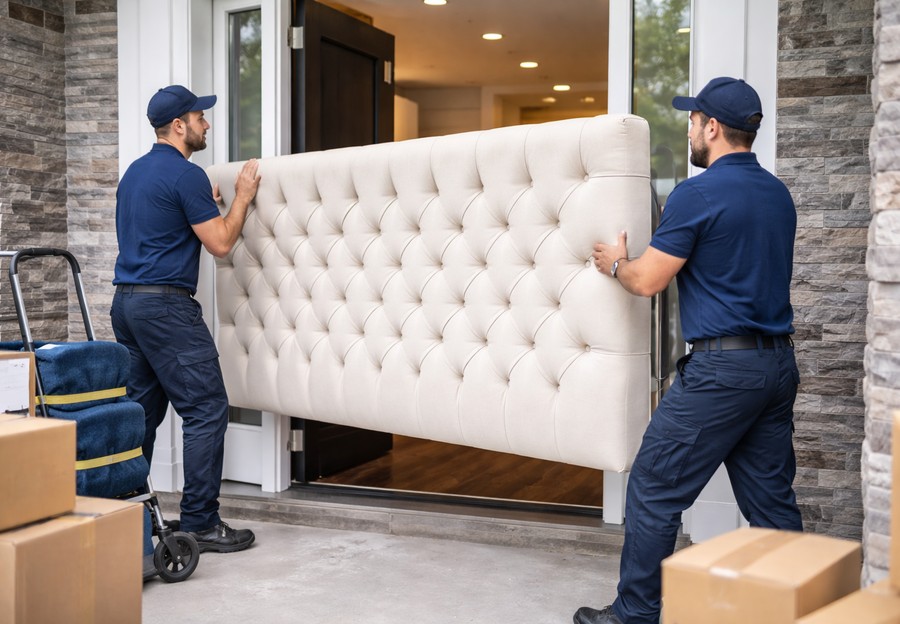
Load orientation is planned deliberately. Movers often rotate furniture so the widest or heaviest side faces away from the rail. This shifts the center of gravity inward toward the safe zone rather than toward open space. Furniture with uneven weight distribution such as recliners or cabinets with solid backs are oriented so the heavy side stays uphill or inward. Engineering balance studies confirm that directing mass toward the support side increases stability margin.
Pacing plays a huge role. Fast movement increases momentum and reduces reaction time. Slow controlled steps allow constant micro correction. Occupational safety research consistently shows that sudden acceleration and deceleration increase loss of control incidents during manual handling. Movers deliberately slow down near rails, corners, and thresholds even if it adds a few extra minutes to the job.
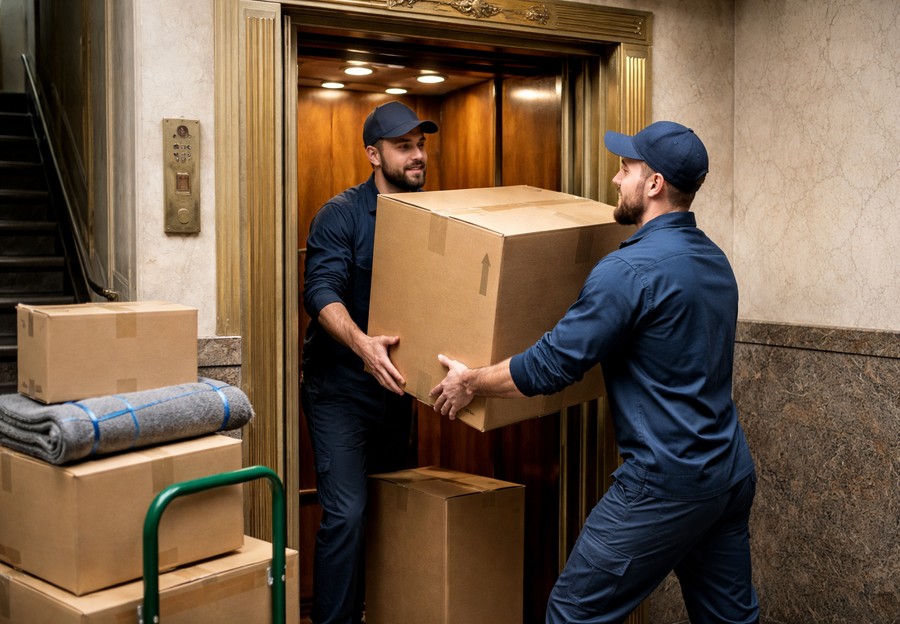
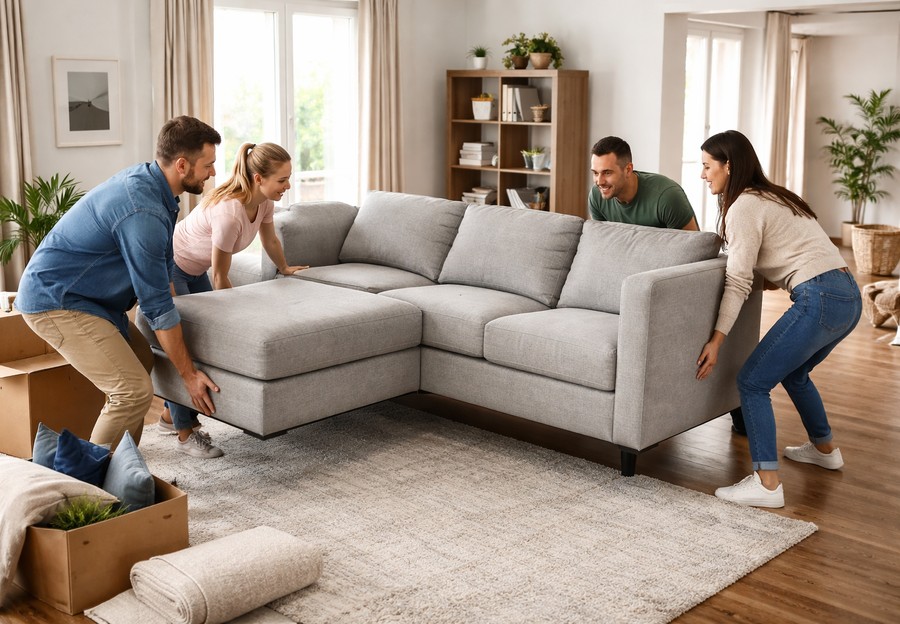
Communication between movers becomes tighter near rails. One person often calls out movement cues so both handlers move in sync. Unsynchronized steps create twisting forces that push the load sideways. Workplace coordination studies show that synchronized motion reduces lateral drift and improves control during complex carries.
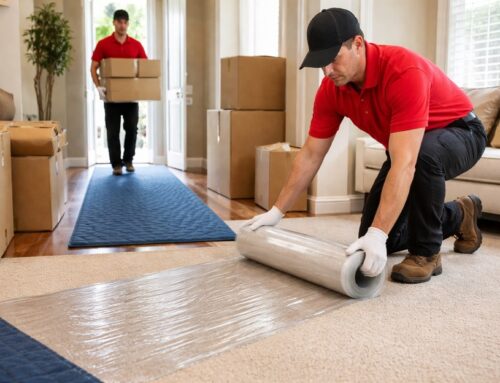
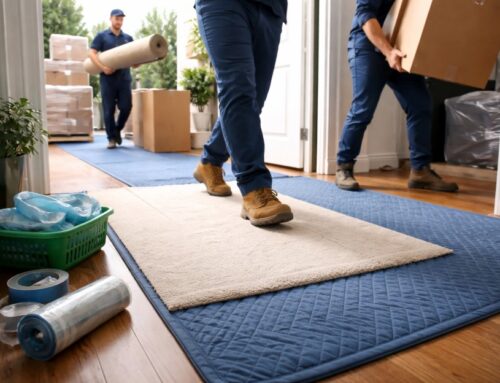
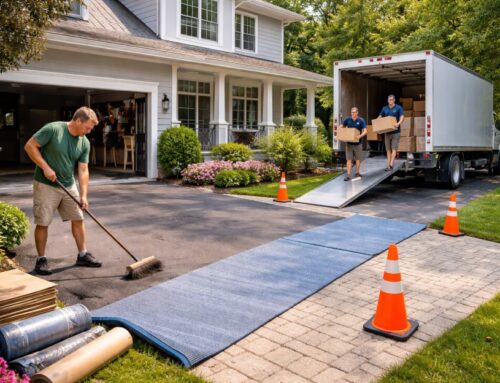
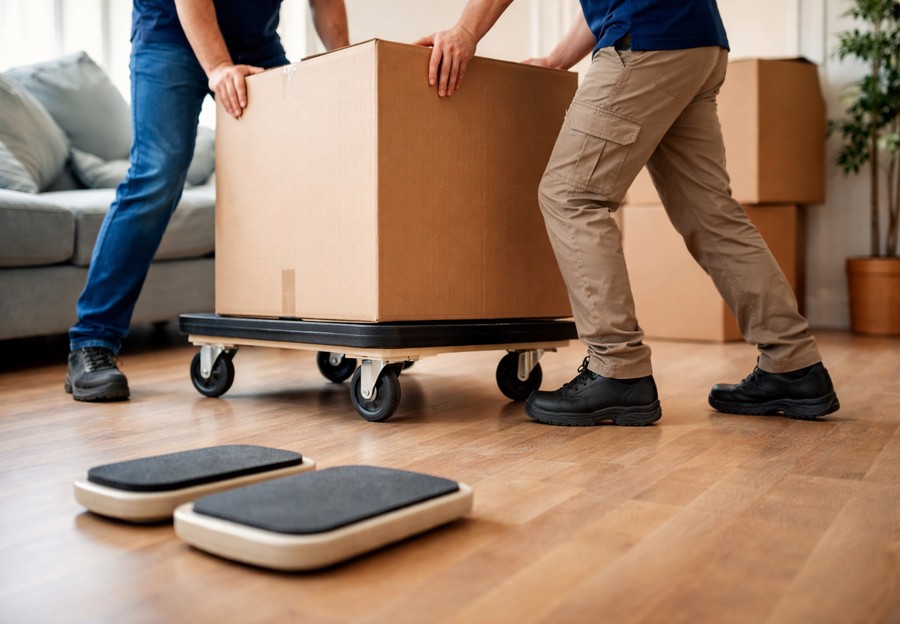
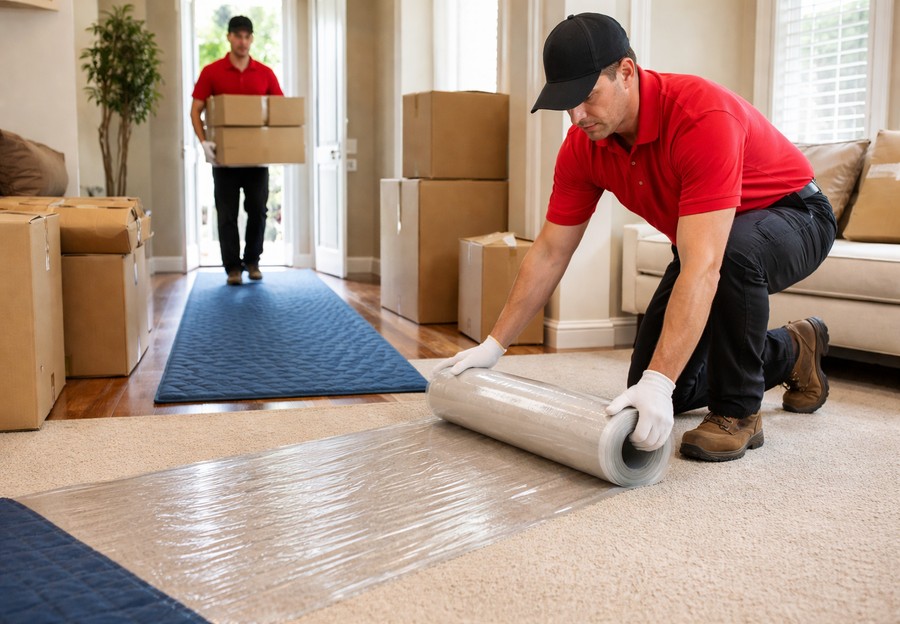
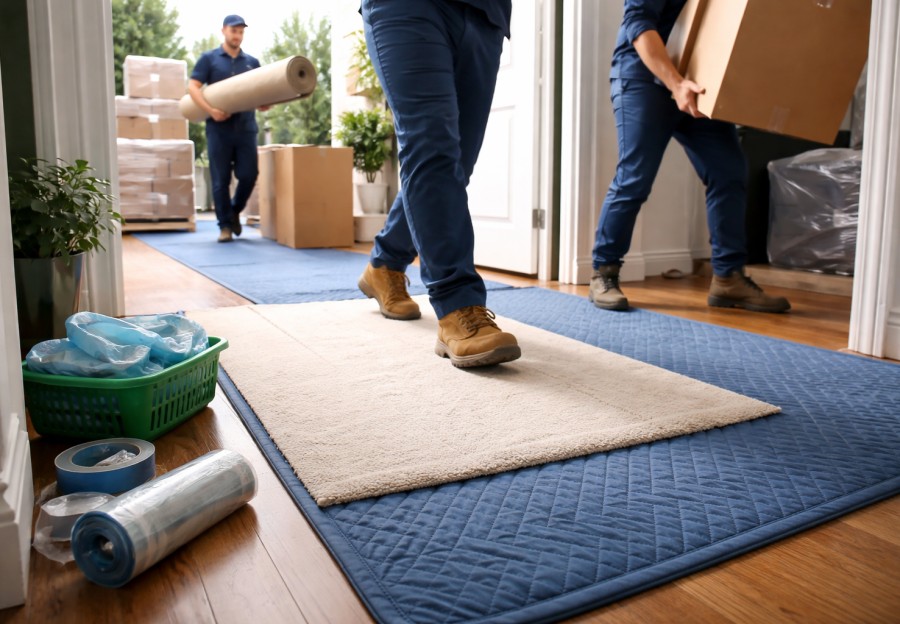
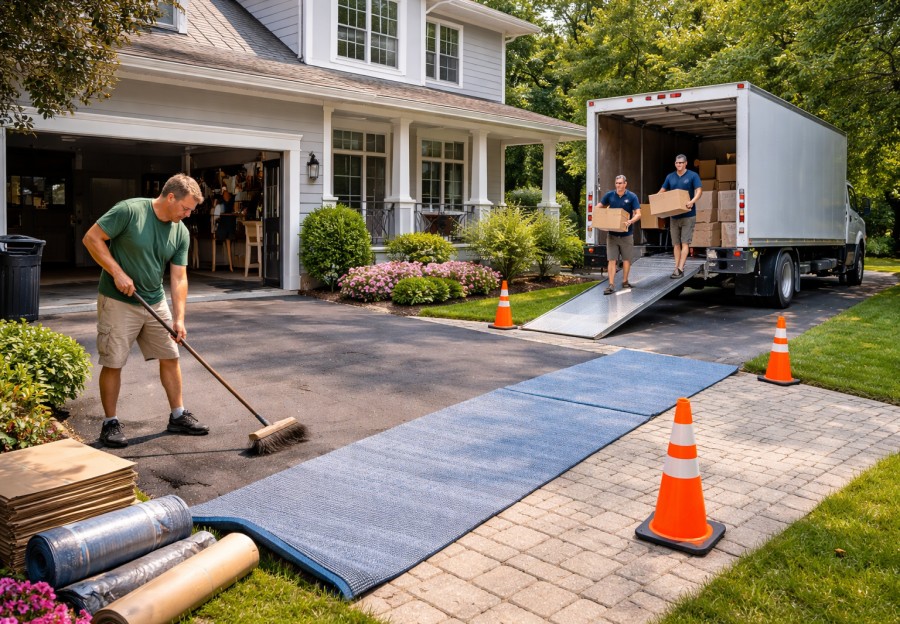
Footing quality influences everything. Slippery or dusty surfaces near rails increase slip risk and reduce braking control. Environmental safety studies show that friction loss dramatically increases fall and drop incidents under load. Movers often sweep or wipe rail-adjacent walkways and may lay runners to improve traction and surface protection. Shoes with good grip also matter more than people expect.
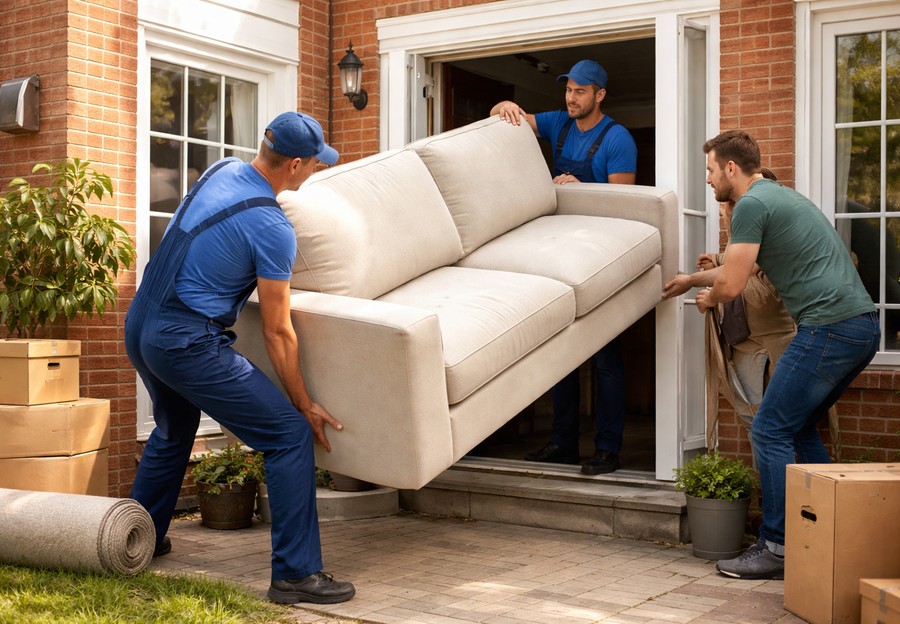
Another factor is body positioning. Movers avoid standing directly between the furniture and the rail where a sudden shift could pin them against the barrier or pull them outward. Instead they maintain a stance that allows retreat into open space if the load starts to drift. Injury surveillance data shows that crush and pinning injuries occur most often when workers are trapped between heavy objects and fixed barriers.
Angle management prevents rail contact in the first place. Rather than carrying furniture parallel to the rail, movers often angle the piece slightly inward. This keeps corners and edges from grazing the rail and creating sudden pivot points. Even light contact can act as a fulcrum that accelerates tipping. Physics shows that when an object rotates around a fixed contact point, angular momentum increases quickly.
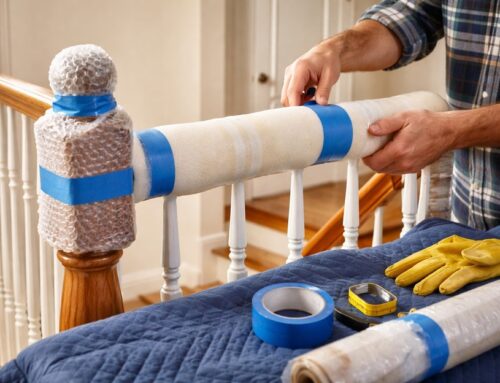
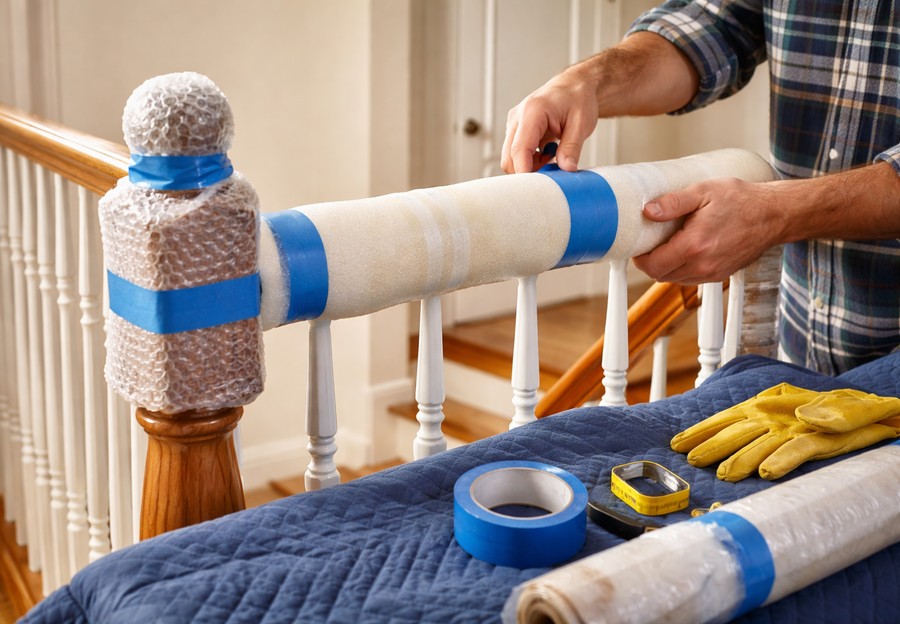
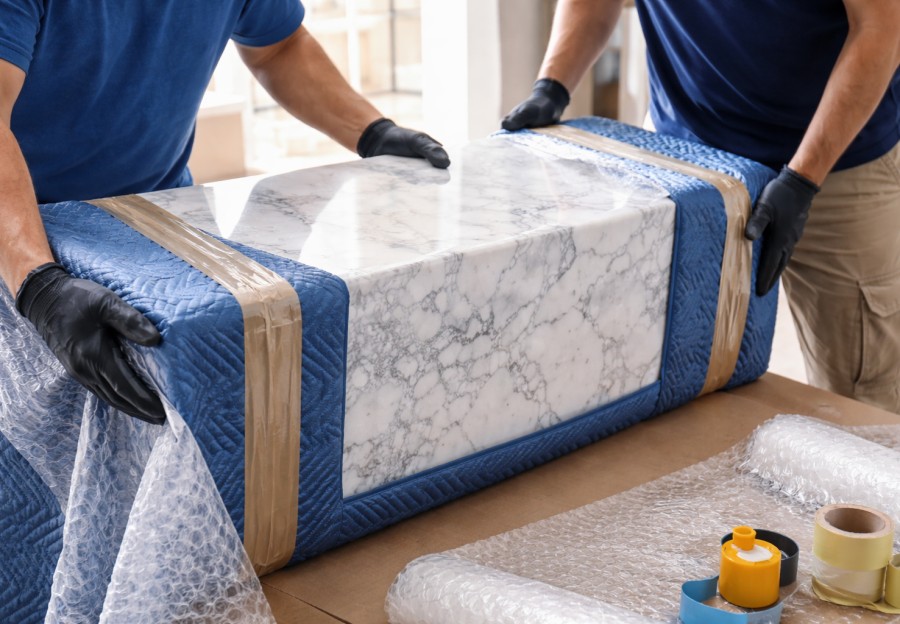
Padding also plays a safety role. Thick padding around corners reduces friction and absorbs minor bumps that could otherwise cause abrupt rotation. Materials handling studies show that padded surfaces reduce rebound forces and minimize sudden directional changes when contact occurs.
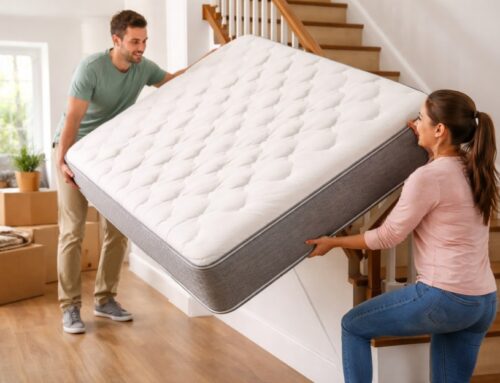
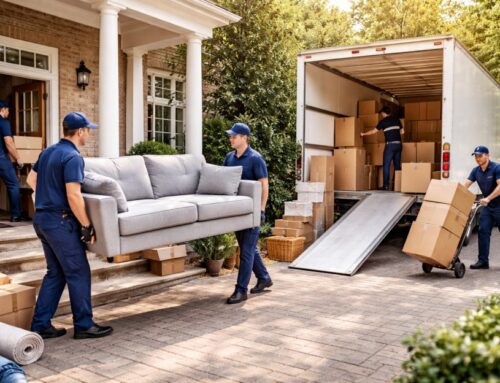
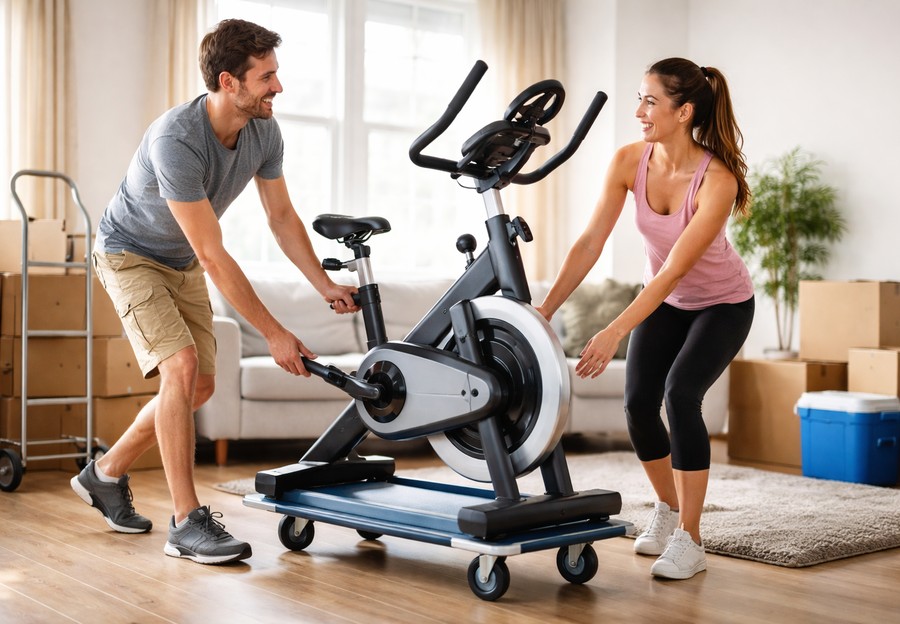
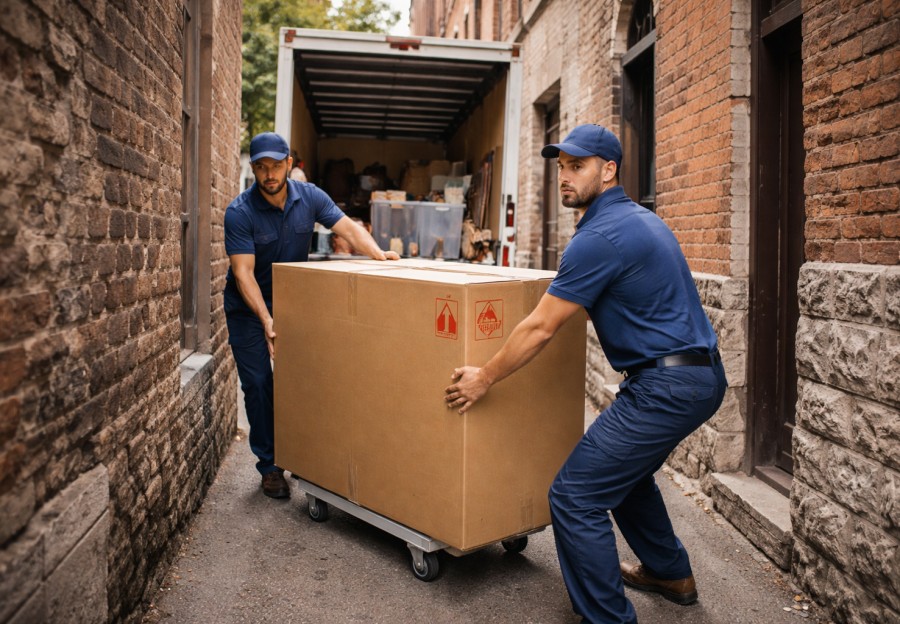
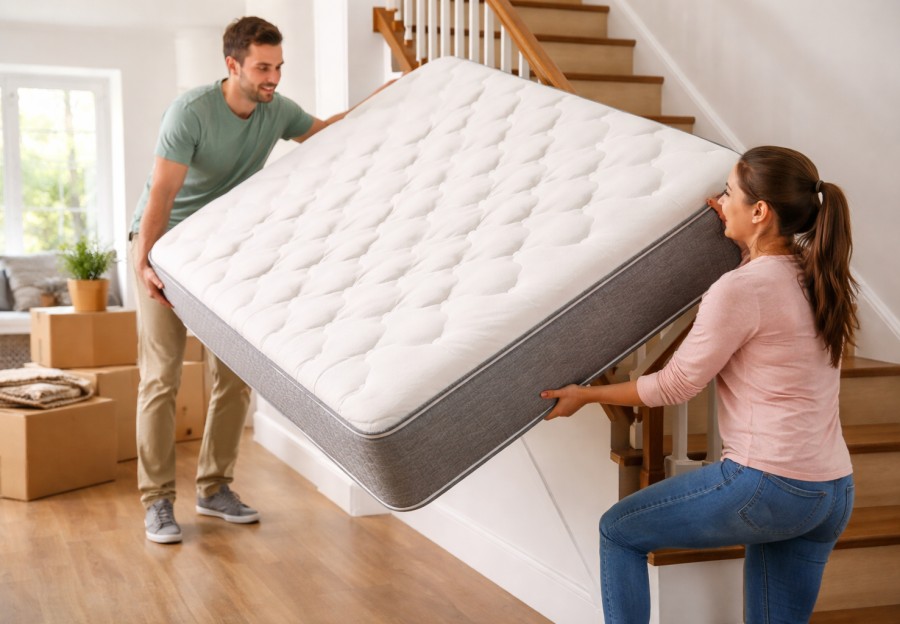
Weight distribution among handlers matters. On staircases or ramps near rails, the downhill person experiences more braking force while the uphill person manages lift. Biomechanics research shows that uneven force distribution increases fatigue and instability. Experienced movers adjust hand positions and step timing to maintain balanced control across the team.
Fatigue management cannot be ignored. As muscles tire, fine motor control decreases and grip strength weakens. Occupational fatigue studies show that injury risk rises significantly after prolonged manual work. Movers often schedule rail heavy carries earlier in the day when energy and focus are highest.
Environmental conditions add complexity. Wind on exterior balconies can introduce lateral forces. Rain increases slip risk. Heat increases fatigue and sweat, which reduces grip friction. Environmental safety data consistently shows that adverse conditions increase handling errors. Professional crews adjust pacing and staffing accordingly or delay risky maneuvers when conditions become unsafe.
Sometimes the smartest move is changing the route entirely. If a path forces furniture dangerously close to a rail with little margin for correction, movers look for alternative paths such as interior stairwells, wider doorways, or even hoisting options. Engineering risk assessments show that eliminating a hazard entirely is more effective than trying to control it repeatedly.
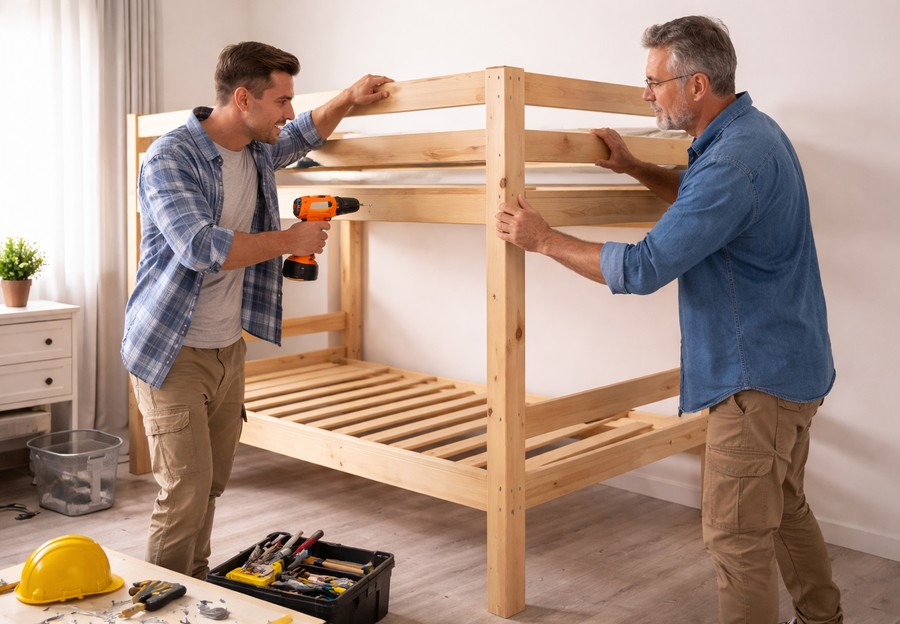
Disassembly reduces tipping risk significantly. Removing legs, shelves, drawers, or detachable components lowers the center of gravity and reduces width. Furniture manufacturing data shows that many pieces are designed for partial disassembly precisely to improve transport safety. Even small reductions in size can restore safe clearance margins.
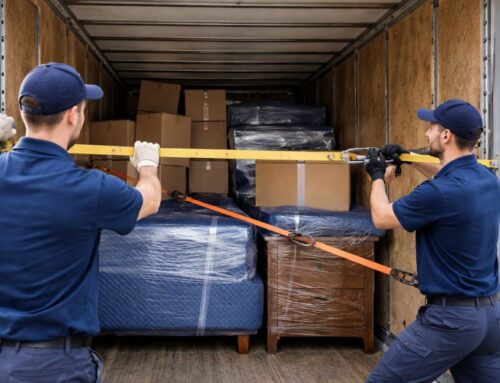
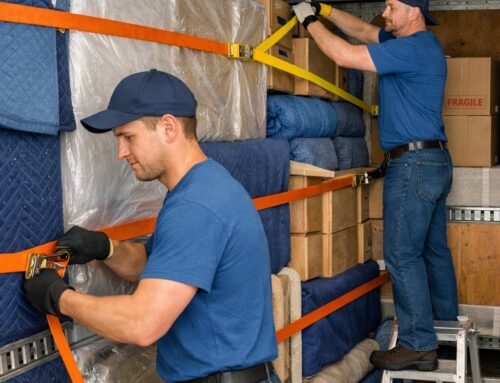
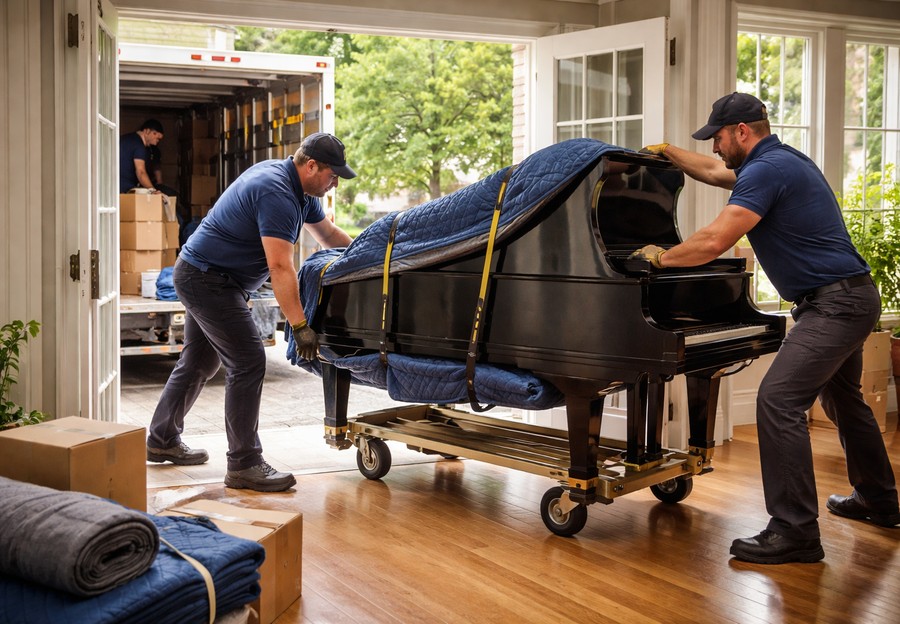
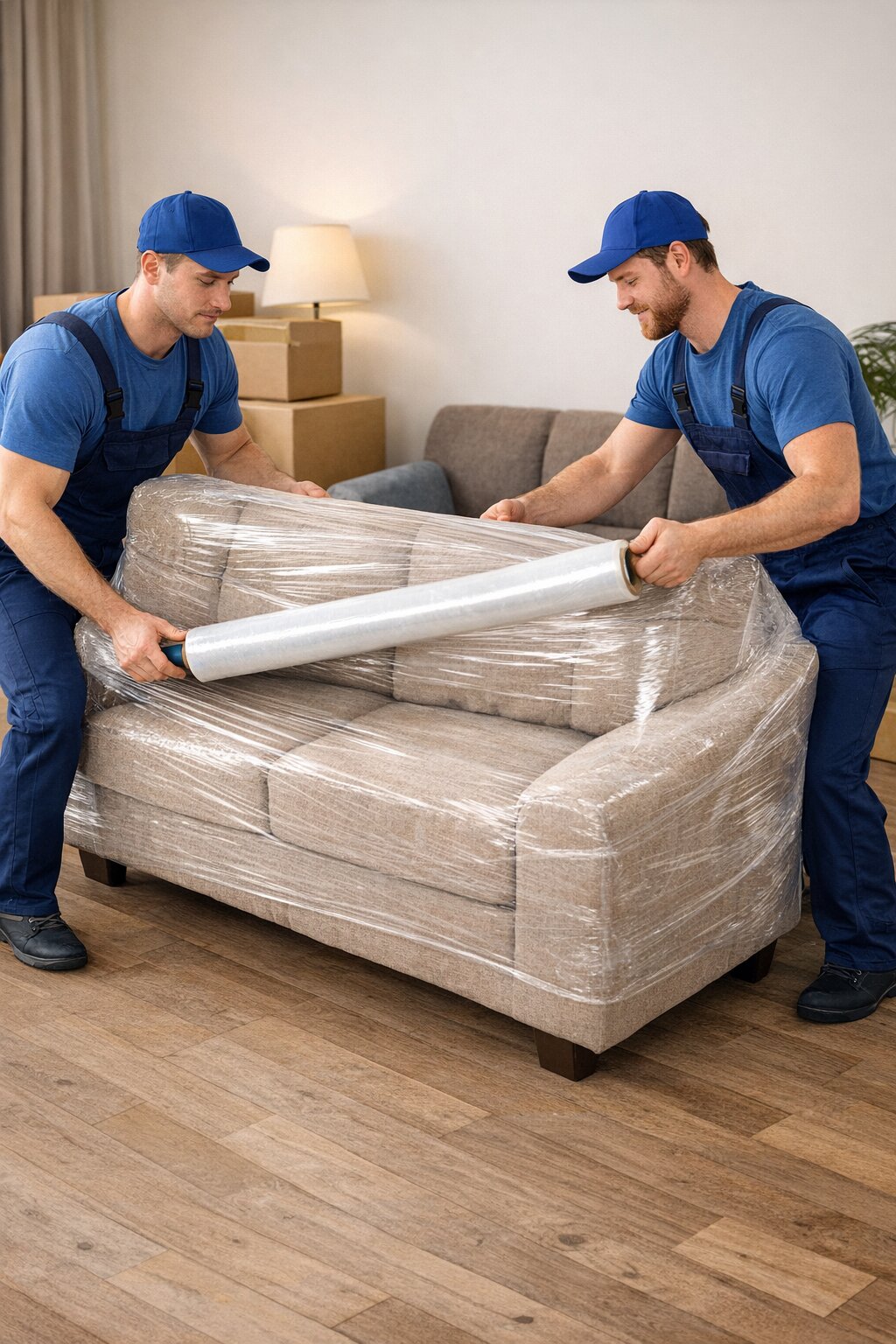
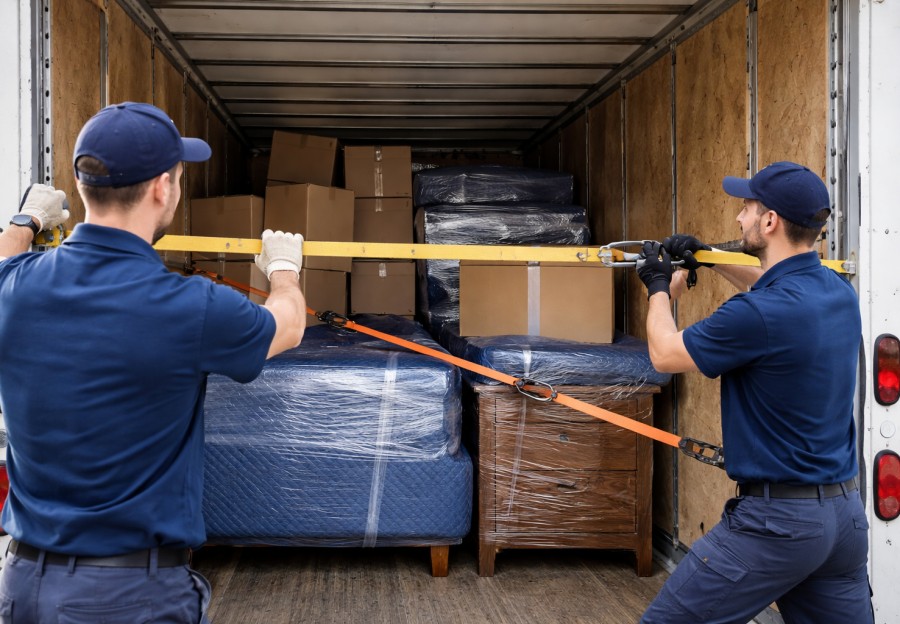
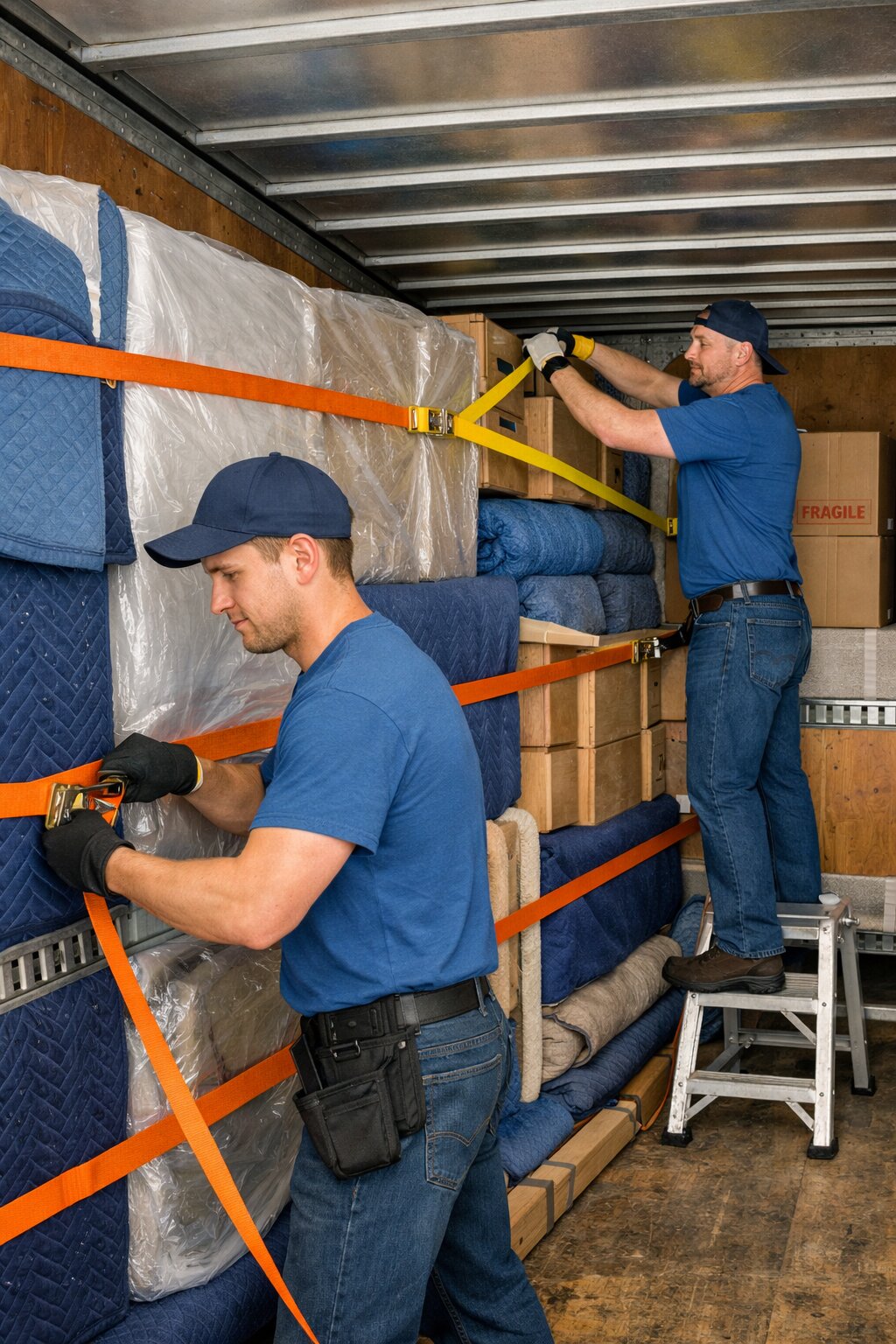
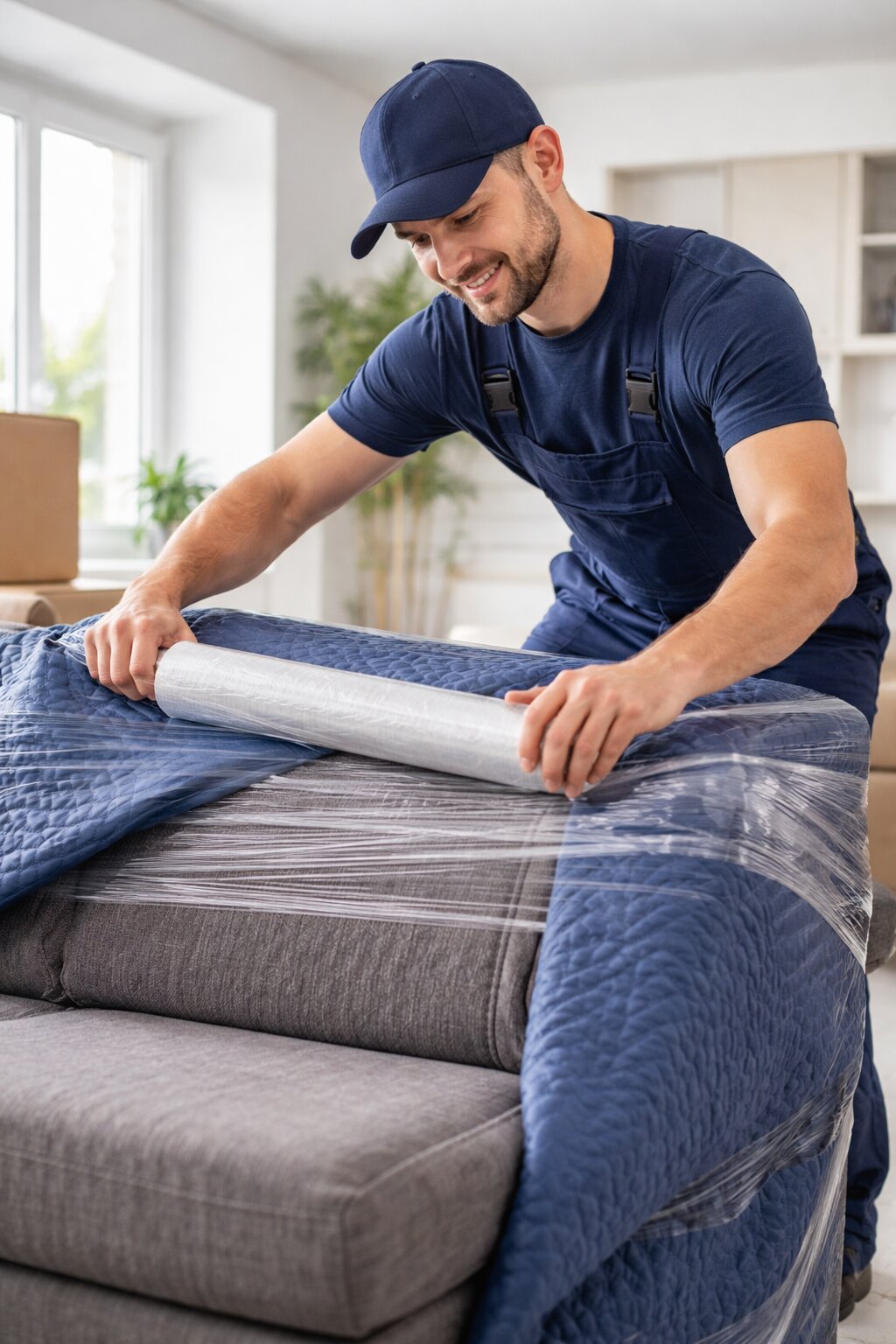
Strapping and temporary stabilization tools are used when appropriate. For awkward shapes, movers may use straps to bind sections together and prevent shifting mass that could change balance mid carry. Load stability studies show that unified loads behave more predictably than multi component assemblies under vibration and movement.
Psychology plays a role as well. Humans tend to rush when they perceive danger, which paradoxically increases risk. Stress research shows that time pressure and perceived urgency increase error rates. Experienced movers intentionally slow down in high risk zones to counteract this instinct.
Cost implications reinforce caution. A dropped piece over a rail can damage property, injure workers, and destroy furniture in seconds. Insurance claim data shows that fall related moving incidents generate some of the highest single event losses. Repairing railings, balconies, or stair structures often costs far more than the furniture itself.
There is also a public safety angle. Exterior rails may border sidewalks, parking areas, or shared spaces. Dropped objects create serious risk to bystanders. Risk management standards emphasize strict control of overhead and edge hazards in any material handling environment.
Environmental impact matters too. A destroyed piece of furniture adds to landfill waste and replacement manufacturing emissions. Sustainability studies consistently show that extending product lifespan reduces environmental footprint more effectively than recycling after damage.
Homeowners often misinterpret a mover’s slow careful behavior near rails as overcautious. In reality, it reflects an understanding of physics and human limits. The goal is not speed. The goal is controlled predictable movement that keeps mass centered within safe boundaries.
When you watch professionals handle these situations, the process looks almost calm and methodical. They pause. They reposition hands. They adjust angles. They communicate. They move in small increments rather than big pushes. That discipline prevents sudden tipping moments.
Avoiding tipping over rails comes down to managing five variables at once. Center of gravity must stay inside the support zone. Clearance must provide room for correction. Grip and body position must allow control without trapping the handler. Pace must allow reaction time. Communication must keep movement synchronized.
Add surface traction, padding, fatigue management, and route planning, and the system becomes resilient rather than fragile. No single action guarantees safety. The combination does.
Moving furniture near rails is one of the highest consequence moments in a move. When handled thoughtfully, it passes quietly without drama. When rushed or improvised, it can escalate instantly.
Understanding how professionals approach this challenge builds respect for the process and encourages patience. Physics always wins. Gravity does not negotiate. The only way to beat it is to stay ahead of it with planning, control, and discipline.
When furniture moves past a rail smoothly and safely, you rarely notice the invisible work that made it possible. That is the mark of good moving practice.