April 29, 2026
How crews keep track of parts and screws
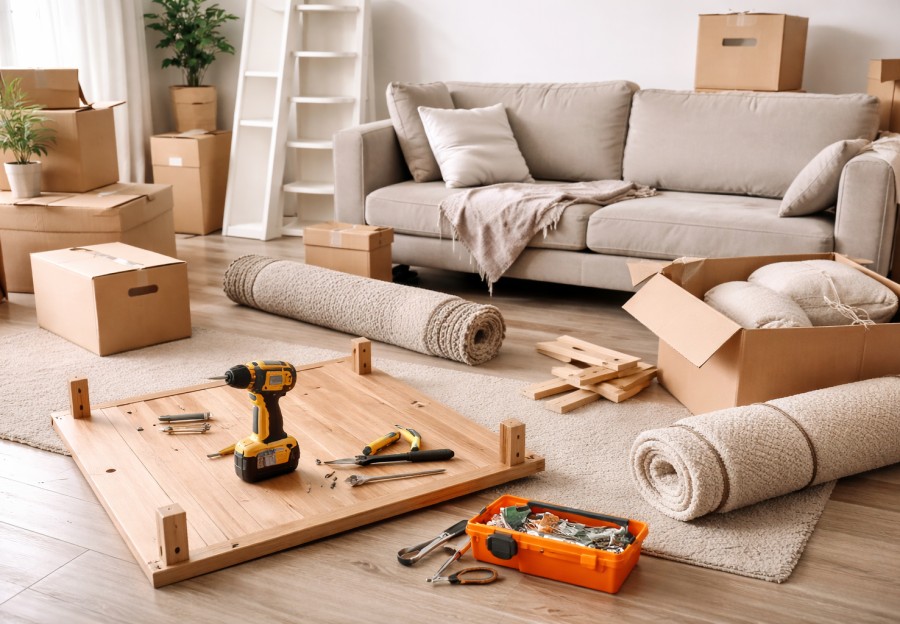
Anyone who has ever reassembled a bed only to discover one mysterious bolt missing knows how quickly a small hardware problem turns into a big headache. Furniture today relies heavily on fasteners, cams, brackets, and specialty screws. During a move, dozens or even hundreds of small parts can come off dressers, tables, bunk beds, shelving, and entertainment units. Professional moving crews rarely lose these pieces, not because of luck, but because they follow simple systems rooted in organization, human behavior research, and practical logistics.
The scale of the issue is larger than most people realize. Consumer furniture surveys show that more than half of modern household furniture uses knockdown or semi modular construction. A single bed frame can contain 20 to 40 fasteners. Multiply that across an average home and you can easily exceed 300 small hardware pieces in one move. Moving industry claims data consistently lists missing hardware as a common cause of post move customer complaints and delayed reassembly.
Human memory alone is not reliable for this kind of task, especially under fatigue and time pressure. Cognitive psychology research shows that working memory can only reliably track about four to seven items at once before error rates increase sharply. On moving day, when people are lifting, navigating stairs, coordinating timing, and managing fatigue, relying on memory to track dozens of tiny parts is unrealistic. Crews build external systems that reduce dependence on memory and prevent small mistakes from snowballing.
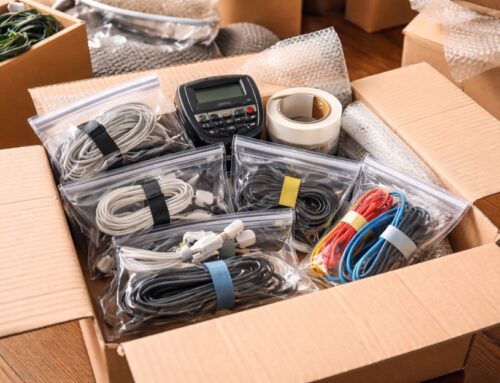
The foundation of their system is immediate containment. The moment a screw, bolt, washer, or bracket comes off, it goes directly into a dedicated container rather than being set on a nearby surface. Surfaces become cluttered quickly during a move, and visual scanning accuracy drops in busy environments. Vision science studies show that people miss small objects more frequently in cluttered visual fields, especially under stress and motion. Immediate containment eliminates that risk.
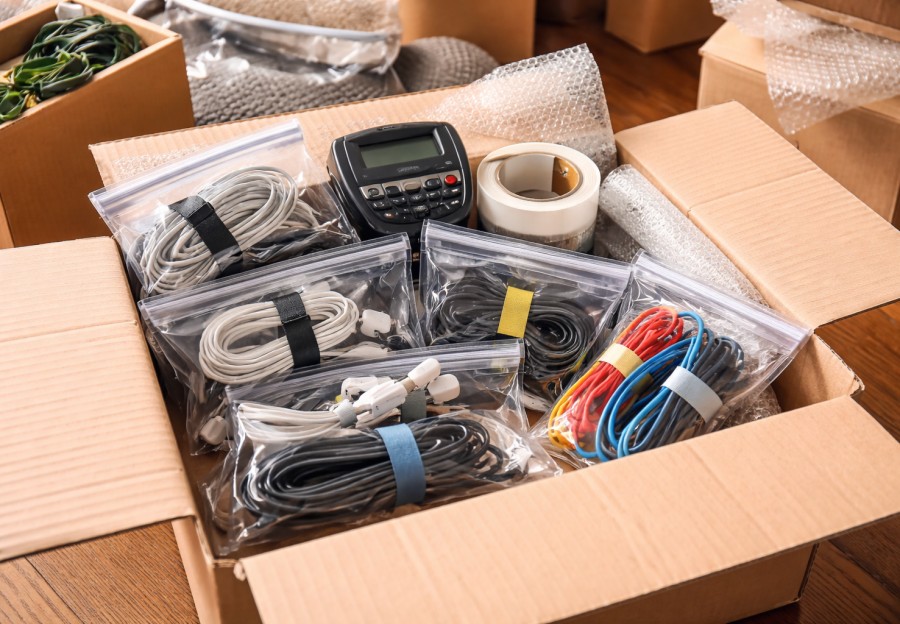
Most crews use heavy duty zip style bags because they seal securely, resist tearing, and remain transparent so contents are visible without opening. Packaging durability testing shows that thicker polyethylene bags resist puncture and abrasion far better than thin food storage bags. Visibility matters because it reduces unnecessary opening and re handling, which lowers spill risk.
The next layer is association. Hardware is always kept physically attached to the furniture it belongs to whenever possible. Crews often tape the sealed hardware bag to a hidden underside of the frame, inside a drawer cavity, or behind a structural rail where it will not get crushed or torn. This keeps the hardware traveling with its parent item through loading, transit, and unloading. Logistics studies consistently show that physical proximity reduces sorting errors more effectively than labeling alone.
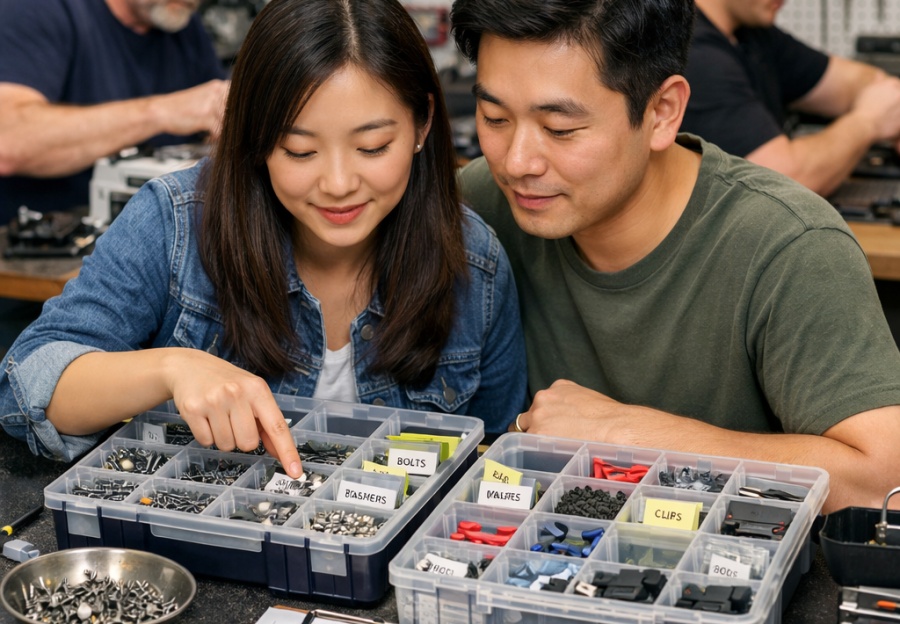
Labeling still plays an important role. Crews mark each bag clearly with the furniture name and location if there are similar items in the home. Clear labeling reduces reassembly confusion later. Field studies in warehouse environments show that labeling accuracy improves retrieval efficiency by roughly 25 to 30 percent when multiple similar parts are present.
Photographic documentation supports the system. Many crews take quick photos of complex assemblies before disassembly. This provides a visual reference for bolt orientation, washer order, and bracket placement. Cognitive research shows that visual cues outperform written notes for reconstructing spatial relationships after a delay. A single photo often saves ten minutes of trial and error later.
Segmentation is another key strategy. Hardware from different furniture pieces is never mixed into a single bag, even if the screws look similar. Manufacturing tolerances vary slightly between models and brands. Two screws that appear identical can differ by thread pitch or length enough to cause stripped holes or loose joints if mixed. Mechanical engineering studies show that improper fastener matching increases joint failure risk and accelerates wear. Keeping hardware separated preserves structural integrity.
Crews also protect the hardware bags themselves. Bags are often placed inside a larger tool pouch or designated hardware bin during transport to avoid crushing or puncture. Vibration testing used in shipping environments shows that loose small items migrate toward edges and corners under motion, increasing puncture risk. Secondary containment prevents accidental loss.
Workflow timing matters. Disassembly is often sequenced so that hardware from one piece is fully secured before the next item is touched. This prevents mixing and mental overload. Task management research shows that batching similar micro tasks reduces error rates compared with rapid task switching.
Environmental awareness reduces loss risk too. Crews avoid placing hardware bags on floors, truck ramps, or ledges where vibration or foot traffic could knock them loose. Occupational safety data shows that dropped small objects are frequently kicked or swept aside unintentionally in busy work zones, leading to loss.
Lighting quality plays a surprisingly important role. Small screws and washers are harder to see in dim areas such as basements, garages, or evening loading conditions. Visual ergonomics studies show that poor lighting increases object detection errors significantly. Crews often use portable lights or headlamps when disassembling in low light areas to avoid missed parts.
Glove choice matters as well. Thick gloves reduce tactile feedback and make it easier to drop small parts. Crews often switch to thinner grip gloves or bare hands when handling hardware to maintain dexterity. Hand ergonomics research shows that fine motor control declines with excessive glove thickness, increasing drop probability.
Inventory discipline extends into the truck. Hardware bins are placed in consistent locations so everyone on the crew knows where they live. Spatial consistency reduces search time and accidental misplacement. Behavioral studies on workspace organization show that consistent placement improves retrieval speed and reduces error rates under time pressure.
At unloading, crews reverse the process. Hardware stays attached to its corresponding item until reassembly begins. Bags are opened only when the furniture is in position, which prevents loose parts from being misplaced in the new space. New homes often have unfamiliar layouts, boxes everywhere, and higher clutter density, which increases loss risk. Delaying opening until the moment of use reduces exposure to clutter.
Reassembly follows staged tightening rather than fully tightening one joint at a time. This ensures alignment and reduces stress on threads. Mechanical assembly guidelines consistently recommend even torque distribution for structural stability and long term durability.
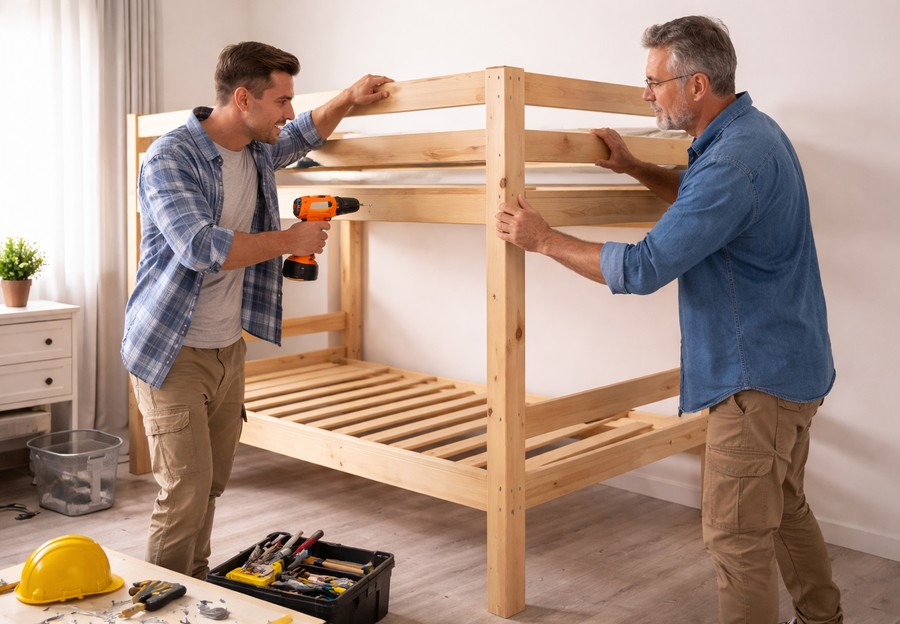
When hardware is damaged or missing despite precautions, crews often carry small assortments of common fasteners for emergency replacement. However, this is treated as a last resort because mismatched hardware can compromise safety and longevity. Furniture safety standards emphasize correct fastener specification for load bearing joints, especially in beds and bunk structures.
The financial impact of good hardware management is meaningful. Consumer repair surveys show that stripped threads, missing bolts, and improper reassembly can lead to repair bills ranging from hundreds to thousands of dollars depending on the furniture type. Replacement parts for branded furniture may require shipping delays and special ordering. Preventing loss saves both money and time.
There is also a safety dimension. Loose or improperly assembled furniture increases collapse risk. Injury surveillance data shows that furniture failures contribute to a notable share of household accidents, particularly involving beds, shelving, and children’s furniture. Correct hardware retention protects long term safety.
Environmental impact connects here too. Lost hardware often renders otherwise usable furniture disposable. Sustainability research consistently shows that extending product lifespan reduces environmental footprint more effectively than recycling after damage. Keeping hardware intact prevents unnecessary waste and replacement manufacturing.
Psychology plays a role in why these systems work. Humans perform better when cognitive load is reduced and tasks are externalized into simple routines. Habit formation studies show that consistent procedural habits reduce error even under fatigue. Crews do not rely on creativity or improvisation for hardware management. They rely on boring, repeatable systems that work every time.
Speed also benefits from organization. While it may seem that carefully bagging and labeling hardware slows the move, time motion studies in logistics show that preventing rework saves far more time than it costs. Ten seconds spent bagging a bolt prevents ten minutes of troubleshooting later.
For homeowners, adopting similar habits during self moves can dramatically reduce frustration. Immediate containment, labeling, physical attachment to the furniture, photo documentation, and consistent storage location replicate professional results with minimal extra effort.
There is also a stress reduction effect. Behavioral research shows that unresolved small problems create disproportionate mental friction. Knowing that every screw has a home reduces background anxiety during unpacking and reassembly.
The system works because it respects how humans actually behave under load, fatigue, and distraction. It does not assume perfect memory or constant attention. It builds safety nets that catch mistakes before they happen.
In the end, crews keep track of parts and screws the same way pilots manage checklists and surgeons manage instruments. They rely on process rather than memory. They control environment rather than reacting to chaos. They reduce variables rather than adding complexity.
That discipline turns what could be a scattered pile of mystery hardware into a predictable, orderly process. When the last piece of furniture is assembled correctly and no extra screws remain on the floor, the value of that quiet system becomes obvious.
Tiny parts may seem insignificant compared with sofas and refrigerators, but they hold everything together. Treating them with structured care protects safety, saves money, reduces waste, and preserves sanity. That is why professional crews take hardware seriously, even when nobody else is watching.