April 12, 2026
How to plan around stairway size and tipping points
Stairways are where most moving plans either succeed or fall apart. A piece of furniture that looks manageable on flat ground can become impossible once stairs enter the picture. Width height angle and turning space all combine to create hard limits. According to moving industry injury reports, stairways account for a large share of accidents and damaged items during residential moves. Planning around stairway size and tipping points is not optional if you want a smooth move. It is essential.
The first concept to understand is that stairways are three dimensional obstacles. People often measure only the width of the stairs, but that tells only part of the story. Ceiling height handrails wall angles and landings all affect what can pass through. Building design studies show that stairwells are typically built to minimum code requirements, not to accommodate oversized furniture. Even newer homes can have tight stair geometry that surprises homeowners.
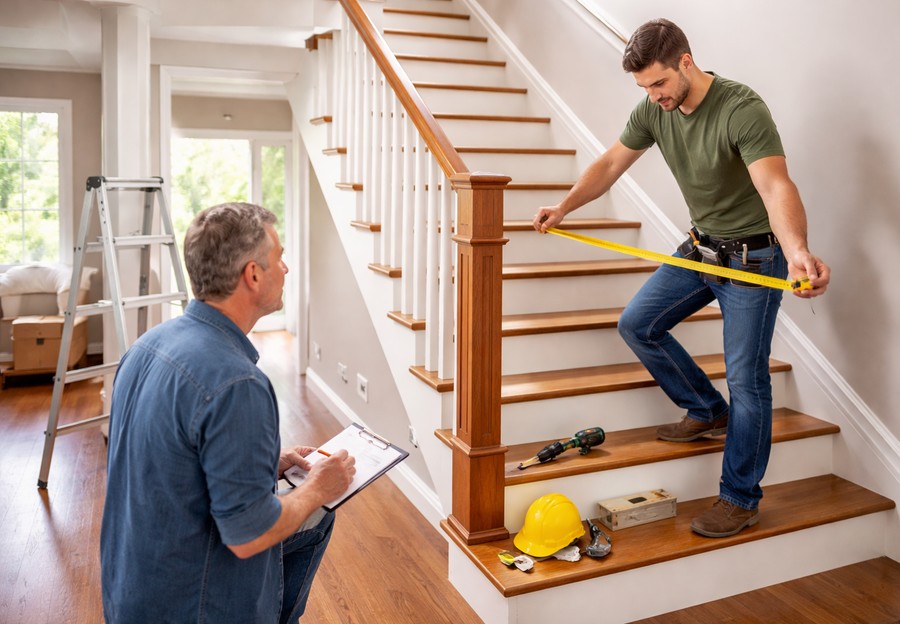
Accurate measurement is the foundation of good planning. Stair width should be measured at the narrowest point, usually between walls or railings. Ceiling height should be measured from the stair tread to the lowest overhead obstruction. Landings need both width and depth measurements. Research from logistics engineering shows that even a difference of two or three centimeters can determine whether a large item can be maneuvered or not. Guessing is how moves get stuck.
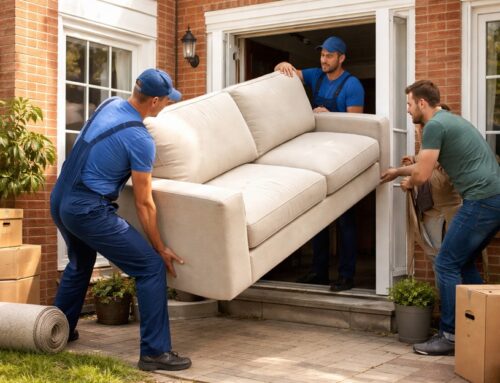
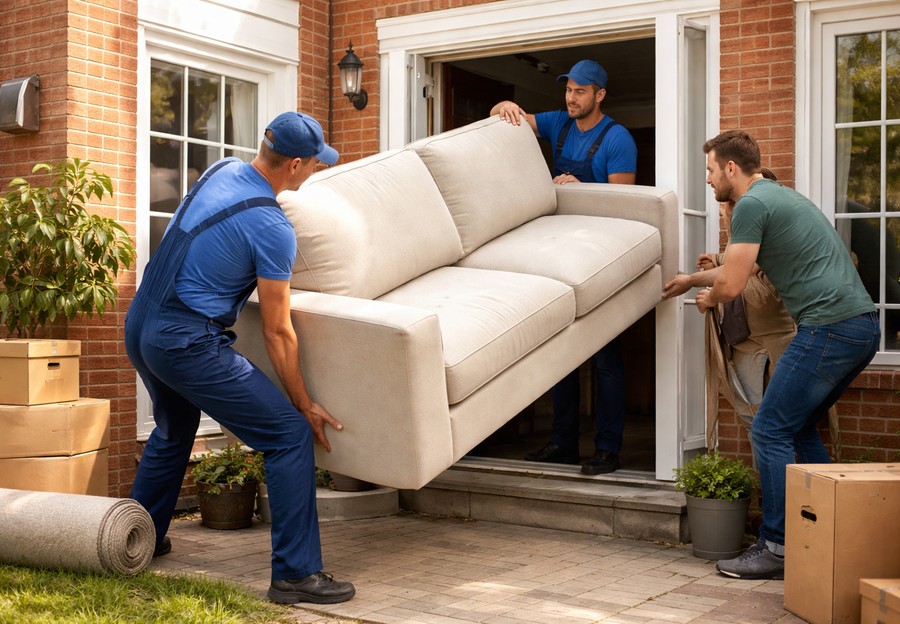
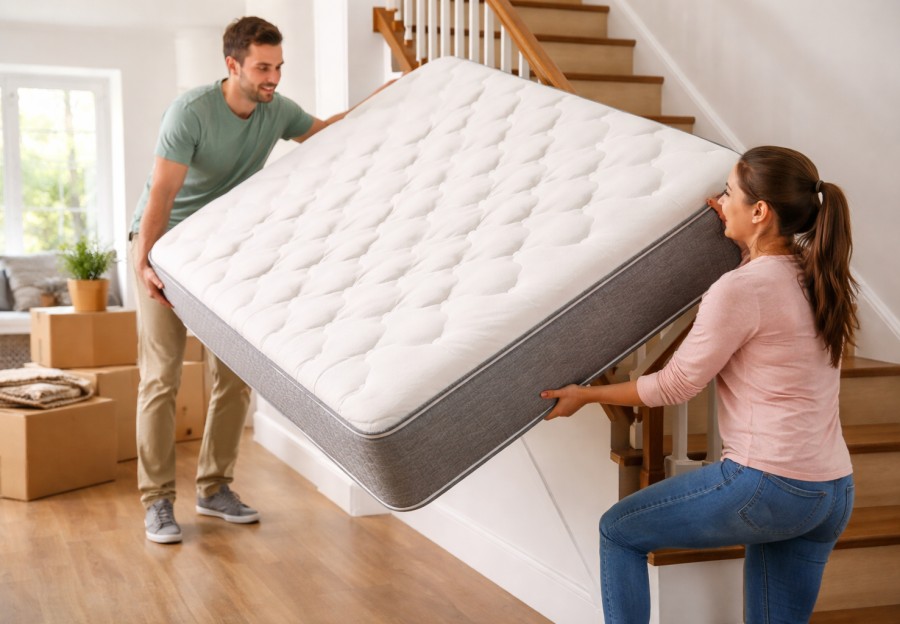
Tipping points are the next critical idea. Every large item has a point where rotating or tilting it changes how much space it needs. For example, a sofa carried flat may be too long for a stairwell, but tipped vertically it may clear the turn. This is not random. It is geometry. Studies in material handling show that changing orientation can reduce required clearance by up to 35 percent. Professional movers rely on this principle constantly.
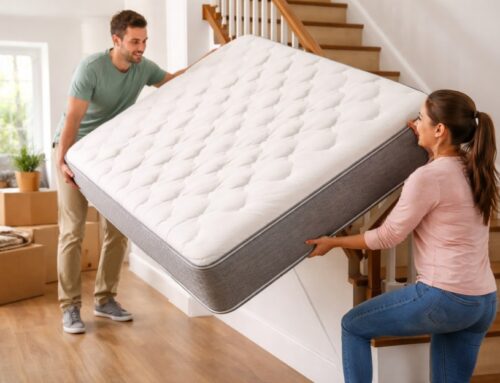
However, tipping also increases risk. When furniture is tilted, weight shifts. The center of gravity moves and control becomes harder. This is why stairway moves are physically demanding and potentially dangerous. Occupational safety data consistently shows higher injury rates during stair carries than level carries, especially when items are near their tipping limits. Planning reduces the need for sudden adjustments under load.
One common mistake is ignoring handrails. Handrails reduce usable width and often cannot be removed easily. Many people measure wall to wall and forget that the rail cuts into the space. Builders and remodelers note that handrails can reduce effective stair width by 7 to 10 centimeters. That loss matters when moving bulky furniture.
Turns and corners are where plans often fail. Straight stairs may be manageable, but a tight turn at a landing can stop progress completely. The critical measurement here is diagonal clearance. Moving studies show that the diagonal dimension is often the limiting factor, not the straight width. Visualizing how an item rotates through a turn is difficult without experience, which is why movers often test with mock angles before committing.
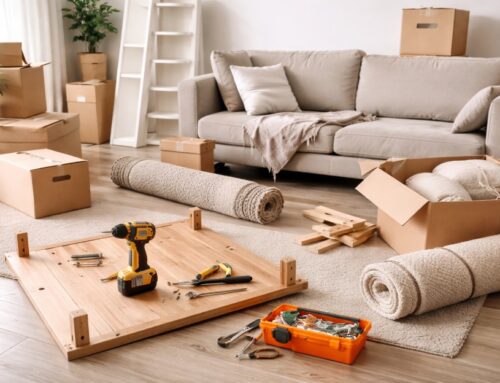
Disassembly is one of the most effective ways to work around stair limits. Removing legs arms headboards or detachable sections can dramatically change tipping points. Furniture manufacturers often design large items to be partially disassembled for transport. Industry data shows that disassembly reduces stairway related damage claims significantly. Taking something apart for ten minutes can save hours of struggle and risk.
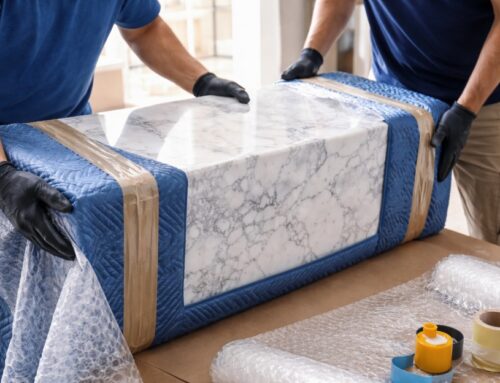
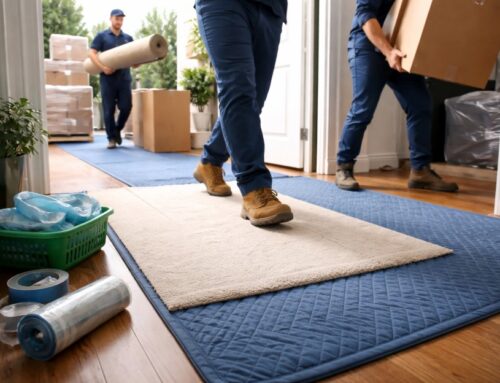
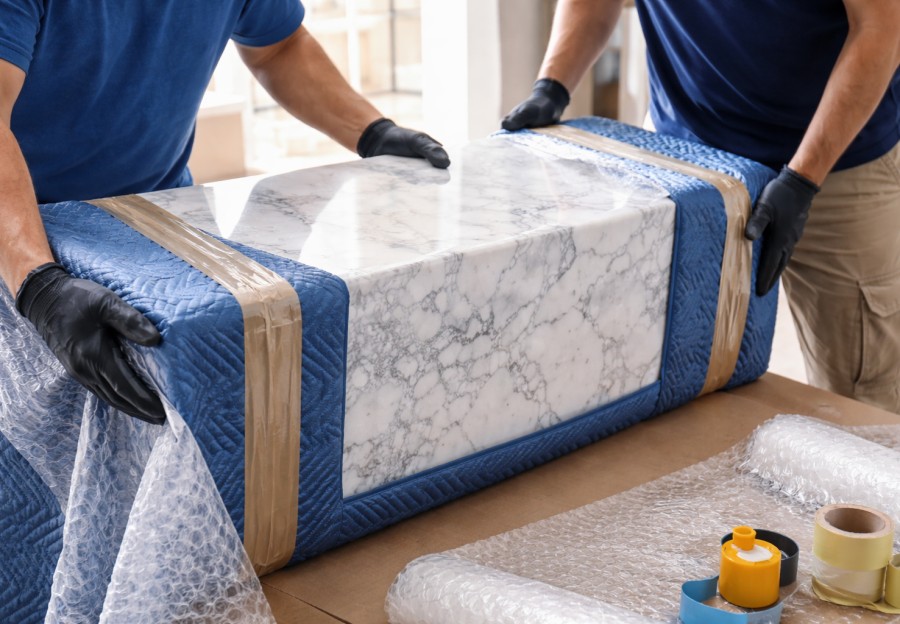
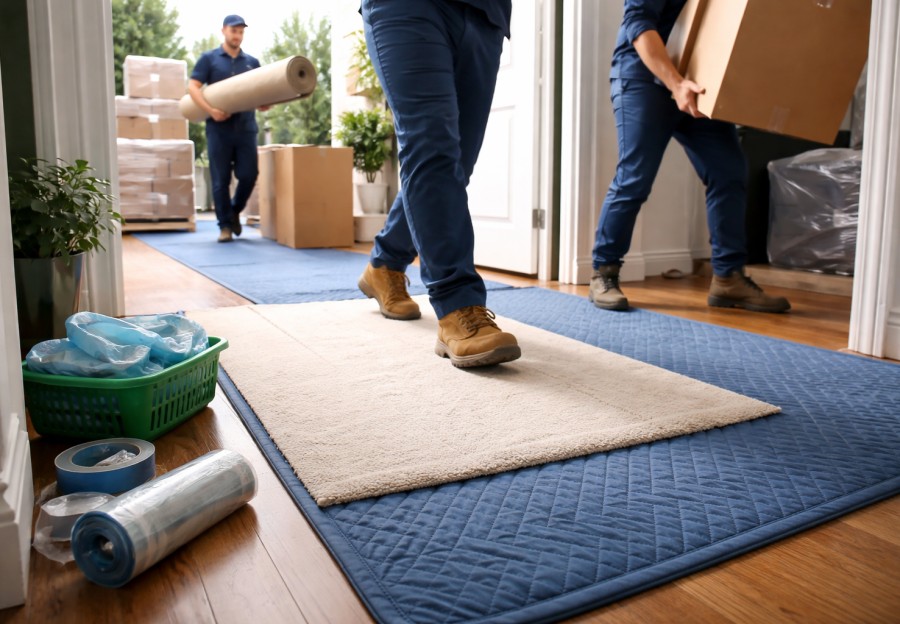
Wall and floor protection is part of stair planning too. Narrow stairways leave little margin for error. Scraped walls chipped paint and damaged banisters are common when furniture barely fits. According to home insurance statistics, stairway damage is one of the most frequent non furniture claims during moves. Padding walls and rails reduces consequences if contact happens.
People planning moves often underestimate fatigue. Carrying items up or down stairs requires sustained effort and coordination. As fatigue increases, control decreases. Ergonomic studies show that muscle fatigue significantly raises the risk of slips and drops during stair tasks. Planning the order of items so the heaviest and most difficult pieces are moved when energy levels are highest is a practical safety measure.
There are times when the safest plan is choosing an alternative route. Ground level windows sliding doors or exterior staircases can offer better angles and fewer restrictions. In some cases, professional equipment is used to move items through windows. While this may add cost, it often reduces risk. Moving industry data shows that alternative access methods result in fewer injuries and less property damage for oversized items.
Knowing when not to force the move is just as important. If an item exceeds stairway limits even after disassembly and orientation changes, forcing it can cause serious injury or structural damage. Structural engineers note that stairways are not designed for high impact loads. Cracked treads broken railings and damaged walls can be costly to repair.
Planning around stairway size and tipping points is about respecting physical limits. Measuring carefully understanding orientation effects protecting surfaces and making smart decisions about disassembly or alternative routes all work together. A successful move is not about brute strength. It is about preparation and geometry.
When stairways are approached with a plan instead of hope, moves become safer calmer and far more predictable. That preparation turns one of the most stressful parts of moving into a controlled process rather than a dangerous gamble.