March 23, 2026
Why wardrobe boxes save time and space
Anyone who has ever tried to pack a closet the night before a move knows how quickly it turns into chaos. Piles of folded clothes slide off chairs. Hangers tangle. Clean garments brush against dusty floors. You spend hours folding, boxing, unfolding, and re hanging everything after arrival. Wardrobe boxes exist to remove that friction. They look oversized and sometimes feel like an extra expense, but when you look at real time savings, space efficiency, and damage prevention data, they consistently outperform traditional packing methods.
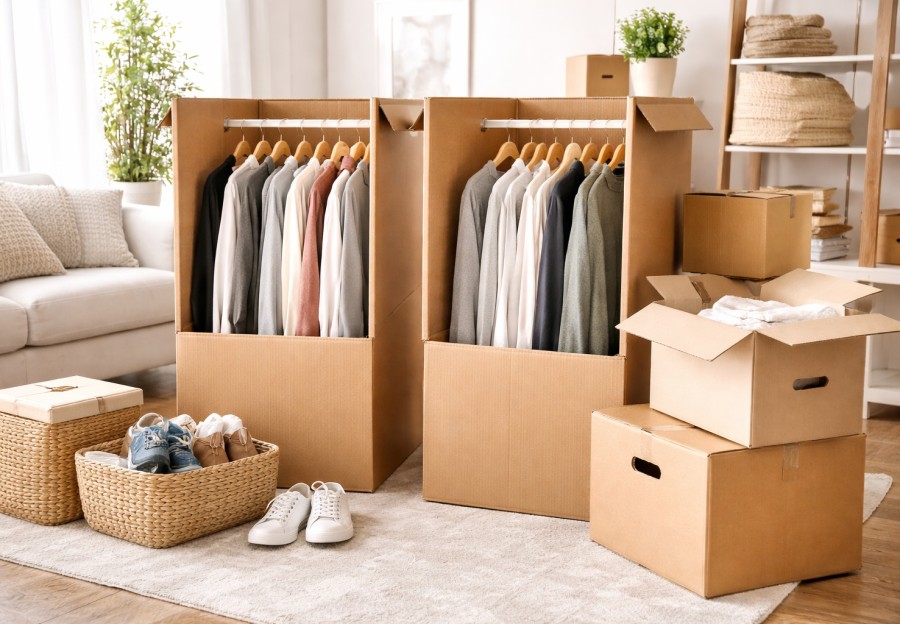
A wardrobe box is essentially a tall box with a built in hanging bar. Clothes stay on their hangers and slide directly into the box. At the new place, the process reverses just as easily. Instead of touching each garment multiple times, you move an entire section of closet in one motion. That reduction in handling alone creates measurable efficiency.
Time savings add up quickly. Time motion studies in logistics consistently show that reducing handling steps improves productivity more than almost any other change. Folding, stacking, labeling, and unpacking clothing typically requires multiple touches per item. Hanging transfer reduces those steps to one lift and one hang. If a household has 150 to 250 hanging garments, which aligns with apparel ownership surveys for many adults and families, eliminating repeated folding can save hours across packing and unpacking combined. Even saving 30 seconds per garment adds up to more than an hour of reclaimed time for a medium sized closet.
The reduced handling also lowers fatigue. Behavioral and occupational research shows that repetitive bending and lifting increases fatigue and error rates. When people get tired, they rush, drop items, and mislabel boxes. Wardrobe boxes keep posture more upright and movements more consistent, which reduces strain and mistakes. The Bureau of Labor Statistics consistently links overexertion and awkward postures to a large share of moving related injuries. Less bending and lifting reduces that risk.
Space efficiency surprises many people. At first glance, wardrobe boxes look bulky. The key difference is how efficiently they use vertical volume. Traditional clothing boxes often leave unused air gaps because folded clothing rarely fills corners cleanly. Wardrobe boxes maximize vertical space by using the full height of the box. Clothing hangs naturally without dead space. Packaging engineers refer to this as volumetric efficiency, meaning how much usable space is filled with actual product rather than air. Higher volumetric efficiency means fewer boxes overall.
Closet rod length provides a useful comparison. A standard wardrobe box holds roughly two feet of hanging clothes depending on garment thickness. A typical bedroom closet may have six to ten linear feet of hanging space. That means three to five wardrobe boxes can move an entire closet without converting clothes into multiple medium boxes. Those same garments might otherwise fill eight to twelve standard boxes once folded loosely with padding to prevent wrinkles and crushing. Fewer boxes reduce truck loading time, stacking complexity, and inventory management during unloading.
Wrinkle prevention adds another layer of value. Fabric science shows that creasing forms when fibers are bent under pressure for extended periods. Heat and moisture accelerate that effect. Clothes folded tightly in boxes often arrive deeply wrinkled, especially cotton and linen blends. Hanging garments remain under minimal compression, so fibers retain shape better. This reduces the need for steaming, ironing, and re laundering after the move, which saves additional time and energy.
Cleanliness matters as well. Floor dust, cardboard fibers, and packing paper particles easily transfer onto folded garments. Textile hygiene studies show that fabric surfaces attract and hold fine particulate matter due to static charge and fiber structure. Keeping clothes suspended reduces surface contact and contamination risk. That means fewer items need rewashing after arrival.
Protection from crushing is another real advantage. Boxes stacked in trucks experience vertical load pressure during braking and vibration. Transportation safety research shows that downward force increases during sudden deceleration. Clothing in standard boxes often sits under heavier boxes and furniture, which compresses fibers and distorts folded shapes. Wardrobe boxes are structurally tall and designed to carry their own vertical load rather than transferring pressure directly onto garments. The hanging rail distributes weight across the box frame rather than onto the clothing itself.
Organization improves dramatically with wardrobe boxes. Entire closet sections move together. Suits stay with suits. Dresses stay with dresses. Seasonal jackets remain grouped. Cognitive psychology research shows that maintaining familiar grouping reduces mental load during transitions. When you open a wardrobe box at the new home, you immediately recognize what belongs where. That reduces decision fatigue and speeds up room setup.
Wardrobe boxes also reduce the need for additional packing materials. Traditional clothing packing often requires tissue paper, plastic garment bags, or vacuum bags to prevent wrinkles and dust. Each of those adds cost and waste. A single wardrobe box replaces dozens of individual garment covers. Sustainability studies consistently show that reducing single use packaging lowers landfill contribution and manufacturing emissions. Reusable wardrobe boxes amplify that benefit over multiple moves or storage cycles.
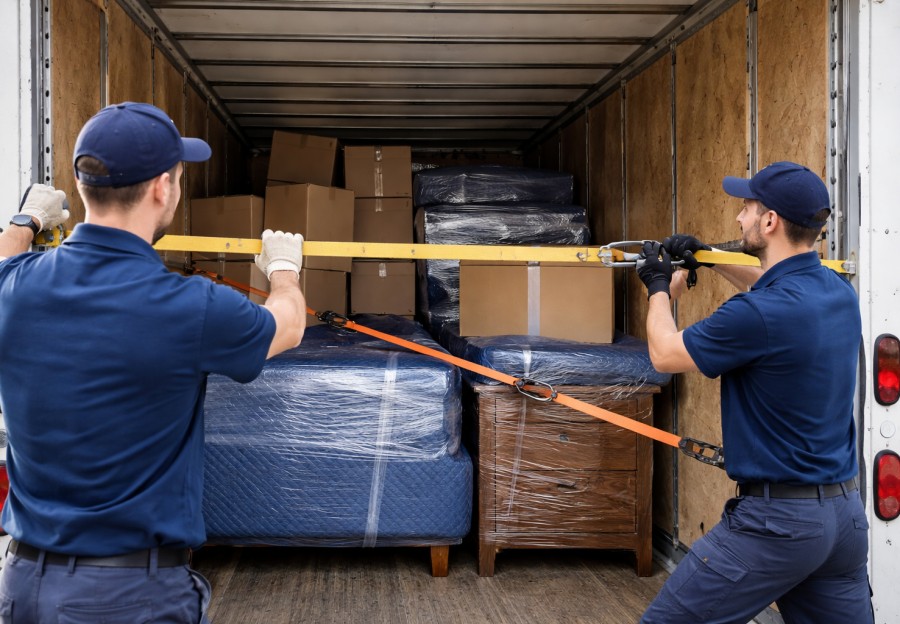
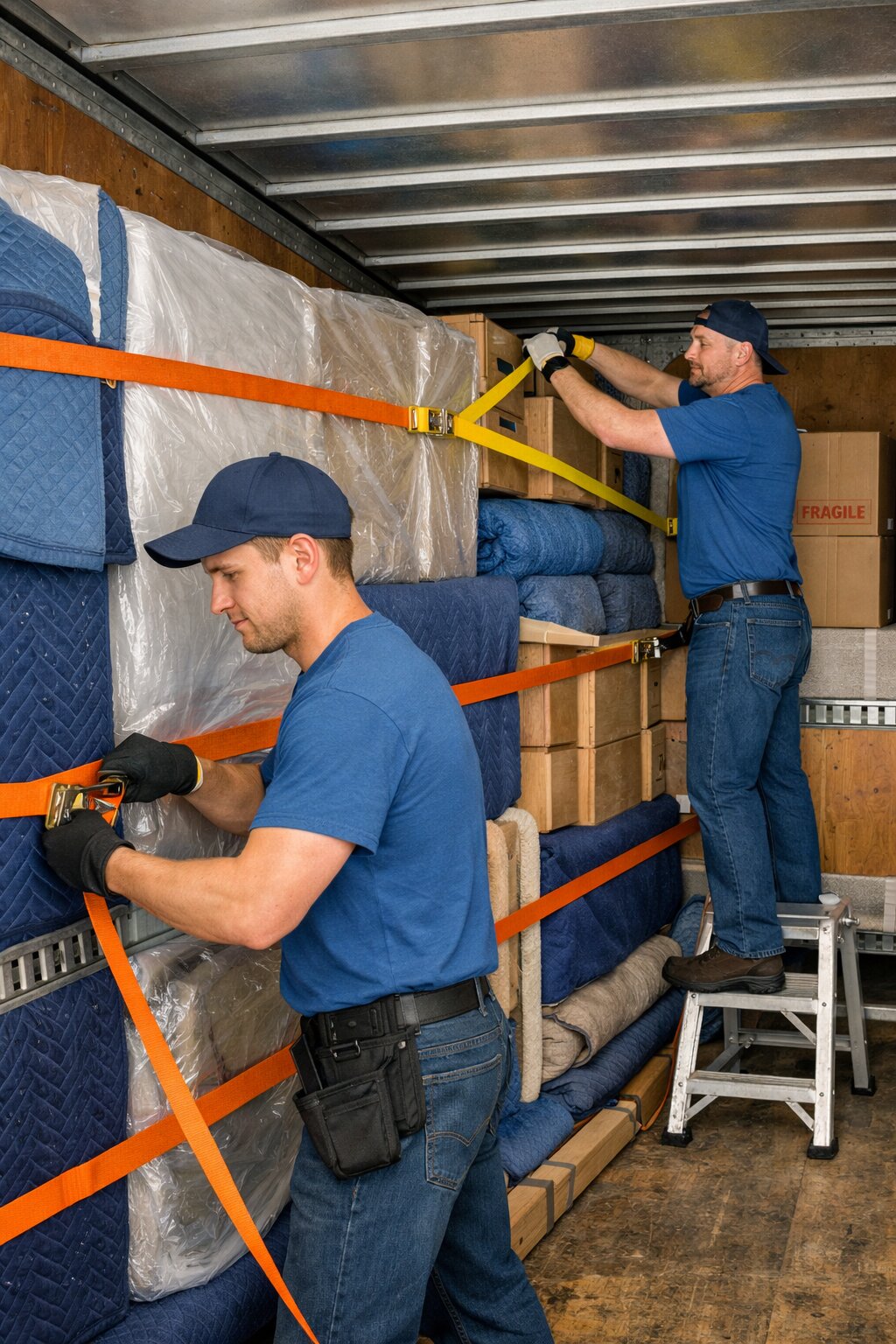
From a truck loading perspective, tall wardrobe boxes stack predictably against walls and form stable vertical columns. Load stability improves when box dimensions are consistent. Logistics research shows that uniform load shapes reduce shifting and improve space utilization inside trailers. That stability protects surrounding boxes and furniture from movement damage.
Another overlooked advantage is accessibility during multi day moves or delayed unloading. If you need access to work clothes or formal wear before all boxes are unpacked, wardrobe boxes provide instant access without tearing through piles of folded cartons. This flexibility reduces stress and keeps routines intact during transition periods.
Cost concerns often come up. Wardrobe boxes cost more than standard cartons. However, cost analysis should include labor time, replacement materials, wrinkle remediation, and damage prevention. If wardrobe boxes reduce packing and unpacking time by several hours, that savings alone often offsets the box rental or purchase price, especially if you are paying hourly moving labor. Consumer moving cost studies consistently show that labor represents the largest portion of moving expenses for local moves. Saving even one hour can outweigh the price difference between box types.
There is also a durability factor. Wardrobe boxes are typically made from heavier grade corrugated cardboard to support vertical load and hanging rails. Packaging engineering data shows that higher edge crush ratings increase stacking strength and reduce collapse risk. That means wardrobe boxes maintain shape better during long hauls and storage, reducing failure risk compared with thin standard cartons overloaded with clothing.
Humidity control benefits clothing protection too. Clothes packed tightly in standard boxes trap moisture and odors more easily. Textile research shows that mildew can begin forming on damp fabrics within 24 to 48 hours in warm conditions. Hanging garments allow more airflow within the box, reducing moisture concentration and odor buildup during transit.
For delicate garments, wardrobe boxes offer superior protection. Suits, gowns, uniforms, and embellished fabrics retain shape when hung. Structured shoulders and tailored seams stay aligned rather than creased. Garment construction research shows that repeated folding stresses seam fibers and interfacing materials over time. Hanging minimizes that stress.
The space benefit extends beyond the truck. At the new home, wardrobe boxes often move directly into closets or bedrooms without unpacking immediately. They temporarily function as portable closets while you settle in. That reduces clutter in living spaces and keeps pathways clear during setup. Safety research shows that clear walkways reduce trip and collision risk during unpacking.
Another practical benefit is reduced labeling complexity. Instead of labeling dozens of clothing boxes with vague descriptions, each wardrobe box often corresponds to a specific closet section or room. That clarity improves placement accuracy. Logistics studies show that simplified labeling systems reduce handling errors and unnecessary re handling.
Even donation sorting becomes easier. As you slide garments into wardrobe boxes, it becomes obvious which items no longer fit your lifestyle or space. Those can be separated quickly without refolding piles of clothing later. Decluttering research shows that visible grouping improves decision clarity and reduces procrastination.
From an environmental standpoint, wardrobe boxes encourage reuse. Many moving companies rent them and sanitize between uses. Reusable packaging systems consistently show lower lifecycle environmental impact compared with single use cartons when reused multiple times.
There is also a psychological comfort factor. Seeing clothes arrive hanging and ready reduces the feeling of disruption. Moving ranks among the top life stressors in behavioral research. Preserving small normal routines like opening a closet and finding clothes ready to wear creates a sense of stability during change.
Space efficiency, time savings, cleanliness, protection, organization, and sustainability all reinforce the same conclusion. Wardrobe boxes are not a luxury item reserved for large moves or high end services. They are a practical efficiency tool grounded in real logistics and material performance data.
Instead of touching every shirt five times, you touch it once. Instead of filling eight boxes with air gaps and wrinkles, you fill three or four structured containers that protect shape and stack cleanly. Instead of spending your first night ironing and hunting for clothes, you hang them and move on to more important setup tasks.
Moving already demands energy and attention. Wardrobe boxes remove unnecessary friction from one of the most time consuming categories in any home. When you look at the numbers, the ergonomics, and the protection benefits together, the logic becomes clear. Wardrobe boxes save time, preserve space, reduce damage risk, and make the entire move feel more controlled and far less exhausting.