
What We Learned From Working With Chicago Property Management Companies
Navigating a relocation within a vibrant metropolis like Chicago demands far more than the mere transportation of belongings. It necessitates a profound understanding of intricate urban logistics and, critically, the cultivation of robust working relationships with the city?s myriad property management companies. For years, Ken Coffey, founder of Coffey Bros Moving, has led his teams in collaborating with hundreds of property managers across high-rises, luxury condominiums, and historic apartment buildings throughout the Chicago area. These partnerships have yielded invaluable insights into executing truly seamless urban relocations.
The unique challenges of moving in Chicago are particularly pronounced in its densest areas. Whether orchestrating a move in a bustling River North high-rise, a historic Gold Coast brownstone, or a sleek Loop apartment building, every relocation presents its own set of logistical puzzles. Successfully navigating these environments often hinges on administrative cooperation as much as it does on physical labor and careful planning.
According to data from the U.S. Census Bureau, Chicago’s population density is approximately 11,868 people per square mile, underscoring the logistical complexities of urban living and the constant movement of residents within such a compact environment. This density directly impacts moving operations.
“Working with property managers is a partnership, not a battle,” Ken Coffey, founder of Coffey Bros Moving, observes. “We have learned that if we respect their building’s rules and schedules, they will do everything in their power to help our crew succeed. This translates into a faster and more pleasant relocation for our clients, making the entire process smoother and more efficient for everyone involved.”
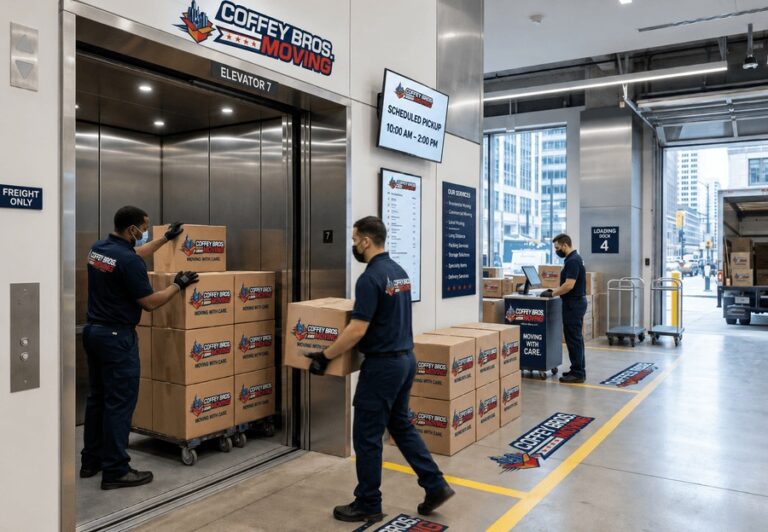
The specific details of urban moves often involve strict protocols. Professional movers must meticulously adhere to elevator reservations, utilize proper floor and wall protection, and maintain clean loading docks. Crucially, nearly all apartment property managers require professional moving companies to submit a valid Certificate of Insurance before being allowed on-site, a non-negotiable step that ensures accountability and protects the building’s infrastructure.
According to the Chicago Metropolitan Agency for Planning (CMAP), over 70% of new housing units permitted in the city are multi-family dwellings. This trend highlights the increasing prevalence of apartment and condo moves, which inherently demand precise coordination with property management to ensure compliance and efficiency.
“Proactive communication is the key to avoiding day-of-move surprises,” Ken Coffey adds. “When we send our logistics sheets and insurance credentials ahead of time, we establish trust and credibility, ensuring a seamless experience for the tenant. A property manager who knows you are insured and prepared is much more likely to accommodate minor scheduling adjustments if unforeseen traffic delays occur on the highway.”
Beyond the city’s core, the suburban landscape surrounding Chicago presents its own distinct set of considerations for property management interactions. In communities like Naperville, Evanston, or Oak Park, movers often encounter homeowners associations (HOAs) with specific guidelines for move-ins and move-outs, which can differ significantly from urban high-rise regulations.
The National Association of Realtors reports that suburban home sales frequently involve homeowners associations (HOAs) with their own specific move-in and move-out protocols. These often include designated moving hours, parking restrictions, and requirements for property protection, adding another layer of administrative detail to the relocation process.
For consumers, understanding these varied requirements is paramount. Always inquire about your building’s specific moving policies well in advance, including any necessary elevator reservations, insurance certificate requirements, or restricted moving hours. Communicating these details clearly with your chosen moving company ensures they can prepare adequately and avoid any day-of complications.
A recent study on urban planning by the City of Chicago’s Department of Planning and Development indicates a continued trend towards mixed-use developments. These complex structures inherently increase the intricacies of managing shared spaces during residential transitions, making professional coordination with property management even more vital.
“Our reputation is built on trust and consistent quality,” Ken Coffey emphasizes. “Every interaction with a property manager is an opportunity to reinforce our commitment to professionalism. When we demonstrate respect for their building and their rules, it not only ensures a smooth move for our client but also solidifies our standing as a reliable partner in the demanding Chicago moving landscape.”
Ultimately, Coffey Bros Moving’s extensive experience with Chicago property management companies reinforces our belief that a successful move is founded on mutual respect and meticulous preparation. We understand that we are guests in these buildings, and treating the property and the people who manage it with the utmost professionalism directly benefits our clients, ensuring every transition is efficient, secure, and stress-free.