
March 4, 2026
Why two-day moves reduce risk for large homes
Large homes bring wonderful space and comfort, but they also bring complexity when it is time to move. More rooms mean more furniture, more fragile items, more stairs, more heavy lifting, and far more decision points during a single day. Many homeowners try to compress everything into one long push because it feels faster and cheaper on paper. In reality, stretching a large move across two days often reduces damage risk, lowers injury potential, improves accuracy, and creates a calmer experience overall.
The scale alone explains why pressure builds so quickly. The American Moving and Storage Association estimates that more than 31 million people move each year in the United States, and a growing share of those moves involve larger suburban homes with higher square footage and more possessions. The Environmental Protection Agency estimates that the average American household owns over 300,000 items when clothing, paper, décor, and stored goods are included. In a large home, that number climbs even higher. Trying to compress that volume into a single day pushes both people and systems past comfortable limits.
Fatigue is the biggest hidden risk in long single day moves. Physical and mental exhaustion reduce coordination, reaction time, and decision quality. The Bureau of Labor Statistics consistently reports that overexertion is one of the leading causes of injury in material handling and moving related work. As fatigue builds, lifting technique slips, grip strength weakens, and situational awareness drops. Even small lapses can cause strained backs, dropped items, or wall damage. A two day schedule allows crews and homeowners to reset physically and mentally instead of operating deep into exhaustion.
Injury risk rises sharply when work extends beyond normal physical limits. Occupational health research shows that musculoskeletal injury rates increase when repetitive heavy lifting continues for extended periods without adequate recovery. Reaction time also slows with fatigue. Human performance studies show measurable drops in alertness and coordination after prolonged physical exertion, even in trained workers. Breaking a large move into two shorter days keeps performance closer to peak rather than sliding into risk territory late in the evening.
Damage risk follows the same pattern. Insurance claim data from moving companies consistently shows that many damages occur during the final stages of long moves when crews are tired and rushing to finish. Furniture corners clip door frames, boxes get stacked too quickly, and fragile labeling gets overlooked. Packaging engineering studies show that small handling errors compound quickly when hundreds of items move through tight spaces. A second day reduces the pressure to rush and allows more careful placement and protection.
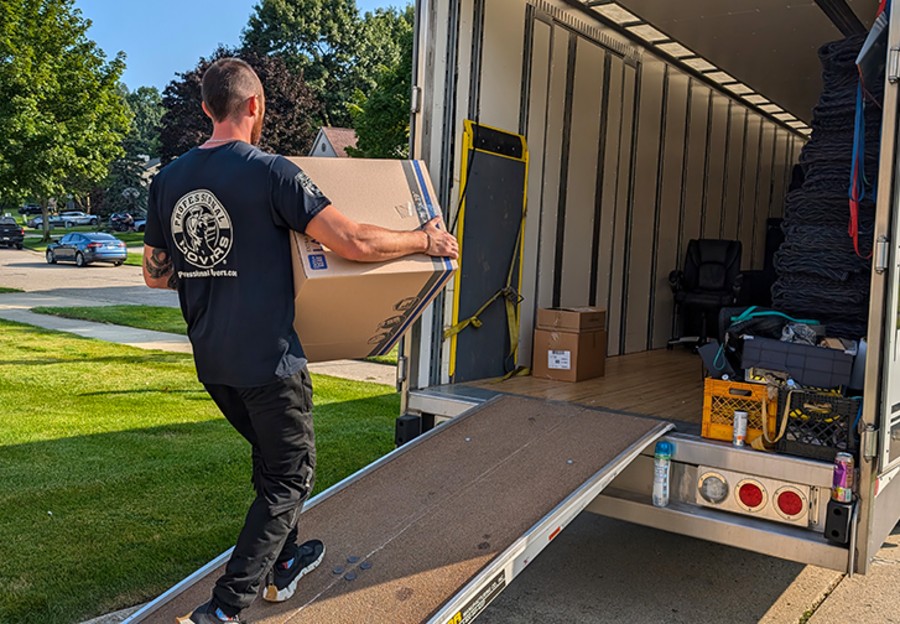
Truck loading quality improves significantly when time pressure drops. Proper weight distribution, balanced stacking, and secure strapping take attention and patience. Transportation safety research links load shift to a significant share of cargo damage incidents. In a rushed single day move, the last third of the truck often gets packed quickly to meet the clock, increasing the chance of unstable stacking and internal movement. With a two day plan, the load can be built thoughtfully rather than hurriedly, which reduces shifting and vibration damage during transit.
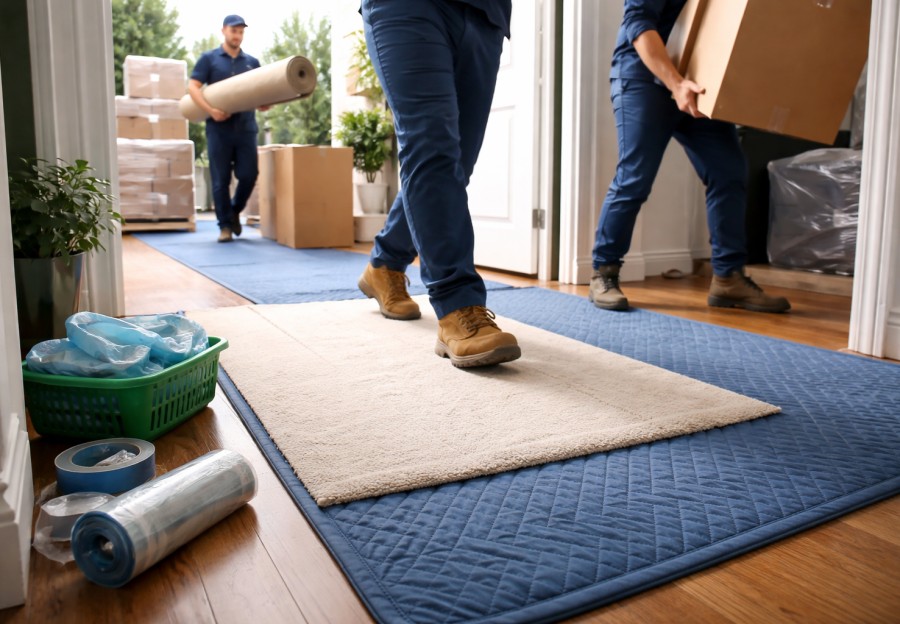
Staging efficiency also improves across two days. In large homes, staging furniture and boxes into clear pathways reduces congestion and walking distance. Time motion studies in manual workflows show that reducing unnecessary movement can improve productivity by up to 30 percent. When everything must happen in one day, staging often becomes chaotic because space fills quickly and pathways shrink. Spreading the process allows rooms to clear in logical phases, maintaining safer walkways and smoother flow.
Decision quality benefits as well. Homeowners often underestimate how many micro decisions happen on moving day. What stays accessible, what goes first, what gets extra padding, what room each item belongs to, what rides with you personally. Behavioral psychology research shows that decision fatigue increases error rates and slows judgment as the day progresses. In a single marathon move, those decisions pile up late in the day when mental energy is lowest. A two day schedule distributes decision load and keeps clarity higher.
Weather exposure risk also decreases with better pacing. If unexpected rain, heat, or wind hits during a single day move, everything gets exposed at once. Vehicle temperature studies show that closed trucks can exceed outdoor temperatures by more than 20 degrees Celsius in under an hour in direct sun. Heat and moisture stress affect electronics, wood furniture, artwork, and fabrics. With two days, weather contingencies are easier to manage and sensitive items can be prioritized during safer windows.
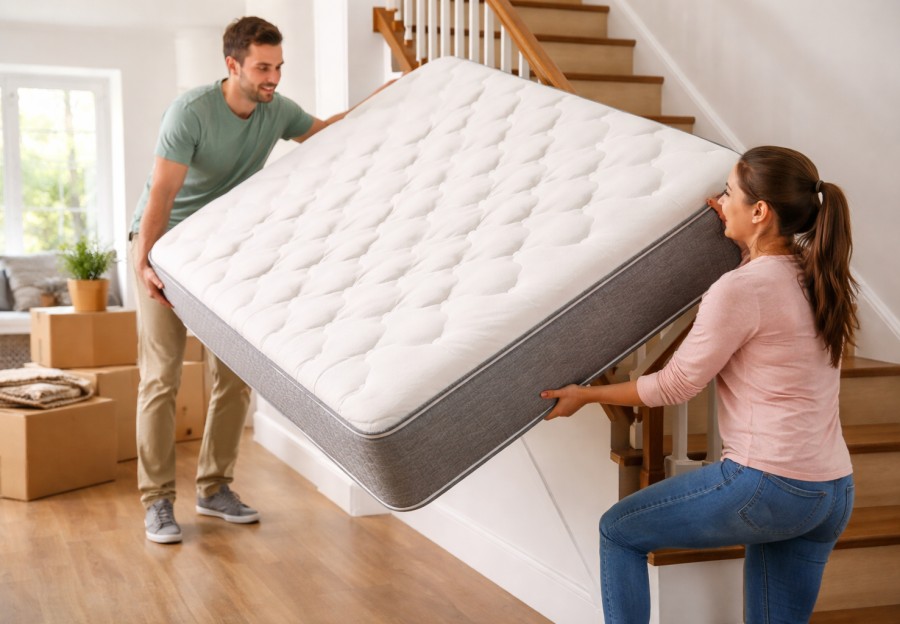
Large homes also contain more specialty items such as pianos, gym equipment, large sectionals, custom cabinetry, and oversized electronics. These items require careful coordination and often extra manpower. Rushing complex lifts increases the chance of slips or collisions. Biomechanics studies show that synchronized lifting reduces uneven load stress and injury risk. That synchronization suffers when crews are tired or hurried. A two day move allows these heavy pieces to be handled when energy and focus are highest rather than squeezed into the last exhausted hours.
Access logistics often become more manageable over two days. Large homes may have long driveways, multiple staircases, narrow hallways, or limited parking access. Municipal data shows that parking conflicts and access delays are common contributors to move day slowdowns in residential neighborhoods. When time pressure is extreme, small access delays cascade into rushed behavior later. A two day plan absorbs those delays without forcing unsafe shortcuts.
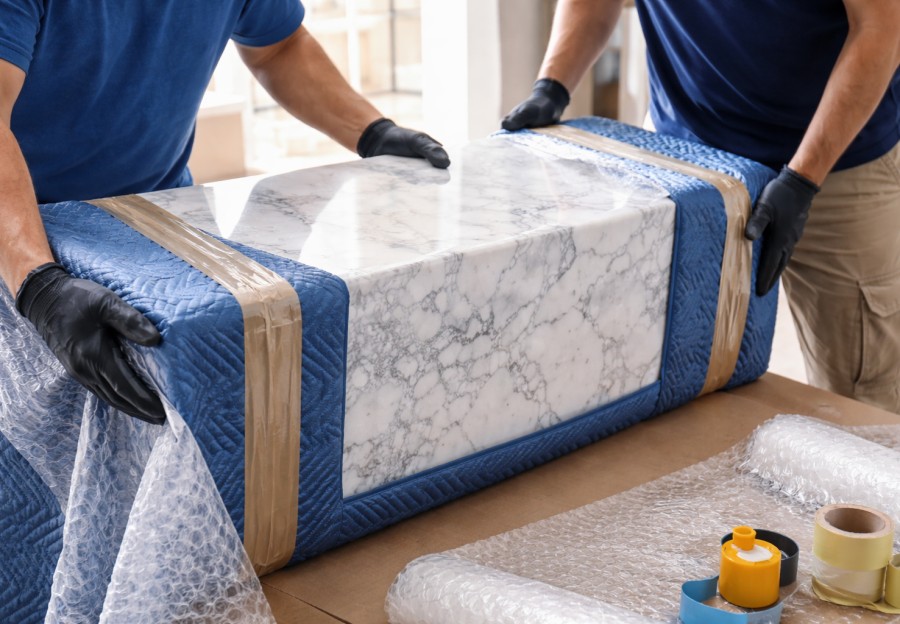
Insurance and liability risk decreases when handling quality improves. Many mover liability policies reimburse based on weight rather than replacement value, which rarely reflects the true cost of high end furniture, stone surfaces, or electronics. Industry surveys show that customers often underestimate this coverage gap until after damage occurs. Reducing the likelihood of damage through better pacing protects financial outcomes even when insurance exists.
Another benefit is better inventory control. In large homes, tracking hundreds of boxes and items is challenging. Logistics studies show that clear staging and slower paced handling reduce misplacement and sorting errors by roughly 25 to 30 percent. When everything moves in one compressed surge, it becomes harder to verify that all items are loaded correctly and labeled accurately. A two day approach allows more frequent checks and corrections.
Noise and neighbor impact can improve as well. Large single day moves often run late into the evening, increasing noise complaints and parking conflicts. Building management and neighborhood associations frequently impose quiet hour restrictions. Splitting the work across two normal workdays reduces tension and keeps operations within reasonable time windows.
Psychological stress drops noticeably when the move is not treated as a single high stakes sprint. Stress research consistently ranks moving among the top life stressors. When homeowners feel rushed, cortisol levels rise and patience drops. Emotional regulation suffers alongside physical fatigue. A two day plan introduces breathing room. Knowing there is time to correct small issues without panic changes the emotional tone of the entire move.
Sleep quality plays a role in recovery and safety. Sleep research shows that even one night of poor sleep can reduce cognitive performance by more than 20 percent the next day. In a one day marathon move that ends late at night, sleep is often shortened or disrupted. The following day becomes harder for unpacking, driving, and decision making. With a two day move, sleep quality tends to improve because physical strain is spread more evenly.
Financial perception often drives people toward single day moves, but the math does not always favor it. If rushing increases damage risk, injury risk, and overtime hours, the final cost can exceed a slightly longer but steadier schedule. Healthcare data consistently shows that musculoskeletal injuries generate significant medical costs and lost productivity. Even minor injuries can create weeks of discomfort and reduced function. Preventing those outcomes carries real financial value.
Productivity consistency also improves across two days. Occupational productivity research shows that sustained moderate effort outperforms short bursts of extreme effort followed by fatigue. In practical terms, crews maintain steadier pace, cleaner communication, and better coordination when they are not racing the clock.
Environmental impact benefits subtly as well. Damaged furniture and broken items contribute to waste and replacement manufacturing. The Global E Waste Monitor reports millions of tons of electronic waste generated annually worldwide, with accidental damage being a contributor. Reducing breakage extends product life and lowers unnecessary waste.
Large homes also often include outdoor items such as patio furniture, grills, planters, and storage sheds. These require separate staging and sometimes cleaning or drying before packing. Moisture trapped in fabrics can lead to mildew within 24 to 48 hours in warm conditions according to textile care research. A two day schedule allows proper drying and preparation rather than rushed packing of damp items.
Communication quality improves with better pacing. Clear instructions reduce errors and re handling. Workplace communication studies show that clarity and calm tone improve cooperation and reduce conflict in physically demanding environments. When everyone is exhausted and rushed late in a single day move, miscommunication increases. Spreading work reduces that pressure.
Another advantage is flexibility for unexpected issues. Elevator outages, weather delays, traffic restrictions, mechanical problems, or last minute packing surprises happen frequently in real moves. Project management research shows that buffer planning reduces stress and improves outcome reliability. A two day move naturally builds buffer into the schedule.
There is also a long term health perspective. Repeated high strain lifting in compressed time windows increases cumulative injury risk over years. Ergonomic research emphasizes pacing and recovery as key injury prevention strategies in physical labor. Even homeowners benefit from respecting those principles when participating in moves.
Two day moves do not mean slower progress. They mean steadier progress with fewer mistakes. The total labor hours may be similar or only slightly higher, but the quality of handling improves significantly. That quality protects furniture finishes, electronics, stone surfaces, and personal valuables while protecting the people doing the work.
Large homes amplify every small risk factor. More volume means more contact points, more decisions, more fatigue, and more chances for something to go wrong. Compressing all of that into a single long day magnifies risk. Spreading it across two days reduces physical strain, improves mental clarity, stabilizes logistics, improves load quality, and lowers damage probability.
Moving is already a major life transition. Reducing unnecessary risk preserves both your belongings and your energy for settling into the next chapter. When the home is large and the inventory is heavy, time becomes a safety tool rather than a cost. A two day move uses that tool wisely, trading a little extra scheduling for a lot more control, protection, and peace of mind.