February 27, 2026
How to protect marble surfaces while moving
Marble looks tough, but anyone who has lived with it knows how easily it can chip, scratch, stain, or crack when handled the wrong way. Countertops, table tops, fireplace surrounds, vanity slabs, and decorative marble pieces carry both financial value and emotional attachment. Natural stone is heavy, brittle, and sensitive to pressure and abrasion. Moving it safely is less about muscle and more about understanding how stone behaves under stress and vibration.
The risk is not small. The Natural Stone Institute reports that marble has a compressive strength that can exceed 15,000 pounds per square inch, yet its tensile strength is much lower, often under 2,000 pounds per square inch. That means it can handle downward weight well but reacts poorly to bending, twisting, and point impact. Most cracks happen not because the stone is weak, but because uneven forces are applied during lifting, stacking, or transport.
Cost alone justifies extra care. Industry pricing data shows that installed marble countertops often range from 60 to over 150 dollars per square foot depending on quality and finish. A single cracked slab can cost thousands to replace once fabrication and installation are included. Insurance claim data from moving companies consistently places stone surfaces among the highest value damage claims due to replacement complexity rather than material cost alone.
The first step in protecting marble is cleaning it before packing. Fine grit acts like sandpaper during vibration and causes micro scratches that dull polished finishes. Flooring and surface care studies show that abrasive particles are one of the main contributors to long term surface wear. A gentle wipe with a soft cloth removes dust and reduces friction damage during transport.
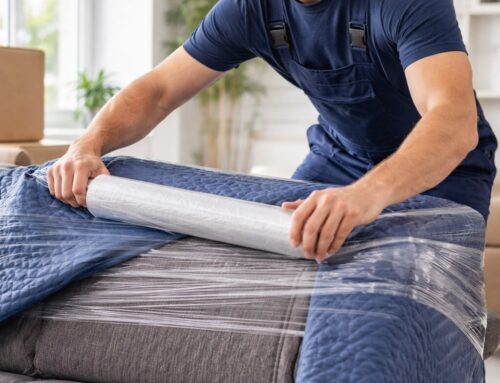
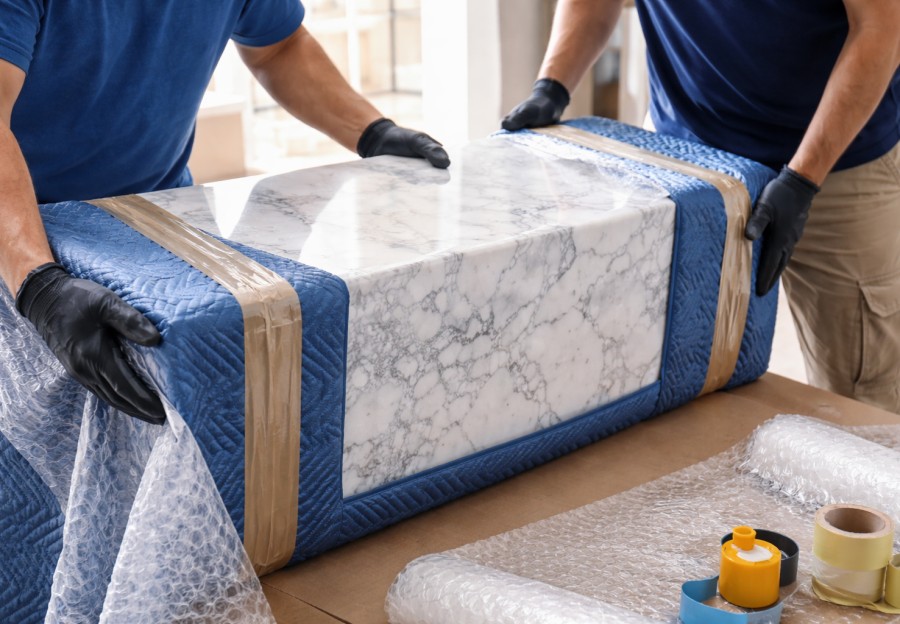
Padding strategy matters more with marble than with most materials. The goal is not only cushioning impact, but distributing pressure evenly. Thick moving blankets or foam sheets create a buffer that absorbs vibration and prevents direct contact with harder surfaces. Packaging engineering tests show that layered padding reduces peak shock loads significantly compared with single thin layers. Even an extra inch of padding can cut transmitted impact forces by more than half in controlled drop testing.
Rigid support is just as important as soft padding. Marble should never rely on soft materials alone to hold its shape. Placing rigid cardboard sheets, plywood panels, or foam boards on both sides of a slab creates a sandwich effect that spreads pressure across a larger area. Physics explains this clearly. Pressure equals force divided by area. Increasing the surface area lowers the stress concentration on any one point, which reduces crack risk.
Orientation during transport plays a major role in survival. Marble slabs and table tops should travel upright rather than flat whenever possible. Stone fabricators and installers routinely transport slabs vertically because horizontal positioning increases bending stress when vibration occurs. Vehicle dynamics research shows that vibration amplitude transfers more aggressively through flat surfaces resting on uneven supports. Upright positioning allows the stone to flex less and distributes forces more evenly through its thickness.
Edge protection deserves special attention. Corners and edges concentrate stress and are the most common failure points. Even a small impact on an exposed edge can create a visible chip that ruins the appearance. Foam edge protectors or folded cardboard guards absorb impact energy at these vulnerable points. Packaging damage analysis consistently shows that reinforced corners reduce surface strike damage during handling and loading.
Moisture control is another overlooked factor. Marble is porous and can absorb moisture, leading to staining or surface dulling. Condensation can form inside wrapping when temperature changes occur during transport. Vehicle interior temperature studies show that parked trucks can exceed outdoor temperatures by more than 20 degrees Celsius within an hour under direct sun. As temperatures cool later, moisture can condense inside sealed wraps. Using breathable padding layers and avoiding sealing damp surfaces inside plastic reduces this risk.
Weight handling must be planned carefully. Marble is heavy. A single slab can weigh several hundred pounds depending on thickness and size. According to stone industry data, marble weighs roughly 160 to 170 pounds per cubic foot. Improper lifting increases the risk of dropping, twisting, or uneven loading. The Bureau of Labor Statistics reports that overexertion is one of the leading causes of injury in material handling jobs. Using proper lifting techniques and adequate manpower protects both the stone and the people moving it.
Never allow marble pieces to rest directly against hard metal surfaces such as truck walls or lift gates without padding. Continuous vibration against rigid surfaces causes abrasion and micro cracking over time. Packaging vibration studies show that long duration low level vibration contributes significantly to finish wear even without visible impact events.
Securing marble inside the truck is critical. Strapping the protected slab upright against padded vertical surfaces such as mattresses or upholstered furniture creates a stable buffer zone. Cargo securement research in freight transport shows that restrained loads withstand forward forces far better than loose items during braking and cornering. While household goods moves are not regulated the same way as commercial freight, the physics remains the same.
Avoid stacking heavy items against marble even when it is padded. Pressure buildup from stacked weight increases fracture risk over long drives. Transportation engineering studies show that stacked loads generate compounding compression forces at lower layers during vibration and braking. Keeping marble isolated in its own protected section reduces that cumulative stress.
Temperature exposure also affects stone adhesives and any mounted hardware. Extreme heat can weaken bonding agents used in attached brackets or seams. Construction materials research shows that prolonged heat exposure accelerates adhesive degradation. Keeping marble away from exterior truck walls where temperature swings are highest helps preserve structural integrity.
Labeling helps prevent accidental mishandling. Clear fragile and orientation markings reduce the chance of improper stacking or laying flat. Logistics studies show that visual handling cues reduce sorting and placement errors by roughly 30 percent in busy environments. That small behavioral improvement can prevent costly mistakes.
Insurance and documentation provide a final layer of protection. Photograph the marble surface before packing to document condition. Basic mover liability often reimburses only minimal amounts per pound, which rarely reflects replacement cost for stone surfaces. Reviewing coverage options protects against financial loss if damage occurs.
Unpacking requires patience as well. Allow marble to acclimate to indoor temperature before unwrapping fully, especially if it traveled through cold or hot conditions. Rapid temperature changes can stress natural stone and increase condensation risk. Once unwrapped, inspect edges and surfaces carefully before installation or placement so any issues are addressed immediately.
Surface protection does not end when the piece is in the new home. During setup and nearby unpacking, keep cardboard or fabric layers on marble until surrounding furniture movement stops. Many chips occur after delivery when heavy objects bump into newly placed stone pieces during final setup. Accident analysis in residential moves shows that secondary handling damage often happens after the truck is unloaded rather than during transport.
Protecting marble surfaces while moving is about respecting the material’s strengths and weaknesses. Marble handles compression well but resists bending poorly. It tolerates weight but not point impact. It looks solid but reacts quickly to vibration and abrasion. Using layered padding, rigid support, upright orientation, edge protection, moisture control, controlled weight handling, secure strapping, and careful temperature management aligns with real data from materials science, packaging engineering, and transportation safety.
The extra preparation may feel slow on moving day, but the payoff is enormous. Preventing one cracked slab or chipped edge can save thousands of dollars, weeks of repair coordination, and the disappointment of permanent cosmetic damage. Marble brings beauty and value into a home. Treating it with the respect its material science demands ensures it arrives at your new place just as elegant as it left the old one.