March 17, 2026
How to move a mattress without ruining it
A mattress is one of the most expensive and most used items in a home, yet it is often treated casually during a move. People drag it across floors, bend it around stair corners, lean it against dirty truck walls, or strap it down so tightly that the internal structure gets crushed. Then they wonder why it sags, smells odd, or feels different after the move. A mattress is a precision product made of layered foams, coils, fabrics, and adhesives. Protecting it properly is about understanding pressure, moisture, airflow, and structural stress rather than just muscle.
The financial reason alone makes care worthwhile. Consumer market data shows that the average mattress now costs well over a thousand dollars in many regions, with premium models running several thousand. Sleep research shows that adults spend roughly one third of their lives in bed, and poor sleep quality is linked to reduced productivity, higher injury risk, and increased health costs. Damaging a mattress during a move is not just an inconvenience. It affects daily wellbeing and long term comfort.
Weight and structure explain why mattresses behave differently than other furniture. A queen size mattress often weighs between 60 and 100 pounds depending on construction. Hybrid and latex models can exceed that. Inside, foam layers compress under load while coil systems resist bending but dislike twisting. Materials engineering research shows that repeated bending and uneven compression accelerate foam fatigue and coil misalignment. Once internal layers shift or permanently deform, the feel of the mattress changes and rarely fully recovers.
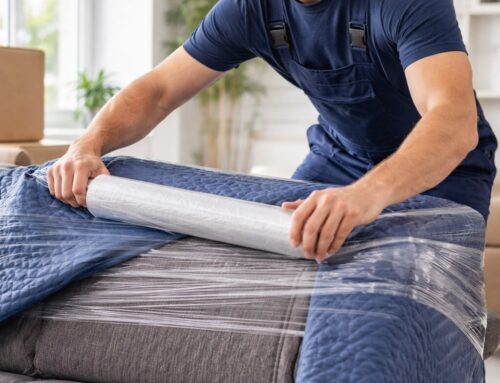
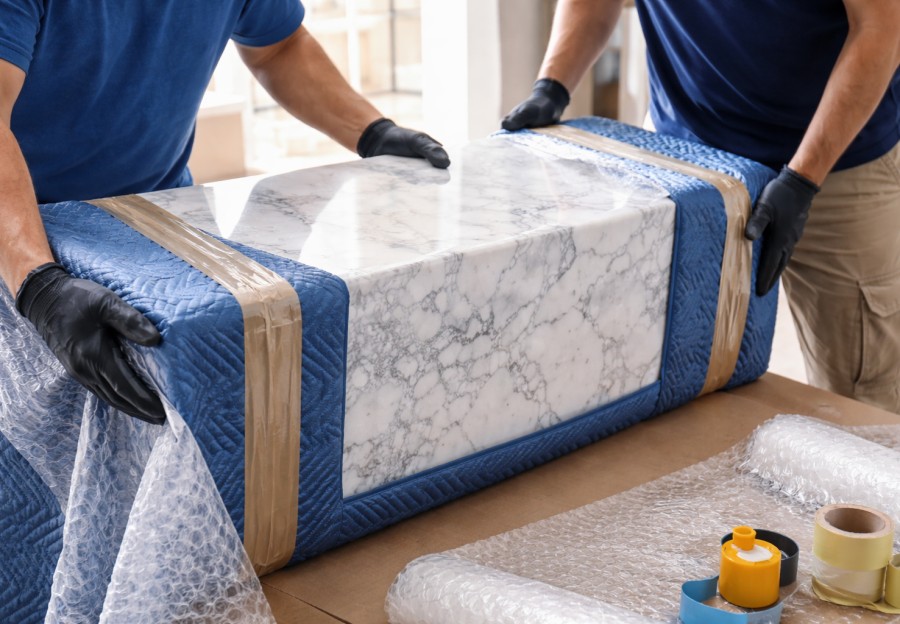
The first protection rule is keeping the mattress clean and dry. Fabric surfaces absorb moisture and odors easily. The American Cleaning Institute notes that soft household textiles trap dust, bacteria, and moisture quickly when exposed to dirty environments. During a move, driveways, truck floors, and hallway walls all carry contaminants. A proper mattress bag or thick plastic wrap prevents dirt transfer and protects against accidental rain or condensation exposure. Packaging research shows that cardboard and fabric lose strength and hygiene integrity rapidly when damp, which is why moisture control matters from the first minute.
Ventilation also matters. Sealing a damp mattress in airtight plastic traps moisture and creates odor and mildew risk. Textile research shows that mildew can begin forming on damp fabrics within 24 to 48 hours in warm conditions. Always let the mattress dry completely before wrapping, especially if it was recently cleaned or exposed to humidity.
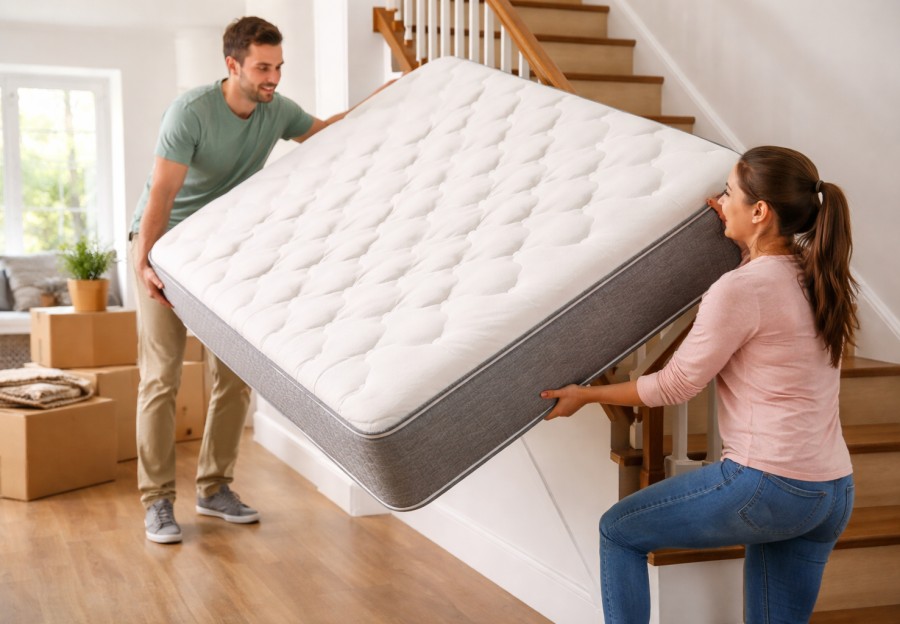
How the mattress is carried matters more than people expect. Bending a mattress sharply around corners introduces torsional stress into foam and coil layers. Structural engineering data shows that torsion weakens bonded materials faster than uniform compression. While some foam mattresses tolerate gentle bending briefly, tight folding or twisting risks permanent damage. Keeping the mattress as straight and flat as possible during carries protects its internal alignment.
Staircases and narrow hallways create common damage points. Dragging edges across railings or wall corners abrades fabric and can tear seams. Upholstery wear studies show that friction damage accumulates quickly even with short repeated contact. Using a second person to guide corners reduces scraping and maintains control through tight turns.
Grip stability improves safety. Mattresses are bulky and awkward, which increases drop risk when grip slips. Human factors research shows that unstable grips increase sudden load shifts that strain muscles and increase impact damage. Wearing gloves with good traction and communicating movements clearly keeps the load balanced and controlled.
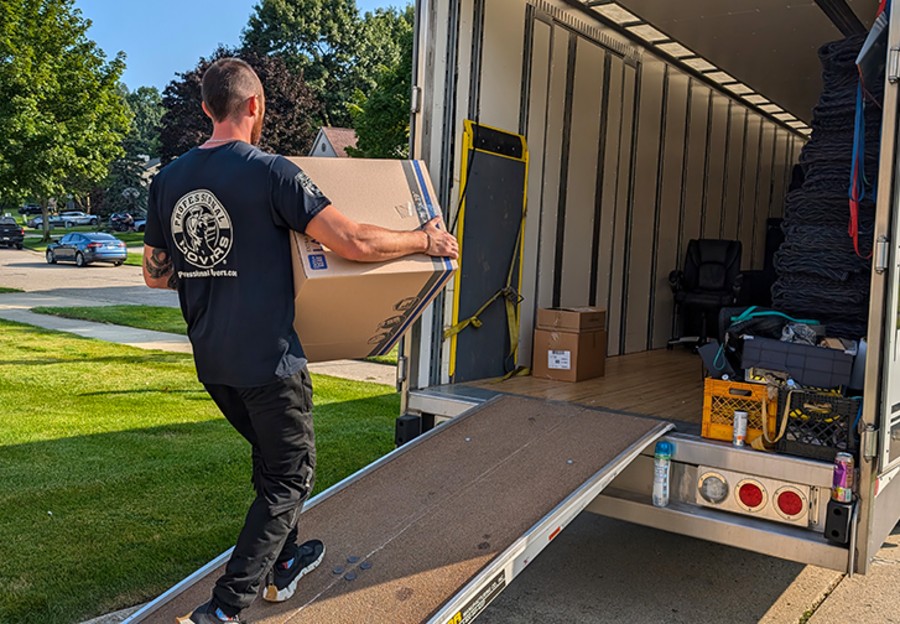
Vehicle placement inside the truck influences long term shape retention. Mattresses should ideally travel upright on their long edge rather than laid flat under heavy stacks. Transportation vibration studies show that vertical stacking under weight increases compression fatigue in foam layers over long drives. Standing the mattress upright against padded surfaces such as sofas or mattresses allows gravity to distribute load more evenly rather than compressing one surface continuously.
Padding between the mattress and truck wall reduces vibration and abrasion. Vehicle interior temperature studies show that closed trucks can exceed outdoor temperatures by more than 20 degrees Celsius in under an hour in direct sun. Truck walls experience larger temperature swings and higher vibration amplitude. Keeping a buffer layer protects fabric, adhesives, and foam resilience.
Strapping technique matters. Straps should secure the mattress firmly without crushing it. Over tightening compresses foam layers and can leave lasting indentations. Mechanical load studies show that sustained compression accelerates material fatigue. Snug restraint that prevents movement without deforming the mattress is the goal.
Avoid placing heavy furniture directly against a mattress even when padded. Compression over several hours of travel slowly deforms foam and quilting. Packaging engineers note that sustained load causes permanent set in many cushioning materials, meaning they do not rebound fully after pressure is removed.
Weather exposure increases risk. Rain introduces moisture. Heat softens adhesives and foams. Cold increases brittleness of some materials. Materials durability research shows that repeated thermal cycling accelerates degradation of bonded layers. Keeping the mattress protected from direct weather and extreme temperature exposure preserves lifespan.
Another overlooked factor is how long the mattress remains wrapped after arrival. Leaving a mattress sealed in plastic for extended periods traps residual humidity and odors. Once inside the new home, remove the wrap and allow airflow before placing bedding. Indoor air quality studies show that trapped moisture in textiles contributes to odor buildup and microbial growth.
Unloading deserves the same care as loading. Fatigue increases mistakes at the end of the day. The Bureau of Labor Statistics consistently reports that overexertion and contact with objects are leading causes of injury in material handling. Slow controlled handling during unloading prevents drops and corner damage when energy is low.
Foundation compatibility matters after the move. Placing a mattress on an uneven frame or damaged box spring increases localized stress. Structural support studies show that uneven support accelerates sagging and internal wear. Inspect the bed frame and slats before placing the mattress to ensure even load distribution.
Rotating the mattress after settling helps rebalance any minor compression from transport. Sleep product manufacturers often recommend periodic rotation to extend lifespan. Allowing the mattress to rest and re expand for several hours before sleeping on it supports material recovery after compression.
There is also a hygiene perspective. Mattress surfaces collect allergens and dust. Improper handling during a move can contaminate the sleep surface. Allergy research shows that dust mite exposure increases respiratory symptoms in sensitive individuals. Keeping the mattress sealed during transit and aired out afterward protects sleep quality.
Cost prevention adds up. Replacing a damaged mattress prematurely can easily cost more than the entire moving supplies budget. Consumer warranty data shows that many mattress warranties exclude damage caused by improper handling or transport, meaning replacement becomes an out of pocket expense. Preventing damage protects that investment.
Environmental responsibility matters as well. Mattresses contribute significantly to landfill volume because they are bulky and difficult to recycle. Waste management studies show millions of mattresses are discarded annually in North America alone. Extending mattress lifespan reduces waste and manufacturing demand.
There is a psychological benefit too. Good sleep supports emotional resilience during major life changes. Stress research consistently ranks moving among the top life stressors. Preserving your sleep environment helps stabilize mood and recovery during the transition.
Moving a mattress without ruining it comes down to moisture protection, gentle handling, controlled bending, proper strapping, thoughtful truck placement, temperature awareness, and careful unpacking. Clean and dry before wrapping. Use breathable protection. Avoid sharp folding and twisting. Carry with stable grip and enough help. Stand upright with padding in the truck. Strap snug without crushing. Keep heavy pressure off. Unwrap and ventilate promptly at the new home. Verify even support before sleeping.
Mattresses are designed to support the human body for thousands of hours, not to endure bending, compression, and weather exposure. Treating them with respect during a move preserves comfort, hygiene, and long term value. A little extra care during a few hours of transport protects years of restful sleep afterward.