March 11, 2026
How movers secure loads inside trailers
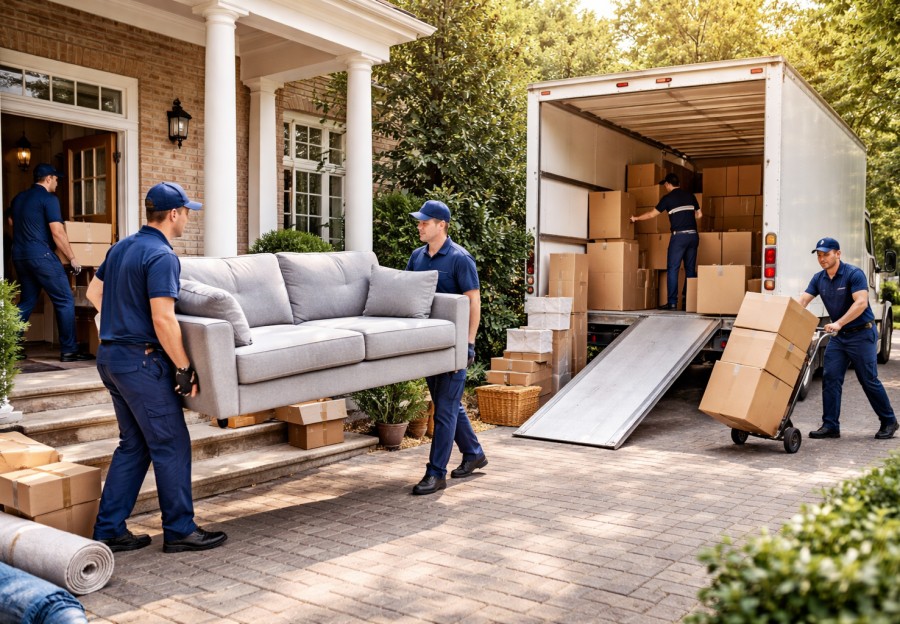
When people picture a moving truck, they usually imagine boxes stacked neatly and furniture wedged into place. What they do not see is the quiet engineering that keeps everything stable once the truck starts rolling. Inside a trailer, every stoplight, pothole, curve, and braking event creates forces that try to shift the load. Securing the load correctly is what prevents crushed boxes, scratched furniture, broken glass, and sudden cargo movement that can injure workers. It is not guesswork. It is applied physics backed by transportation safety data and decades of field experience.
The need for load security starts with basic motion. A moving truck weighing several tons does not stop instantly. Transportation safety studies show that heavy vehicles require significantly longer braking distances than passenger cars, especially when fully loaded. During braking, inertia pushes cargo forward. During acceleration, it pulls backward. During turns, lateral forces push loads sideways. Even at low speeds, these forces add up. Federal Motor Carrier Safety research consistently links unsecured or poorly secured loads to a large share of cargo damage incidents and roadway safety hazards.
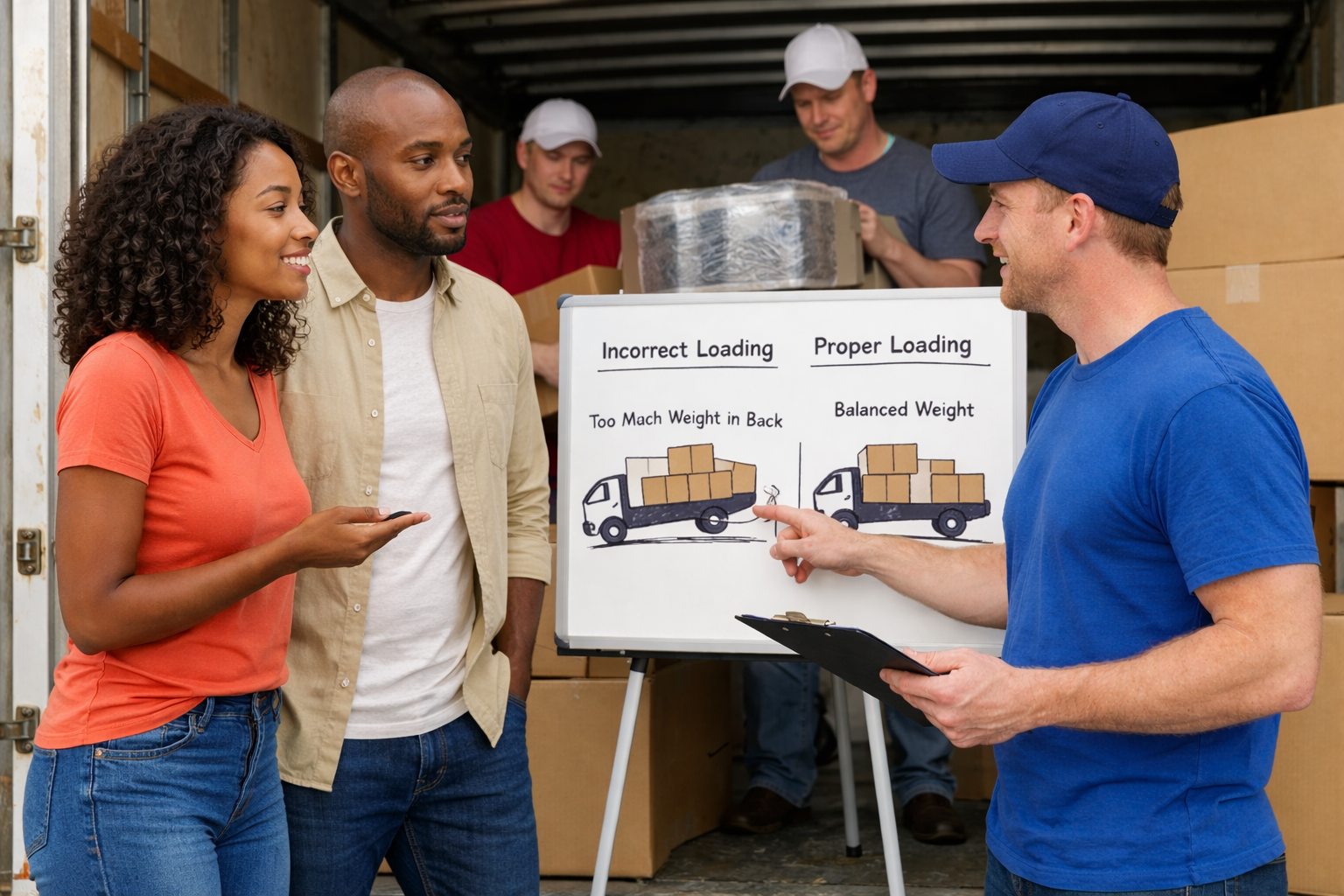
Weight distribution is the foundation of secure loading. Movers build the load from the front of the trailer forward toward the rear rather than randomly stacking. Heavy items such as appliances, solid wood furniture, safes, and packed book cartons go low and close to the front wall of the trailer. This keeps the center of gravity stable and reduces sway. Vehicle dynamics research shows that higher centers of gravity increase rollover and instability risk. Even in residential moves, keeping weight low and balanced improves braking control and reduces internal load shift.
The front wall of the trailer acts as a primary anchor point. Movers often create a tight front wall with heavy, rigid items placed flush and padded to prevent hard contact. This forms a solid base that resists forward movement under braking. Cargo securement engineering shows that tight load faces reduce the need for excessive strapping because the load itself distributes force across a large surface area.
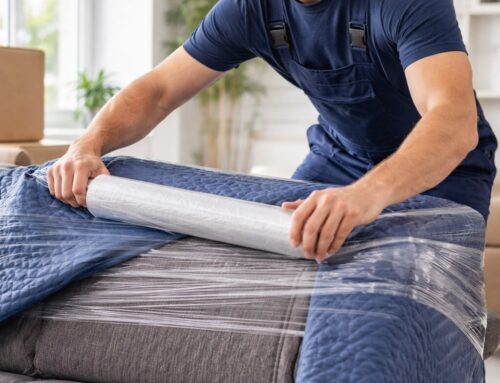
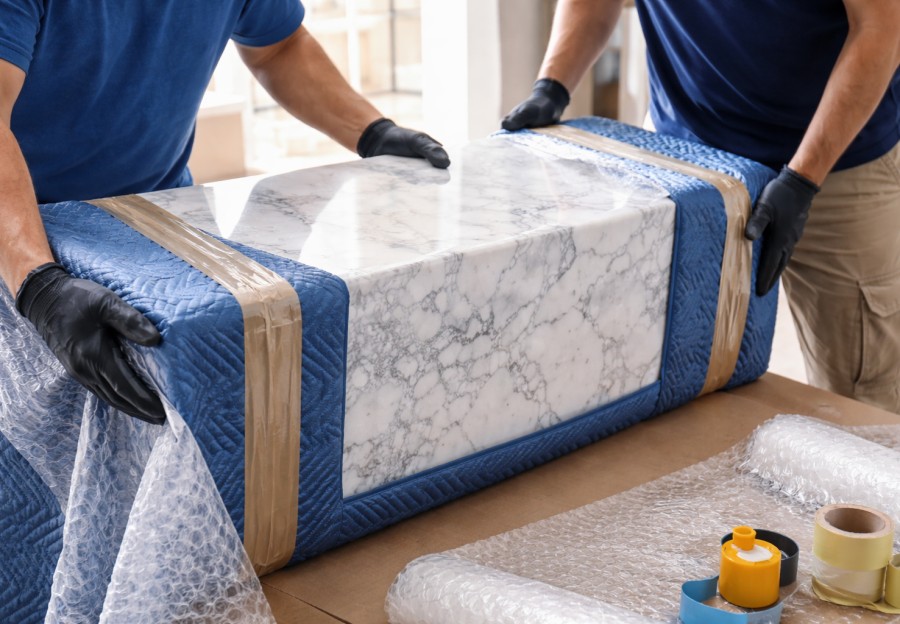
Padding plays a major role in security, not just surface protection. Moving blankets and foam pads increase friction between items. Friction matters because sliding is what creates momentum damage. Packaging vibration studies show that when friction coefficients increase between stacked surfaces, internal movement drops significantly even under constant vibration. In practical terms, padded furniture grips neighboring items better than slick wood or plastic surfaces.
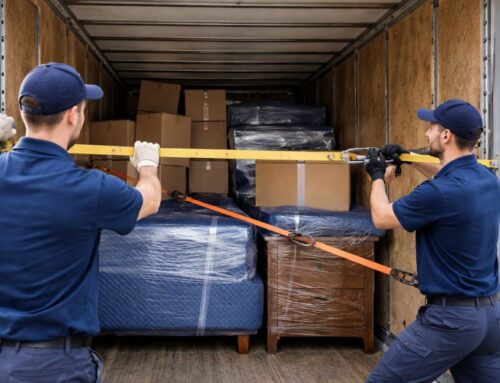
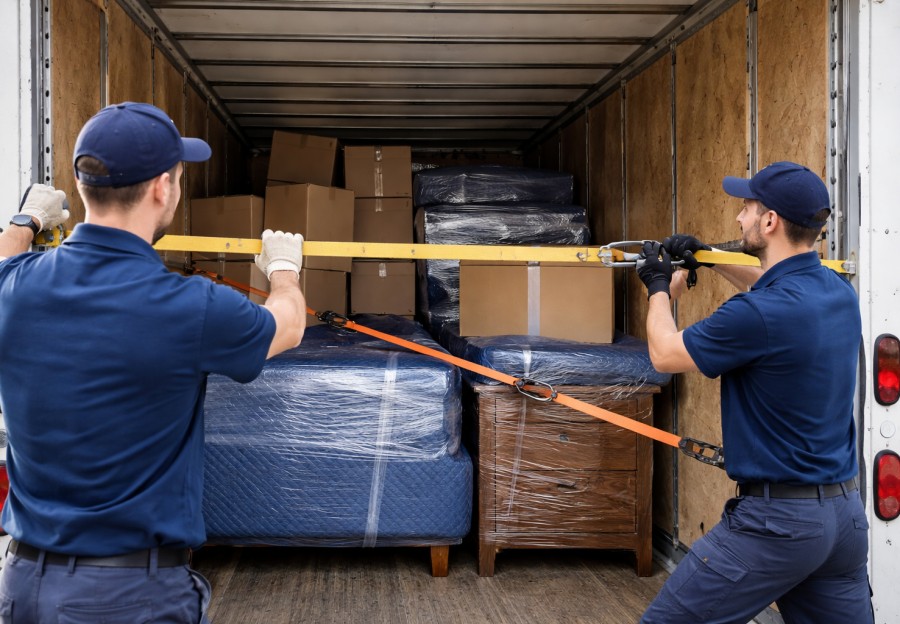
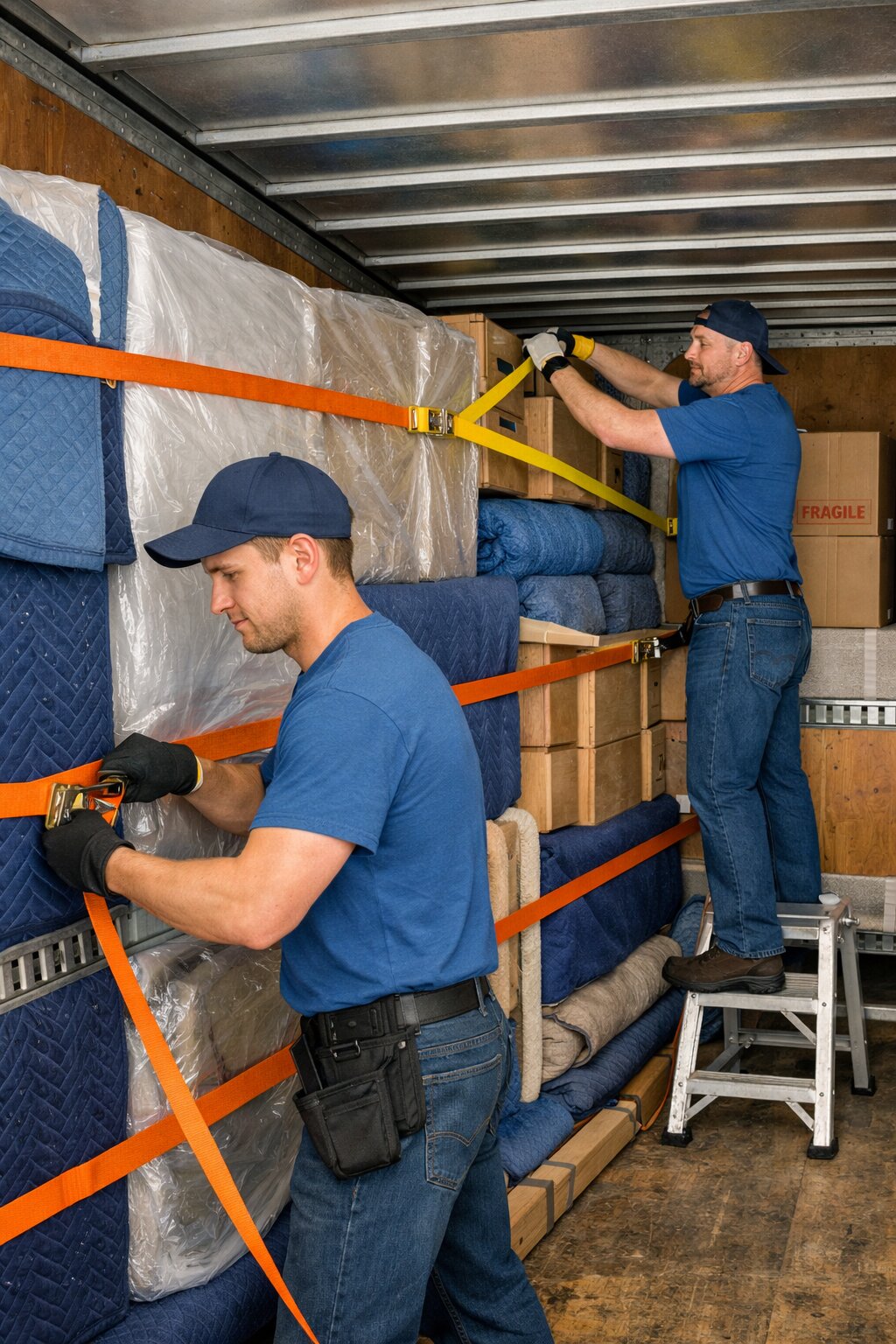
Straps and load bars add active restraint. Most trailers include E track rails or similar anchor systems along the walls. Movers use ratchet straps and adjustable load bars to create vertical and horizontal restraint zones. These devices prevent forward, backward, and sideways movement. Commercial freight safety data shows that multi point restraint systems dramatically reduce load shift incidents compared with single restraint points. Even though household moves are not regulated the same way as commercial freight, the physics remains identical.
The way straps are tensioned matters. Over tightening can crush boxes or stress furniture frames. Under tightening allows slack that becomes momentum during braking. Experienced movers aim for firm tension that holds the load without deforming it. Mechanical engineering studies on fastener tension show that optimal restraint balances holding force with material tolerance to avoid damage.
Load segmentation improves control. Instead of treating the entire trailer as one massive pile, movers create sections. One zone might contain mattresses and upholstered furniture acting as shock absorbers. Another zone may hold boxed goods stacked tightly. Fragile items often ride in protected buffer zones away from hard pressure. Logistics research shows that segmenting loads improves handling accuracy and reduces cascading failure when one area shifts slightly.
Vertical stacking follows predictable rules. Heavier boxes go on the bottom. Lighter boxes go above. This prevents compression collapse and keeps the stack stable. Packaging engineering data shows that corrugated boxes lose more than 30 percent of compression strength when moisture or uneven loading is present, so conservative stacking protects against failure during vibration.
Interlocking placement also increases stability. Boxes and furniture are arranged so that seams and edges overlap rather than forming straight vertical lines that can shear under motion. Masonry construction uses similar interlocking principles for stability. The same logic applies inside a trailer where vibration constantly challenges alignment.
Void filling is another key element. Empty gaps allow items to shift and settle. Even small gaps expand over miles of vibration. Packaging lab studies demonstrate that internal voids increase collision energy between items during transport. Movers fill gaps with soft items such as mattresses, sofas, rugs, and padded furniture to create compression zones that absorb motion rather than transmit it.
Side wall protection reduces abrasion and temperature exposure. Trailer walls experience greater vibration amplitude and wider temperature swings. Vehicle interior temperature studies show that closed trailers can exceed outdoor temperatures by more than 20 degrees Celsius in direct sun. Sensitive items placed directly against walls experience more thermal cycling and vibration stress. Padding and buffer placement reduce these exposures.
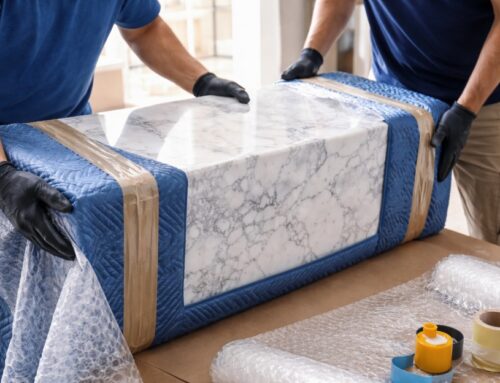
Orientation of large flat items affects stability. Mirrors, stone slabs, glass panels, and framed art typically travel upright rather than flat. Stone fabricators and glass transport standards favor vertical orientation because bending stress increases when flat items flex under vibration. Upright placement allows gravity to distribute forces through thickness rather than across surface span.
Load height matters too. Stacking too high raises the center of gravity and increases tipping risk inside the trailer. Transportation safety research shows that higher load stacks amplify lateral movement during turns. Movers often keep heavier sections below shoulder height while using lighter goods to fill upper space.
Doors and tailgate zones receive special attention. The rear of the trailer experiences higher vibration and greater exposure to sudden braking forces. Loads near the door are often double strapped or blocked with load bars to prevent surge when the truck stops. Cargo incident data shows that rear load shift is a common contributor to door bursts and falling items during unloading.
Human safety drives many of these practices. The Bureau of Labor Statistics reports that overexertion and contact with objects are leading causes of injury in material handling jobs. A shifting load increases pinch hazards, sudden movement risk, and unstable footing inside the trailer. Securing loads protects not only the cargo but also the people unloading it.
Time pressure influences security quality. Rushed loading increases shortcuts. Insurance claim trends consistently show higher damage rates during compressed schedules when crews push to finish quickly. Professional movers prioritize controlled pacing and systematic build up rather than rapid stacking.
Weather exposure also affects securing strategy. Rain increases slip risk and softens cardboard. Heat softens adhesives and foam padding. Cold makes materials more brittle. Occupational safety research shows that environmental conditions influence handling speed and grip reliability. Adjusting padding and restraint under different weather protects load stability.
Long distance moves amplify vibration exposure. Packaging vibration testing shows that micro movement accumulates over hours of travel, slowly working loads loose if restraint is insufficient. This is why long hauls often use additional strapping layers compared with short local moves.
Another factor is mixed material interaction. Wood, metal, glass, and fabric respond differently to pressure and vibration. Materials engineering studies show that differential stiffness creates stress concentration at contact points. Padding between dissimilar materials buffers these stresses and prevents abrasion.
Communication within the crew affects load security. Clear coordination ensures that heavy items are placed intentionally rather than opportunistically. Workplace communication research shows that clear task alignment reduces error rates and re handling. When everyone understands the load plan, stacking remains consistent and stable.
Inspection is part of the process. Experienced movers periodically pause to check strap tension, wall pressure, and gap formation as the load builds. Small corrections early prevent large shifts later. Preventive maintenance principles in logistics show that early intervention reduces downstream failure rates significantly.
Unloading benefits directly from proper securing. A stable load unloads smoothly with predictable item access. A poorly secured load often reveals leaning stacks, buried fragile items, and blocked pathways that slow unloading and increase damage risk. Time motion studies show that organized load layouts reduce re handling and walking distance, improving productivity and safety.
There is also a financial dimension. Repairing damaged furniture, electronics, and stone surfaces often costs hundreds or thousands of dollars. Home improvement pricing data consistently shows that restoration costs exceed the incremental labor cost of careful loading. Preventing damage protects both customer budgets and mover liability exposure.
Environmental impact matters too. Damaged goods contribute to landfill waste and replacement manufacturing. Sustainability studies show that extending product lifespan reduces environmental footprint. Secure loading supports waste reduction indirectly.
Psychologically, a well secured trailer reduces anxiety for both movers and customers. Stress research shows that predictability and visible control lower perceived risk during high effort tasks. Seeing a clean, tight load builds confidence that belongings are protected.
How movers secure loads inside trailers is not random stacking. It is structured weight distribution, friction management, layered padding, strategic segmentation, controlled strapping, void elimination, orientation management, environmental buffering, and continuous inspection. These methods align with real data from transportation safety, packaging engineering, occupational health, and materials science because the same physical laws apply whether cargo is industrial freight or household furniture.
The trailer may look like a simple metal box, but inside it becomes a carefully balanced system designed to absorb motion, resist force, and protect what matters. When this system is built correctly, the truck can travel thousands of miles or across town with confidence that everything inside will arrive the same way it left.